
HEALTH
Lung Cancer Myths Still Hide the Never-Smoker Risk Spike
On World Lung Cancer Day doctors dismantle seven screening myths, but the quieter crisis is rising never-smoker cases tied to air pollution and 1-in-5 uptake.

On World Lung Cancer Day, doctors again list the myths that keep high-risk people away from screening. Lung cancer killed roughly 1.8 million people worldwide in 2022 and remains the top cancer killer, yet it often grows quietly for years. By the time a cough or weight loss appears, many cases have already reached stage III or IV.
The seven myths Indian oncologists flagged this week match what global societies hear every August. Behind them sits a quieter shift: never-smokers now account for a rising share of diagnoses, air pollution drives a large slice of adenocarcinoma, and even eligible smokers get screened at rates around one in five.
Seven Myths That Still Shape the Clinic Visit
Dr Abhishek Yadav, Director of Medical Oncology at Yashoda Medicity, and Dr Ronak Jain, Consultant Surgical Oncology at Paras Health Udaipur, walked through the claims they hear most. The pattern is consistent across continents.
| Myth | Fact doctors emphasize |
|---|---|
| Screening is for everyone | Only high-risk adults meet criteria; shared decision-making comes first |
| Wait for symptoms | Early disease is usually silent; symptoms often mean advanced stage |
| Diagnosis equals no hope | Early detection allows surgery alone in some cases and far higher survival |
| A chest X-ray is enough | Low-dose CT finds small tumors X-rays miss |
| Only current smokers need it | Former smokers within 15 years and some exposed non-smokers carry risk |
| Screening prevents cancer | It detects early; quitting and avoiding toxins lower incidence |
| Every smoker should be screened | Age, pack-years, life expectancy and fitness for treatment all matter |
Yadav put the core problem simply: “This is the tragedy of lung cancer: it’s largely a silent disease in its early stages, and by the time symptoms like persistent cough, chest pain, or unexplained weight loss show up, treatment options are far more limited and survival rates drop significantly.”
Why Low-Dose CT Replaced the Old Chest Film
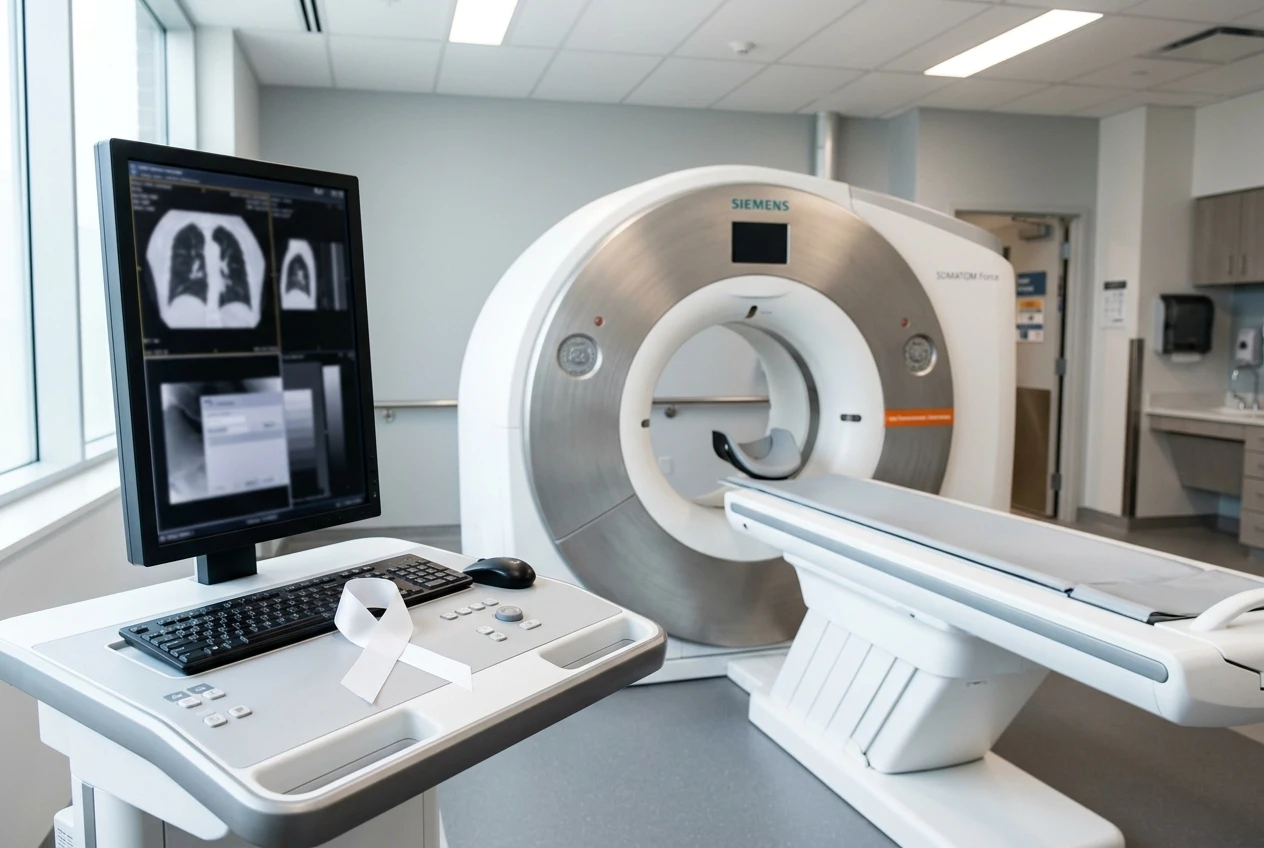
Chest X-rays were once the default. Large trials showed they do not cut deaths. The National Lung Screening Trial changed the standard. Participants who received three annual low-dose CT scans saw a 20% relative reduction in lung cancer deaths compared with chest radiography. All-cause mortality fell 6.7 percent. The number needed to screen to prevent one lung-cancer death was 320.
LDCT uses far less radiation than a standard diagnostic CT and can spot nodules a few millimeters across. Most positive findings are false positives that resolve on follow-up imaging, but the net benefit holds when programs limit screening to people at true high risk and manage results carefully.
Eligibility Rules Are Narrower Than Most Assume
The U.S. Preventive Services Task Force gives a B recommendation for annual LDCT for ages 50 to 80 who have at least a 20 pack-year smoking history and currently smoke or quit within the past 15 years. Screening stops after 15 smoke-free years or when a health problem sharply limits life expectancy or the ability to undergo curative surgery.
- Age window: 50-80 years
- Smoking load: ≥20 pack-years (one pack a day for 20 years, or equivalent)
- Timing: current smoker or quit within 15 years
- Shared decision: discuss benefits, false positives, and next steps before the first scan
A pack-year is simple arithmetic: packs per day multiplied by years smoked. Two packs a day for 10 years equals 20 pack-years. The 2021 update lowered the age from 55 and the pack-year threshold from 30, expanding the eligible pool. American Cancer Society guidance tracks the same numbers. Jain adds that long-term second-hand smoke, heavy air pollution, or asbestos exposure should prompt a specialist conversation even if pack-year criteria are not met.
The Quiet Rise Among People Who Never Lit Up
Smoking still causes the large majority of cases. Yet the composition is shifting. Nearly 60 percent of people diagnosed today have never smoked or quit years earlier, according to the Lung Cancer Foundation of America. The International Agency for Research on Cancer estimates lung cancer in never-smokers is now the fifth-highest cause of cancer death worldwide. Adenocarcinoma dominates those cases, making up 53 to 70 percent of never-smoker lung cancers.
About 200,000 adenocarcinoma cases in 2022 were linked to air pollution. East Asia carried the heaviest burden. Rates in women have risen in many countries even as male rates fall with declining smoking. Indoor solid-fuel smoke and outdoor PM2.5 both contribute. In high-pollution cities the risk is no longer theoretical.
Stats snapshot
- 2.5 million new lung-cancer diagnoses globally in 2022
- 1.8 million deaths the same year
- Nearly 60% of today’s patients never smoked or quit long ago
- ~200,000 adenocarcinoma cases tied to air pollution in 2022
Current screening criteria still rest almost entirely on personal smoking history. People exposed only to second-hand smoke, radon, or dirty air have no automatic pathway into annual LDCT. That gap is the sleeper part of the story the classic myths never reach.
Stigma Keeps Uptake Stuck Near One in Five
Even among people who clearly qualify, screening rates remain the lowest of any major cancer check. An American Cancer Society analysis put 2024 uptake at 18.7 percent of the eligible U.S. population. Raising that figure to 100 percent could prevent an estimated 62,110 lung-cancer deaths over five years and add more than 870,000 life-years. At today’s rate only about a quarter of those gains materialize.
Stigma is a central driver. Many eligible adults associate the disease with personal failure and avoid the conversation. Clinicians sometimes fail to raise it. Geographic and insurance barriers compound the problem. Forum of International Respiratory Societies members used this year’s World Lung Cancer Day to call for equitable access to screening worldwide, listing financial, geographic, and structural obstacles that keep high-risk people from the scanner.
The value of screening lies in enabling timely action, not just a diagnosis.
Dr Yadav’s line captures the practical point. A scan only helps if the system can move from abnormal finding to biopsy to treatment without months of delay.
What Changes When the Cancer Is Found Early
Overall five-year survival for lung cancer sits near 20-27 percent. When the disease is caught at an early, localized stage the figure rises sharply. LCFA notes that 5-year survival jumps from 27% to 64% with early detection. Some stage I patients need only surgery. Targeted therapies and immunotherapy have further improved outcomes for later stages, but the biggest single leap still comes from finding the tumor before it spreads.
That is why the myths matter. Waiting for symptoms, trusting an X-ray, or assuming “I quit so I am safe” converts treatable disease into hard-to-treat disease. The same silence leaves never-smokers and pollution-exposed residents outside the risk conversation entirely.
Governments and health systems that expand programs, train primary-care teams to raise the topic, and open research into risk models that include air quality and second-hand exposure will close more of the gap than another round of myth lists alone. For now the tools exist, the evidence is solid, and the calendar still marks August 1 as the day the world is supposed to notice.
Frequently Asked Questions
Who currently qualifies for annual lung cancer screening with LDCT?
Adults aged 50 to 80 years with a 20 pack-year or greater smoking history who currently smoke or quit within the past 15 years are the core eligible group under USPSTF and matching society guidelines; shared decision-making and fitness for potential treatment are required before starting.
What exactly is a pack-year?
One pack-year equals smoking an average of 20 cigarettes (one pack) per day for one year; two packs a day for 10 years or half a pack a day for 40 years both equal 20 pack-years.
Does lung cancer screening prevent the disease from starting?
No. Screening detects existing cancers earlier; the strongest prevention steps remain never starting tobacco, quitting if you smoke, and reducing exposure to second-hand smoke, radon, asbestos and heavy air pollution.
Why is a chest X-ray not recommended for lung cancer screening?
Randomized trials showed chest radiography does not reduce lung-cancer mortality, while low-dose CT does; X-rays simply miss many of the small, early tumors LDCT can identify.
How much does early detection improve survival odds?
Overall five-year survival hovers around 20-27 percent; when lung cancer is found at an early localized stage the five-year figure rises to approximately 64 percent, and some patients can be treated with surgery alone.
Disclaimer: This article offers general information only and is not a substitute for personal medical advice. Speak with a qualified physician about your individual risk and screening options.

-
 TECH1 year ago
Where Garmin Watches are Made and How They are Assembled
-

 AUTO2 months ago
Tesla’s Roadster Is ‘a Few Weeks Away,’ Says Its Chief Designer
-
 NEWS10 years ago
Samsung Releases Galaxy Note7 TV Ad as Reddit AMA Leaks Specs
-
 NEWS10 years ago
Android 7.0 Nougat Rolls Out To Nexus Devices With New Emoji, Features
-
 FINANCE9 years ago
Cardano Price Surges as ADA Enters the Crypto Top Ten List
-
 NEWS10 years ago
Pre-Order the First Camera Made for Facebook Live Streaming Video
-
 FINANCE1 year ago
Binance Suspends Trading and Withdrawals for a System Upgrade
-
 FINANCE9 years ago
RChain Price Jumps Nearly 150% to a New All-Time High of $2.03