
BUSINESS
Commercial LPG Falls Another Rs 200 Yet Stays Elevated
19-kg commercial LPG drops to Rs 2738 in Delhi and Rs 2872.50 in Kolkata from August 1, the second cut after West Asia hikes, while domestic stays flat.

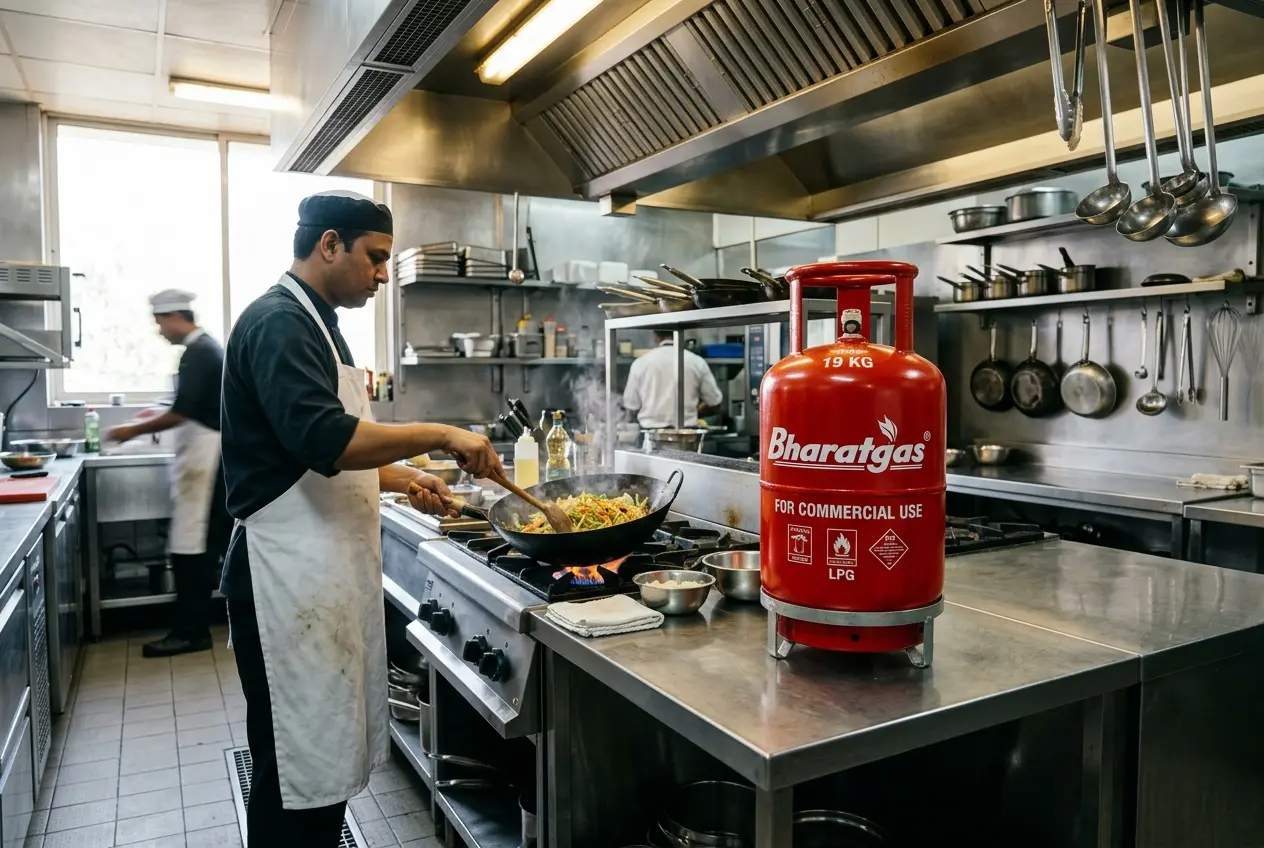
Oil marketing companies cut the price of a 19-kg commercial LPG cylinder by Rs 192 to Rs 209 from August 1, 2026, the second straight monthly reduction. In Delhi the cylinder now costs Rs 2,738; in Kolkata it stands at Rs 2,872.50.
Domestic 14.2-kg cylinders saw no change. The move trims a major input cost for restaurants, hotels and caterers after a brutal spring of hikes tied to West Asia supply shocks.
New Rates Across the Four Metros
Multiple outlets including The Hindu and price trackers confirmed the fresh schedule effective Saturday. Mumbai dropped Rs 194 to Rs 2,691.50. Chennai fell Rs 200 to Rs 2,906.
| City | New 19-kg Price (Rs) | Cut (Rs) |
|---|---|---|
| Delhi | 2,738 | 192 |
| Kolkata | 2,872.50 | 209 |
| Mumbai | 2,691.50 | 194 |
| Chennai | 2,906 | 200 |
The 5-kg free-trade LPG cylinder, used heavily by migrant workers and small vendors, also eased by about Rs 46.50 to Rs 762 in Delhi.
Two Cuts After the Spring Spike
July 1 brought the first 2026 reduction of roughly Rs 183.50, taking Delhi from Rs 3,113.50 to Rs 2,930. The August step adds another roughly Rs 190-210 layer.
Together the two cuts total about Rs 380 per cylinder. That still leaves prices far above the start of the year.
- January 1, 2026: Delhi commercial 19-kg at Rs 1,691.50 after a Rs 111 rise.
- March-April 2026: Successive jumps, including Rs 195.50 in April, pushed rates toward Rs 2,000-plus.
- May 1, 2026: Sharp surge of nearly Rs 1,000 in some reports as West Asia tensions peaked, Delhi near Rs 3,071.50.
- June 1, 2026: Further Rs 42 lift to Rs 3,113.50 in Delhi.
- July 1 and August 1, 2026: Back-to-back cuts totaling roughly Rs 380 as tensions eased and crude retreated.
The Indian Oil historical 19 kg price table shows the full arc from under Rs 1,700 early in the year to the June peak above Rs 3,100 before the recent retreat.
Restaurants and Hotels Feel It First
Commercial LPG is a core operating cost for eateries, dhabas, catering kitchens, hotels and many small food businesses. Fuel can run 10-15 percent or more of expenses in high-volume kitchens.
- Full-service restaurants and hotel kitchens that burn multiple cylinders daily gain the clearest cash-flow breather.
- Caterers and outdoor event cooks who buy in volume see immediate working-capital relief.
- Street-side and small dhabas, often cash-tight, get a smaller absolute saving but one that matters at thin margins.
- Industrial users of bulk or packed commercial LPG share the same monthly revision schedule.
Earlier in the crisis, industry voices warned that supply shortfalls forced some hotels and restaurants to cut hours or shut temporarily. The price path compounded that pressure.
Domestic Prices Stay Frozen
Households using the standard 14.2-kg subsidized cylinder saw zero movement on August 1. Delhi domestic remains near Rs 942, Mumbai Rs 941.50, with similar stability elsewhere since the June adjustment.
Government and OMCs have long treated domestic LPG as a protected consumer item. Commercial product, by contrast, follows international benchmarks more closely through monthly reviews.
A PIB note from the height of the West Asia disruption spelled out the distinction: OMCs apply calibrated commercial LPG revisions policy aligned with global trends for industrial and premium segments while holding retail pump prices and domestic cylinders steady.
Why Commercial Moves When Domestic Does Not
Commercial rates track Saudi contract and import-parity signals plus rupee and freight costs. When the Strait of Hormuz risk premium faded and crude fell from triple-digit spikes toward the mid-70s, the monthly formula allowed the two cuts.
Domestic pricing stays under tighter political and subsidy management. That shield protected households through the crisis but left commercial users fully exposed to the spike and only partially compensated on the way down.
Parallel policy pushed PNG connections and incentives for commercial kitchens as a longer-term exit from cylinder dependence. States that advanced piped-gas reforms received extra commercial LPG allocation during the shortage months.
The Net Math Still Looks Steep
Even after the two cuts, a Delhi commercial cylinder sits roughly Rs 1,000 above its January level. Cumulative spring hikes exceeded Rs 1,300 before the partial reversal.
Key snapshot:
- ~Rs 380 total relief from the July and August cuts combined.
- ~Rs 1,000+ still higher than early-2026 starting point in major cities.
- Zero change for the 14.2-kg domestic cylinder on August 1.
- ~Rs 46.50 drop for the 5-kg FTL cylinder in Delhi.
On X, several posts noted the same arithmetic. One widely shared line ran: “₹209 cut on commercial LPG. Restaurant owners will save money. Will your thali price drop? History says no.” Another observed that owners raised menu prices quickly on the way up and rarely reverse them.
That second-order effect is the live question for diners. Lower fuel bills improve kitchen margins. Whether those savings appear on the plate depends on competition, labor costs, and how much of the earlier spike was already baked into prices. Past fuel cycles suggest limited and slow pass-through.
Broader business costs remain in focus. Strong July GST collections topping Rs 2.11 lakh crore signal resilient formal activity, yet many small eateries still watch every input. Operators opening new outlets also need to mind the practical side of fuel storage and safety; overlooked physical details that can sink a new eatery include cylinder placement, ventilation and compliance that add both cost and risk.
For now the August revision is a tangible, if incomplete, breather for commercial kitchens. The larger price level and the frozen domestic schedule show how differently the two LPG markets are managed.
Frequently Asked Questions
What is the difference between commercial and domestic LPG cylinders in India?
Domestic cylinders are the common 14.2-kg size sold mainly to households, often with subsidy elements and tighter price controls. Commercial 19-kg cylinders serve restaurants, hotels, industry and bulk users and follow monthly market-linked revisions more directly.
How often do oil companies revise commercial LPG prices?
State-run OMCs typically reset commercial LPG rates on the first of each month based on international benchmarks, exchange rates and freight. Domestic rates change far less frequently and are held steady for longer stretches.
Why did commercial LPG prices rise so sharply earlier in 2026?
Geopolitical conflict in West Asia disrupted shipping through key chokepoints, tightened global LPG availability and pushed crude higher. OMCs passed those costs through successive commercial hikes that totaled well over Rs 1,300 per cylinder before the recent easing.
Did the August 2026 cut affect the 5-kg free-trade LPG cylinder?
Yes. The 5-kg FTL cylinder, popular with migrant workers and very small vendors, fell by roughly Rs 46.50 in Delhi to about Rs 762, adding a second layer of relief beyond the 19-kg commercial cut.

-
 TECH1 year ago
Where Garmin Watches are Made and How They are Assembled
-

 AUTO2 months ago
Tesla’s Roadster Is ‘a Few Weeks Away,’ Says Its Chief Designer
-
 NEWS10 years ago
Samsung Releases Galaxy Note7 TV Ad as Reddit AMA Leaks Specs
-
 NEWS10 years ago
Android 7.0 Nougat Rolls Out To Nexus Devices With New Emoji, Features
-
 FINANCE9 years ago
Cardano Price Surges as ADA Enters the Crypto Top Ten List
-
 NEWS10 years ago
Pre-Order the First Camera Made for Facebook Live Streaming Video
-
 FINANCE1 year ago
Binance Suspends Trading and Withdrawals for a System Upgrade
-
 FINANCE9 years ago
RChain Price Jumps Nearly 150% to a New All-Time High of $2.03