NEWS
Adobe Foundry and Topaz Hand Brands the Full Stack
Firefly Foundry brand models plus Topaz enhancement give enterprises certified generation and quality at scale.

Adobe sealed a definitive agreement to acquire Topaz Labs in June 2026 and already cleared its biggest U.S. antitrust wait. Paired with Firefly Foundry, the move gives large brands certified generation and automated quality inside one stack. Pure generative platforms and stand-alone enhancers now face a taller procurement filter.
Shares jumped nearly 6 percent on the FTC news. The close is still set for the second half of 2026. What changes for buyers is the end-to-end path from brand-trained draft to polished delivery.
Brand Models Move Inside the Adobe Stack
Firefly Foundry launched at Adobe MAX on October 28, 2025. Adobe works side-by-side with the customer. Applied AI scientists and forward-deployed engineers assess workflows, train on full catalogs of company IP, validate against brand rules, and deploy the finished models.
The models cover image, video, audio, vector and 3D. They surface inside GenStudio, Creative Cloud, the Firefly app and Express. Customers keep ownership of their data and the outputs. Qualifying enterprise plans add IP indemnification on commercially safe base models.
Hannah Elsakr, vice president of GenAI New Business Ventures, said businesses gain Adobe’s training infrastructure and research so they can define bespoke models for GenStudio and Creative Cloud. An Adobe study cited at launch found marketers expect content demand to rise more than five times over two years.
Foundry goes deeper than earlier Custom Models. Custom Models let teams fine-tune on style or subject with their own images. Foundry builds unique multimodal models with Adobe experts and co-designs the surrounding workflows.
| Dimension | Custom Models | Firefly Foundry |
|---|---|---|
| Training approach | Fine-tune on style or subject | Unique multimodal models with Adobe experts |
| Asset coverage | Customer images for style or subject | Image, video, audio, vector and 3D catalogs |
| Adobe role | Self-serve fine-tuning | Applied scientists and forward-deployed engineers |
| Workflow scope | Output inside existing tools | Co-designed workflows plus stack deployment |
Walt Disney Imagineering is an early cited partner. Its Research & Development unit trains models on franchise assets such as Frozen, Cars and Lilo & Stitch to speed concept art and 3D prototypes for parks. That sets a visible bar for co-innovation depth.
Topaz Supplies the Quality Pass at Volume
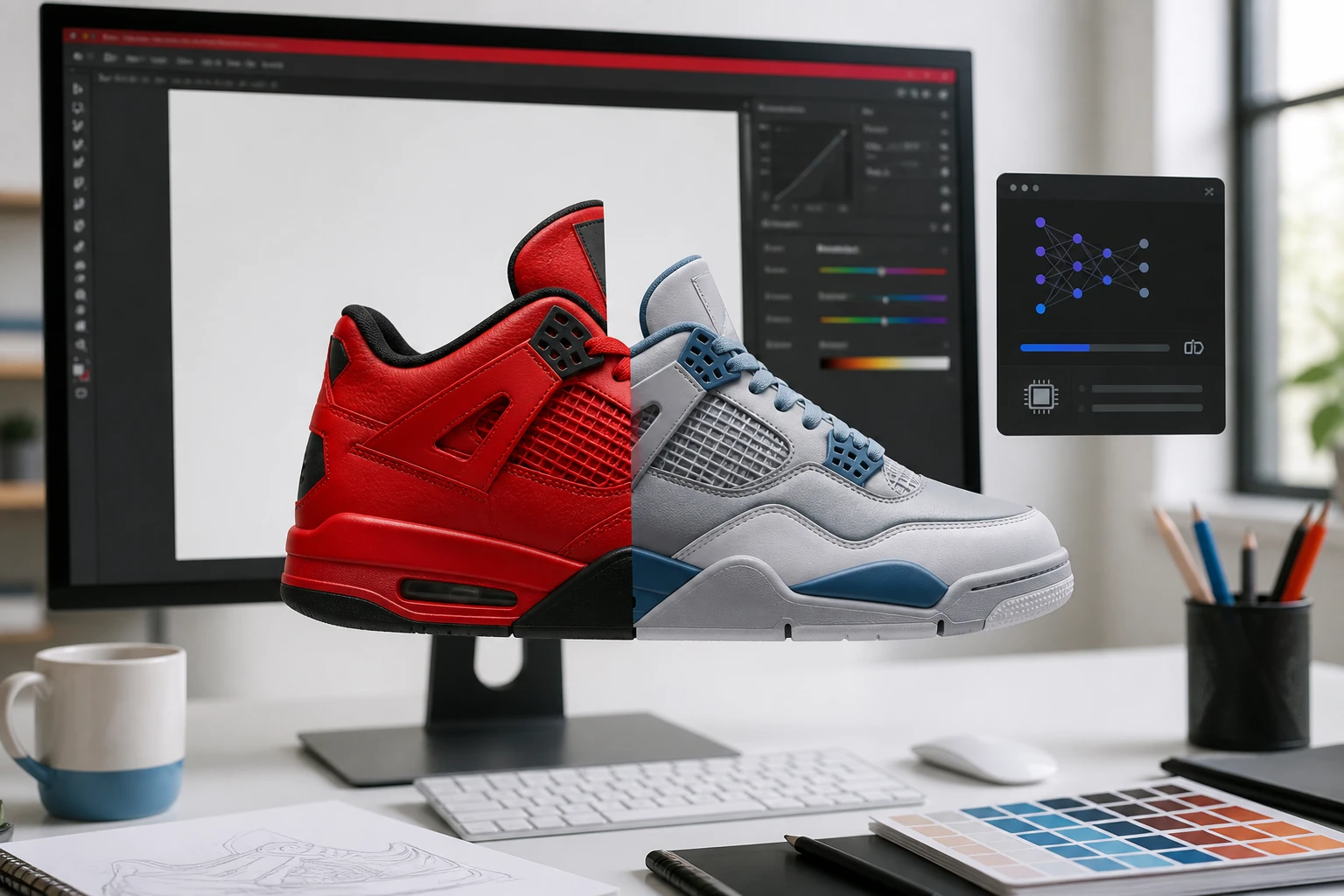
Topaz Labs built its name on AI upscaling, sharpening, noise reduction, frame interpolation and restoration. Its tools already reach millions of customers, including 20 of the world’s 50 largest companies, and carry an Emmy for video technology.
The June 25 announcement folds those models plus Neurostream on-device inference into Adobe Firefly, Firefly Services and Creative Cloud apps such as Photoshop, Lightroom and Premiere. Stand-alone Topaz products stay available on the company’s site. CEO Eric Yang will keep leading the team after close.
Creators are creating more content by mixing captured and generated images and video, and with Topaz Labs we will give every creator the quality and control to easily produce that content at higher quality and resolution.
David Wadhwani, president of Adobe’s Creativity and Productivity Business, made that case in the release. For high-volume e-commerce or archive teams the value is automated quality assurance. Low-resolution product shots or degraded footage can be cleaned and upscaled inside the same pipeline that generates new brand-safe variants.
- Upscaling for low-resolution source stills and frames
- Sharpening and noise reduction for mixed capture-and-AI footage
- Frame interpolation to smooth motion in generated or restored video
- Restoration for archive material that must re-enter modern campaigns
- Neurostream on-device inference for local performance inside desktop apps
Creators on X flagged the quality-pass angle fast. Generation draws the headlines. Professional value often sits in the final enhancement step that makes hybrid footage look finished. Keeping Topaz tools stand-alone for now softens immediate disruption while the native path into Firefly Services takes shape.
FTC Clearance Shortens the Path
On July 28, 2026 the commission granted an FTC early termination notice for the deal (transaction 20261815, Adobe Inc. acquiring Topaz Labs, Inc. from Eric Yang). News of the notice hit the next session and lifted Adobe shares nearly 6 percent.
Early termination removed the main U.S. waiting-period risk. The second-half 2026 close timeline remains subject to remaining conditions. Investors read the clearance as a shortened route to integration of enhancement models inside the apps creators already open every day.
A Market Compounding Above 31 Percent
SNS Insider projects the global content intelligence market to 39.88 billion by 2035, up from $2.65 billion in 2025, a compound annual growth rate of 31.15 percent. Large enterprises held 68 percent of 2025 revenue. Media and entertainment led end-use segments at 25 percent. North America accounted for roughly 40 percent.
| Metric | Value |
|---|---|
| 2025 market size | $2.65 billion |
| 2035 projected size | $39.88 billion |
| CAGR 2026-2035 | 31.15% |
| Large enterprise share 2025 | 68% |
| Media & entertainment share 2025 | 25% |
| North America share 2025 | ~40% |
Adobe already spans creation, management and delivery. Foundry supplies the brand-specific generation layer. Topaz supplies the remediation and quality layer. Earlier moves such as the 2023 Rephrase.ai video acquisition fill generative gaps. Each piece makes the integrated argument harder for point solutions to match.
The 68 percent large-enterprise share lines up with Foundry’s hands-on delivery model. Media and entertainment at 25 percent maps to Topaz’s Emmy-recognized video work and to Premiere as a destination. A market compounding above 31 percent rewards vendors that own more of the lifecycle.
Who Gains and Who Faces the Higher Bar
Brand legal and creative operations teams are quiet winners. A custom Firefly model trained on approved palettes, typography and product imagery shrinks the review cycle. Assets leave the generator closer to approval-ready. That is compliance infrastructure as much as creative tooling.
The same stack pressures pure generative platforms that lack indemnification, brand governance and the surrounding Creative Cloud workflow. Procurement teams already weigh EU AI Act compliance baked into image tools and similar safety claims. Adobe’s commercially safe positioning plus contractual IP indemnity for enterprise customers meets that checklist in one vendor conversation.
- Cycle-time cut: brand-trained models reduce legal and brand review loops
- Volume handling: automated enhancement supports thousands of SKUs or archive frames
- Switch friction: proprietary models and integrated pipelines raise the cost of leaving Adobe
- Procurement filter: commercial safety and indemnity become table stakes
Stand-alone enhancement tools face a mirror problem. They may match Topaz on a technical benchmark yet lack a native path from a brand-certified generator. Users who start inside Foundry-trained surfaces meet less friction if the quality pass is already wired into Photoshop, Lightroom, Premiere and Firefly Services after the deal closes.
Point tools can still win a single step. They struggle when procurement scores indemnification, brand governance, desktop integration and automated quality in one pass.
Generation and Enhancement Share One Pipeline
Firefly Foundry models trained on brand IP cut the distance between a prompt and an approval-ready draft. Enhancement models then raise resolution, clean noise and restore archive frames so the draft can ship across channels that demand polish.
Mixed capture-and-AI work makes that handoff routine. A team may generate product variants from a Foundry model, drop in real photography, then run the composite through Topaz-style upscaling and sharpening before it reaches the storefront. When both steps live inside Firefly Services and Creative Cloud, the file never leaves the governed environment.
High-volume e-commerce illustrates the loop cleanly. Thousands of SKUs need on-brand images at consistent quality. Foundry supplies the brand layer. Automated enhancement supplies the quality floor. Archive teams run a parallel version when they revive degraded footage for new campaigns. Neurostream keeps parts of that quality pass local on the machine creators already use, while Firefly Services can absorb batch work that exceeds local capacity.
Talent Markers and the Timeline Ahead
Adobe ranks No. 192 on the Fortune 500 and No. 9 on America’s Most Innovative Companies list. It also placed seventh among the best large workplaces in the Bay Area for 2026. Those rankings matter for retaining the AI researchers and engineers who keep Foundry and the Topaz integration moving.
- October 28, 2025: Firefly Foundry announced at Adobe MAX with multimodal brand models and expert co-innovation
- June 25, 2026: definitive agreement to acquire Topaz Labs for enhancement models and on-device Neurostream
- July 28, 2026: FTC grants early termination of the U.S. waiting period
- Second half 2026: expected close of the Topaz transaction subject to remaining conditions
Operators should watch three concrete signals. How quickly Foundry moves from early co-innovation projects such as Disney Imagineering to broad general availability for enterprise accounts. Measurable throughput gains once Topaz models land inside Firefly Services and the desktop apps. Whether licensing for model training sits inside existing enterprise tiers or becomes an incremental line item as brand model counts grow.
Adobe is no longer only selling seats in a creative suite. It is selling the configuration layer, the quality layer and the governance layer that large content operations need when generative AI becomes the default production path. Brands that train early will find the models hard to leave. Competitors without the full stack will find the bar higher than a better prompt.
Frequently Asked Questions
What asset types can Firefly Foundry models cover?
Foundry models support image, video, audio, vector and 3D. Adobe trains them on a customer’s full brand catalogs and surfaces them across GenStudio, Creative Cloud, the Firefly app and Express so teams can generate multimodal outputs that stay on-brand.
Do customers own the data and outputs from Firefly Foundry?
Yes. Adobe states that customers keep full ownership of their data and the outputs. Qualifying enterprise plans also include IP indemnification built on commercially safe Firefly base models, giving legal teams a contractual backstop in a single vendor agreement.
Will Topaz products stay available after Adobe closes the deal?
Yes. Adobe has said stand-alone Topaz products will remain available on the Topaz Labs website after the transaction closes. Existing customers can expect continued support while the models also integrate into Firefly, Firefly Services and Creative Cloud apps.
How large is the content intelligence market Adobe is targeting?
SNS Insider valued the market at $2.65 billion in 2025 and projects $39.88 billion by 2035 at a 31.15 percent CAGR. Large enterprises held 68 percent of 2025 revenue and media and entertainment led end-use at 25 percent.
How does Firefly Foundry differ from Adobe Custom Models?
Custom Models are a self-serve fine-tune on style or subject using customer images. Foundry pairs Adobe applied AI scientists and forward-deployed engineers with the customer to train unique multimodal models on entire IP catalogs and to co-design the surrounding production workflows before deployment into the Adobe stack.

-
 TECH1 year ago
Where Garmin Watches are Made and How They are Assembled
-

 AUTO2 months ago
Tesla’s Roadster Is ‘a Few Weeks Away,’ Says Its Chief Designer
-
 NEWS10 years ago
Samsung Releases Galaxy Note7 TV Ad as Reddit AMA Leaks Specs
-
 NEWS10 years ago
Android 7.0 Nougat Rolls Out To Nexus Devices With New Emoji, Features
-
 FINANCE9 years ago
Cardano Price Surges as ADA Enters the Crypto Top Ten List
-
 NEWS10 years ago
Pre-Order the First Camera Made for Facebook Live Streaming Video
-
 FINANCE1 year ago
Binance Suspends Trading and Withdrawals for a System Upgrade
-
 FINANCE9 years ago
RChain Price Jumps Nearly 150% to a New All-Time High of $2.03