
NEWS
Xiaomi 18 Ultra Rumor Shows Why AI Beats Camera Excess

The Xiaomi 18 Ultra cancellation rumor should be treated as unconfirmed: Xiaomi has not announced the phone, and the company has not confirmed any halt. The reason the report still matters is that Xiaomi’s own numbers show a tougher flagship equation, with smartphone revenue at RMB44.3 billion in Q1 and memory costs hitting Android makers at the same time, according to Xiaomi’s Q1 results announcement.
That makes the rumor more useful as a stress test than as a settled product fact. If the Xiaomi 18 Ultra disappears, the decision would fit a pattern already visible in Xiaomi’s disclosures: less patience for costly camera theater, more money moving into artificial intelligence (AI, software that can generate, automate and interpret tasks), software, in-house tools and connected devices.
The Cancellation Claim Needs a Careful Label
Phone leaks age badly, and Xiaomi’s flagship calendar has become harder to read since the company began using phones, electric vehicles, home devices and AI models as one joined product story. The safest label for the current claim is paused or unconfirmed, not dead. A canceled device can return with a new name, a delayed device can look canceled for months, and a component project can vanish while the main phone survives.
| Model or Signal | Status | Camera Emphasis | Strategic Read |
|---|---|---|---|
| Xiaomi 15 Ultra | Official global product | One inch main sensor and 200MP ultra telephoto listed in the Xiaomi 15 Ultra camera specifications | The old Ultra formula sold imaging ambition first |
| Xiaomi 17 Max | Confirmed in Xiaomi financial materials | Leica 200MP main camera, large display and 8,000mAh battery | The flagship halo can move to screen, battery and daily endurance |
| Reported Xiaomi 18 Ultra question | Unconfirmed industry leak | No official Xiaomi specification | The rumor tests whether Ultra-grade costs still earn their slot |
The distinction matters because enthusiasts hear cancellation and think retreat. Product planners hear allocation. The company can still ship a premium phone while cutting the riskiest part of the bill of materials.
The Ultra Line Was Xiaomi’s Camera Laboratory
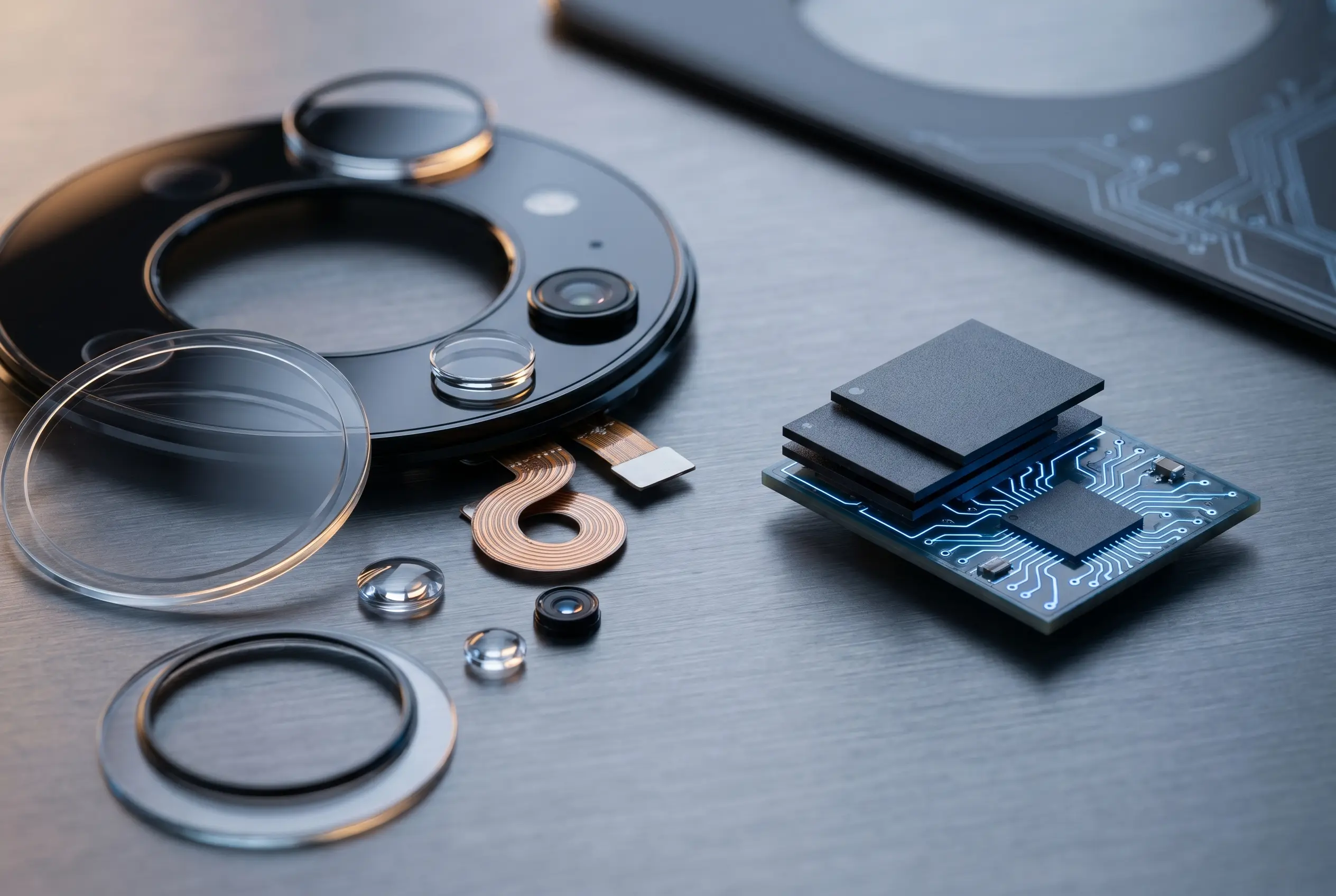
For several generations, the Ultra badge gave Xiaomi a simple job: prove it could build a camera phone that belonged in the same conversation as Apple, Samsung and Vivo’s best devices. That meant big sensors, Leica branding, long telephoto reach, camera grips and a rear module that looked closer to a compact camera than a normal handset.
Leica Camera AG, the German optics company, described its Xiaomi partnership as ongoing since 2022 and said the 15 Ultra used a Leica quad camera system covering 14mm to 200mm focal lengths in a Leica Xiaomi 15 Series press release. That kind of specification is the point of an Ultra. It gives reviewers a headline feature, gives stores a hero display unit and gives fans a reason to pay more than the base model.
The problem is that the lab model gets expensive when every competitor can say AI, computational photography and local assistants in the same breath. A 200MP sensor remains visible. A better assistant, faster image pipeline or smarter search layer may touch more users every day.
The Market Is Punishing Hardware Excess
Xiaomi’s phone business still has scale. It also has less room for waste. In the first quarter, the company said smartphone shipments reached 33.8 million units, smartphone revenue reached RMB44.3 billion, and smartphone gross margin was 10.1%. Average selling price (ASP, revenue divided by unit shipments) rose 8.2% year over year to a record RMB1,310.
- 33.8 million phones shipped by Xiaomi in Q1, enough for a top three global slot.
- 10.1% gross margin in smartphones, a thin cushion for exotic camera hardware.
- 23.5% premium mix in mainland China, using Xiaomi’s threshold of RMB3,000 and above.
IDC’s smartphone tracker puts the pressure in sharper terms. Global smartphone shipments fell 2.9% year over year to 293.8 million units in Q1, while Xiaomi shipped 33.8 million phones for 11.5% share and posted the steepest decline among the top five vendors, according to IDC’s Q1 smartphone market data. Samsung and Apple grew because premium buyers tolerate prices better. Xiaomi has to protect premium gains without losing the value base that made it large.
Memory Prices Turn Specs Into Margin Risk
The nastiest cost pressure is not the camera ring. It is memory. Dynamic random access memory (DRAM, the short-term chip memory a phone uses to keep apps and AI features running) has become a product-planning constraint. Low Power Double Data Rate 5X (LPDDR5X, the DRAM class used in many high-end phones) matters even more when on-device AI is part of the sales pitch.
TrendForce, the semiconductor research firm, said mobile DRAM contract prices continued rising in 2Q26 and estimated LPDDR4X prices would jump at least 70% to 75% quarter over quarter, with LPDDR5X up 78% to 83%. It also said 12GB is becoming the mainstream high-end configuration while 16GB adoption declines, according to TrendForce’s mobile DRAM pricing report.
- Fewer niche camera modules lower sourcing risk when memory is already inflating the bill.
- More shared parts across standard, Pro and large-screen models make production easier to adjust.
- Software features can reach older and cheaper devices faster than a custom optical stack.
That is why cost discipline has become a product feature. A flagship that looks slightly less wild on paper can still be a better business if it ships on time, holds margin and lets Xiaomi reuse its best software work across more models.
AI Gives Xiaomi a Different Flagship Story
Xiaomi does not have to abandon premium phones to make this turn. It can change the proof point. The company said research and development (R&D, spending on product and core technology work) rose 33.4% year over year to RMB9.0 billion in Q1, while R&D staff reached 26,048. It also said AI capabilities are being used to support its Human × Car × Home device strategy.
That strategy is no longer vague branding. Xiaomi’s MiMo API platform says the MiMo V2.5 series was open-sourced under the MIT license, supports commercial inference deployment and includes models with a 1-million-token context window. The same Xiaomi MiMo V2.5 open-source announcement says the Pro model is designed for agent and coding applications, while the standard model supports text, image, video and audio understanding.
The phone angle is plain. Better AI can improve search, voice, camera selection, translation, app actions, smart home control and car handoff without requiring every buyer to purchase the most expensive camera unit.
That does not make optical hardware irrelevant. It changes the order of the pitch. The camera becomes one part of the premium phone, not the whole argument for the product.
The Pro Model Becomes the Pressure Point
If the Ultra slot goes quiet, Xiaomi’s Pro model has to carry more weight. It would need enough camera hardware to reassure enthusiasts, enough AI hardware to justify the new pitch and enough battery or display advantage to feel meaningfully above the standard phone. That is a harder job than simply sitting below an Ultra monster.
The clean route is to move selected camera pieces down while avoiding the full specialty build. Xiaomi already showed the broad version of that play with 17 Max in its Q1 materials: a large-screen flagship with Leica’s 200MP main camera, a 6.9-inch HyperRGB display and an 8,000mAh battery. That sounds less like a pure camera phone and more like a daily flagship with one very strong imaging claim.
For buyers, the Pro model has to inherit the halo without inheriting every cost. For Xiaomi, the gain would be a tighter product ladder, fewer expensive one-off parts and a cleaner AI story across phones, cars and home devices.
If the cancellation claim fades, Xiaomi still faces the same memory math and the same premium-market pressure. If the claim holds, the missing Ultra will mark the moment when the camera arms race became too expensive to lead every cycle.

-
 TECH1 year ago
Where Garmin Watches are Made and How They are Assembled
-

 AUTO3 months ago
Tesla’s Roadster Is ‘a Few Weeks Away,’ Says Its Chief Designer
-
 NEWS10 years ago
Samsung Releases Galaxy Note7 TV Ad as Reddit AMA Leaks Specs
-
 NEWS10 years ago
Android 7.0 Nougat Rolls Out To Nexus Devices With New Emoji, Features
-
 FINANCE9 years ago
Cardano Price Surges as ADA Enters the Crypto Top Ten List
-
 NEWS10 years ago
Pre-Order the First Camera Made for Facebook Live Streaming Video
-
 FINANCE1 year ago
Binance Suspends Trading and Withdrawals for a System Upgrade
-
 FINANCE9 years ago
RChain Price Jumps Nearly 150% to a New All-Time High of $2.03