
NEWS
United Rentals Tests AI Stickiness With ChatGPT Agent

United Rentals’ ChatGPT integration gives customers a conversational way to describe jobsite needs and receive equipment recommendations from the company’s fleet knowledge. The investor question is narrower: whether artificial intelligence (AI, software that can generate and reason over text and data) moves customers into owned rental workflows, where repeat orders, telematics, billing and service data can add switching cost.
The May 19, 2026 launch puts the tool inside a channel customers already use to plan work. It is a distribution move rather than a new profit center by itself; the measure that matters is whether a planning query becomes a reservation, a managed account or a specialty rental conversation.
The ChatGPT Door Opens Earlier in the Rental Funnel
The company said the Equipment Agent launch in ChatGPT makes the tool the first equipment rental application available in the ChatGPT store. The assistant had already gone live on unitedrentals.com earlier in the year, using plain-language prompts to narrow equipment choices for complicated jobsites, quick-turn maintenance work and customers who may not know the exact machine class they need.
That matters because the rental decision often starts before procurement sees a purchase order. A project manager may know the lift height, surface, load and access limits, but not whether the right answer is a scissor lift, boom lift or telehandler. The agent sits at that messy first question, then points the user toward product pages and, if the workflow is working, a rental path.
Customers using the Equipment Agent are seeing a 70% improvement in finding the right equipment for their projects.
Tony Leopold, senior vice president and chief technology and strategy officer at United Rentals, gave that measure in the original Equipment Agent announcement on March 12, 2026. The number is useful, but only as an early funnel metric. Faster discovery helps. It does not prove that a customer will rent more, rent longer or stay with the same supplier when rates tighten.

The Stickiness Test Starts After the Recommendation
For URI (the company’s New York Stock Exchange ticker) shareholders, stickiness means more than a clever prompt. The durable value begins after the recommendation, when a customer logs in, checks availability, reserves a machine, attaches the rental to a job code, asks for pickup, receives status alerts or manages invoices through the company’s owned tools.
- Discovery to order – a user moves from equipment advice to a cart, quote or branch contact.
- Order to account – the jobsite need gets tied to a customer profile, project, purchase order or billing workflow.
- Account to management – the rental then lives in Total Control, telematics, notifications and service records.
- Management to repeat demand – the next shutdown, outage or construction phase starts from that history, not from a fresh vendor search.
The company’s Total Control fleet and worksite management platform is the harder piece for rivals to copy. It handles equipment status, jobsite allocation, invoice viewing, lien release management, purchase order tracking, consolidated billing, telematics and alerts. A generic chat assistant can recommend a boom lift; an account workflow can make it inconvenient to move the whole job to another rental house.
The ChatGPT channel becomes valuable if it lowers the cost of entering that owned workflow. Without that handoff, the agent is closer to a smart catalog search than a lock-in tool.
Digital Scale Gives the Agent a Bigger Landing Pad
The reason this launch deserves more than a short product brief is the size of the landing pad behind it. In the first quarter investor presentation, the company said its website had 22 million sessions in 2025, 78% of revenue used digital, and 9.8 million customer notifications were sent. Those are not software company numbers; they are proof that digital touchpoints already sit inside a heavy-asset business.
- 22 million sessions in 2025 on unitedrentals.com, showing the web channel already catches high-volume rental research.
- 78% of revenue used digital, which means the tools are touching active business rather than sitting on the side.
- 9.8 million customer notifications went out, giving the company repeated contact points after a rental begins.
Scale also matters because the fleet is physical. The same presentation lists about $23 billion of fleet size based on average original equipment at cost (OEC, the purchase-price base used to size a rental fleet) and about 1 million units. A chat answer that cannot see availability, location, delivery timing or branch support is thin; a recommendation tied to that base can become operationally useful.
The AI Stack Is Broader Than One Chatbot
The ChatGPT addition fits a wider pattern. Management has been trying to pull equipment selection, jobsite visibility, service and repair knowledge into digital channels that customers and employees already use. The rental giant’s advantage comes from the mix of branch reach, fleet data and account processes around a job.
| Digital Touchpoint | Customer Moment | Stickiness Signal |
|---|---|---|
| ChatGPT recommendation agent | Planning and specification | Captures the first question before a quote, especially for unfamiliar equipment classes. |
| Total Control | Active rental management | Keeps equipment status, billing, purchase orders, telematics and alerts in the customer’s daily workflow. |
| Procore Technologies integration, construction project software | Project resource management | Brings rented equipment records into Procore Resource Management for shared customers. |
| Manual Assist AI | Service and maintenance | Gives technicians diagnostics and access to manufacturer manuals, which can shorten downtime. |
The February Procore telematics integration shows the same distribution logic as ChatGPT: meet customers where work is already being managed. The December Manual Assist AI rollout with Amazon Web Services points inward, giving more than 4,000 monthly service users diagnostics and access to thousands of manufacturer manuals.
For investors, the strongest version of this strategy is a loop. Better recommendation improves order accuracy; better telematics improves on-rent management; faster service improves availability; availability improves the odds that the next order starts with the same provider.
The Margin Question Sits Beneath the AI Story
The risk is that investors overpay for the AI story and underweight the machine economics. URI raised its 2026 revenue outlook to $16.9 billion to $17.4 billion and projected adjusted earnings before interest, taxes, depreciation and amortization (adjusted EBITDA, a non-GAAP profit measure) of $7.625 billion to $7.875 billion. Those are large numbers, but the same outlook calls for net rental capital expenditures of $2.95 billion to $3.35 billion after gross purchases of $4.4 billion to $4.8 billion.
That is why a faster equipment recommendation changes the story only if it improves utilization, rate discipline, mix or operating cost. In the first quarter results release, rental revenue rose 8.7% to $3.419 billion, while average OEC increased 5.7% and fleet productivity increased 2.3%. The company also recorded a $45 million restructuring charge tied mainly to branch consolidations and cost reductions.
Specialty is the swing factor. The same release reported 13.8% growth in specialty rental revenue, but specialty rental gross margin fell 170 basis points because of higher depreciation, delivery costs and revenue mix. That is the hidden cost side of a one stop shop strategy: more complex projects can deepen the relationship, but they can also carry heavier support costs.
AI can help by reducing wrong-fit rentals, speeding service answers and routing customers to higher-value categories. It cannot repeal the capital cycle. A rental provider still earns its return by buying fleet well, keeping it busy, servicing it cheaply and selling it at a decent residual value.
A Useful Tool Still Has to Beat the Phone Call
The phone call remains the benchmark because rental is filled with edge cases. Ground conditions, lift height, load weight, power availability, access windows and local delivery capacity can change the right answer. A chat tool can collect the first draft of that problem. Branch teams still have to make sure the recommendation fits the site and the schedule.
That is why the customer-stickiness claim should be judged by behavior, not novelty. Look for evidence that AI-assisted discovery is tied to logged-in accounts, reservation conversion, specialty cross-selling, fewer service issues or higher digital usage. A launch headline can show ambition; repeated workflow data would show habit. The case is strongest where the company already has density: 2025 rental revenue was split between 48% industrial and other customers, 48% non-residential construction and 4% residential construction, and the first two groups care about uptime, documentation, purchase orders and quick support as much as price.
If URI can tie ChatGPT discovery to account workflows, fleet availability and branch response, the agent can thicken a relationship that already runs through invoices and jobsites. If it stays a smart catalog front end, investors should treat it as marketing gloss on a business still driven by utilization, rates and capital discipline.
Disclaimer: This article is for informational purposes only and does not offer investment advice. Equipment rental stocks can be affected by construction demand, interest rates, debt, fleet values and company execution. Consult a qualified financial adviser before making investment decisions. Figures are accurate as of publication on June 1, 2026.

-
 TECH1 year ago
Where Garmin Watches are Made and How They are Assembled
-

 AUTO3 months ago
Tesla’s Roadster Is ‘a Few Weeks Away,’ Says Its Chief Designer
-
 NEWS10 years ago
Samsung Releases Galaxy Note7 TV Ad as Reddit AMA Leaks Specs
-
 NEWS10 years ago
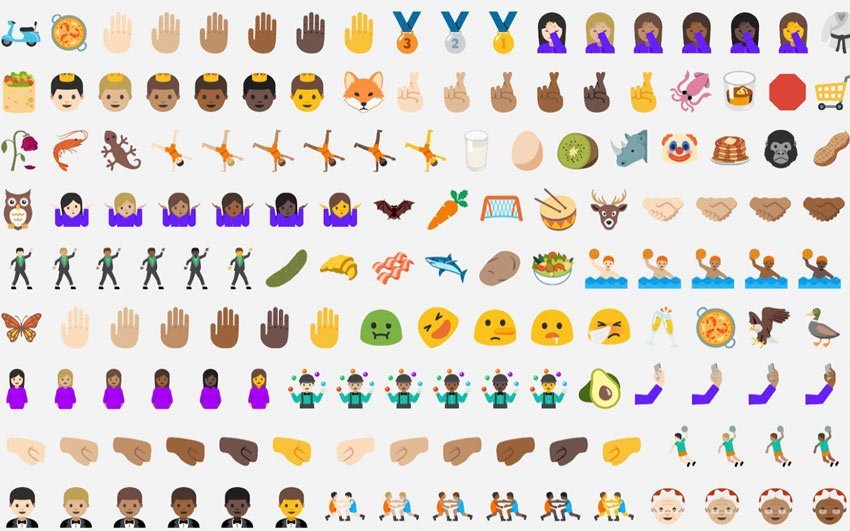
Android 7.0 Nougat Rolls Out To Nexus Devices With New Emoji, Features
-
 FINANCE9 years ago
Cardano Price Surges as ADA Enters the Crypto Top Ten List
-
 NEWS10 years ago
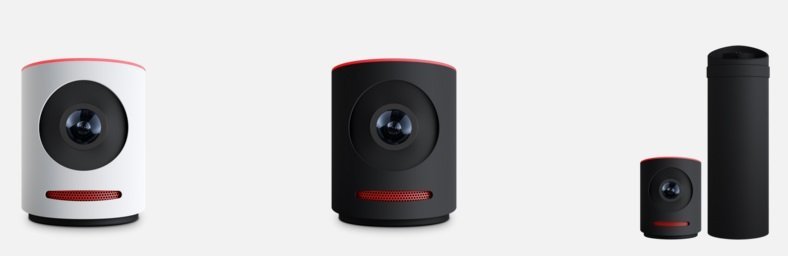
Pre-Order the First Camera Made for Facebook Live Streaming Video
-
 FINANCE1 year ago
Binance Suspends Trading and Withdrawals for a System Upgrade
-
 FINANCE9 years ago
RChain Price Jumps Nearly 150% to a New All-Time High of $2.03