
GAMING
Sony to Pay $7.85M PSN Settlement After Court Greenlights Refund Plan

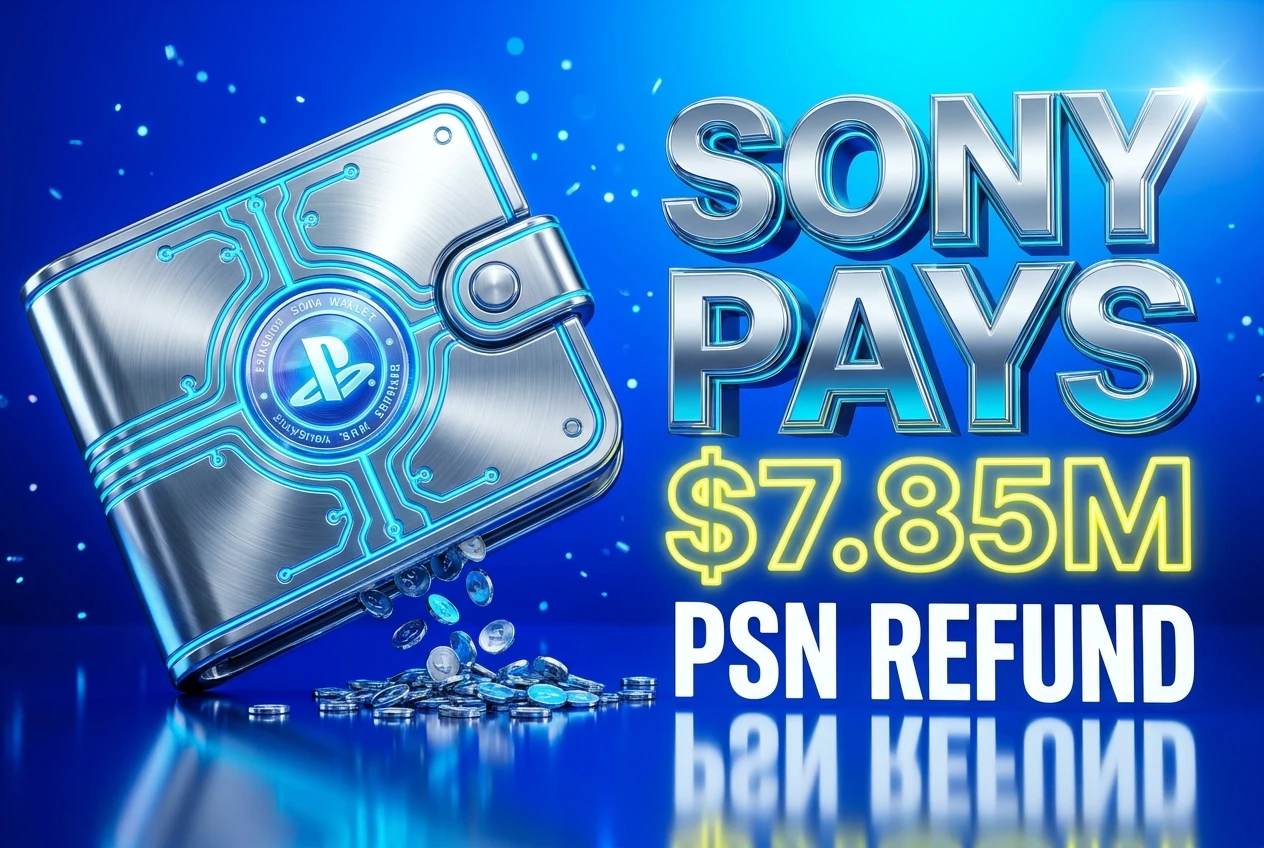
Sony Interactive Entertainment will pay $7.85 million in account credits to roughly 4.4 million US PlayStation Network users to settle a five-year antitrust class action over digital game pricing on the PlayStation Store. Judge Araceli Martínez-Olguín granted preliminary approval to the deal on April 8, 2026, in the Northern District of California, with a final fairness hearing set for October 15, 2026. Eligible buyers will receive automatic PSN wallet credits, not cash refunds, and the average per-account payout works out to roughly the price of a cup of coffee.
The settlement closes the federal chapter of Caccuri, et al. v. Sony Interactive Entertainment LLC, Civil Action No. 21-cv-03361-AMO, but it leaves Sony exposed to a parallel UK case seeking nearly £2 billion. And it lands in the same month Sony was forced to walk back reports of a 30-day online check for digital games.
Settlement Hits the Court Docket After Two Earlier Rejections
The proposed deal was first reached in 2024 but knocked back twice by the bench before this month’s preliminary approval. Plaintiffs’ counsel at Saveri Law Firm’s April 29 settlement notice filed the revised version after the court flagged concerns over the original notice plan and distribution mechanics.
Sony has not admitted wrongdoing. The company’s filed answer denies that any of its conduct violated federal antitrust statutes or state consumer-protection law. The settlement document carries the standard line that the court has made no determination on the merits.
Three named plaintiffs carry the case: Agustin Caccuri, Adrian Cendejas, and Allen Neumark. Each is in line for a service award, and the three split an aggregate of $30,000 if the court signs off in October.
Who Qualifies and What Each Account Will Actually Get
The class covers any US resident who bought a digital game through the PlayStation Store between April 1, 2019, and December 31, 2023, where that game had previously been sold as a game-specific voucher at retailers like Amazon, GameStop or Walmart. The qualifying titles also had to clear two more tests: at least 200 voucher redemptions before April 1, 2019, and a post-discount price that climbed by at least 50 cents after Sony pulled vouchers from third-party shelves.
Sony’s official settlement administrator says more than 4.4 million PSN accounts meet the criteria. That denominator, set against the headline $7.85 million number, drives the arithmetic the press release skips.
After the standard deductions, the cash actually flowing to players is far smaller than the headline suggests:
- $7,850,000 total settlement fund
- Up to 25% for class counsel fees, capped at roughly $1.96 million
- $30,000 in service awards split across three named plaintiffs
- ~$1.30 rough average per eligible account once administration costs come out
That floor average masks wide variance. A buyer with one or two qualifying purchases might see less than a dollar drop into their PSN wallet. A heavy spender who bought a dozen flagged titles at full price could see a meaningfully larger credit, because the formula scales with documented purchase volume during the class period.
The official PSN Digital Games Settlement FAQ page confirms credits land directly in the active PSN wallet linked to the qualifying email, with no claim form required for active accounts. Spendable like any other PSN balance, the credit can be applied to games, add-ons, or PlayStation Plus.
The Game-Specific Voucher Theory at the Heart of the Case
The legal core is narrow. Plaintiffs argue Sony foreclosed the only retail channel that had been disciplining its prices, then quietly raised them. Before April 2019, a PlayStation owner could walk into a Walmart, buy a download code for a Sony-published game, and redeem it on PSN at whatever price the retailer set. After Sony pulled those vouchers, the only path to a digital copy was the PlayStation Store, where Sony alone set the price.
Sony can and does set the retail prices without facing any retail competition for digital content, allowing it to obtain monopoly profits from digital distribution.
That argument, advanced by lead plaintiffs’ attorney Robert Palmer of Saveri Law Firm in the consolidated complaint, anchors the entire damages model. The consolidated amended class action complaint filed in 2021 details the price comparisons title by title.
The Eligible Games List Everyone Wants to Check
Sony has not published the list publicly on its own platforms. The settlement administrator hosts the official table of more than 100 qualifying titles, and that document is the only authoritative reference. Players checking eligibility should ignore aggregator copies floating around forums, since several have already trimmed or relabeled entries.
The marquee names confirmed on the qualifying list span Sony’s biggest first-party franchises and several major third-party releases:
- The Last of Us and The Last of Us Remastered
- God of War and the broader God of War collection
- Uncharted series titles
- Ratchet & Clank entries
- Until Dawn and Resident Evil 4
- Destiny and Destiny 2
- The Elder Scrolls Online, No Man’s Sky, and the Mass Effect trilogy
- Sports titles including NBA 2K18, NBA 2K19, Madden NFL 17, and three years of WWE 2K
Whether a specific purchase qualifies depends on the date and the price paid. A Last of Us copy bought during a 2018 Black Friday voucher run does not count. The same disc-less purchase made through the PlayStation Store in October 2021 likely does, because that fits the post-vouchers price window the complaint targets.
Players curious about a single title can pull up their PSN purchase history under Account Management on the console or the PlayStation website, then cross-reference dates against the administrator’s list.
Deadlines and How to Get Paid
For most active PSN holders, the process is passive. The administrator will identify qualifying accounts from Sony’s transaction records and apply the credit automatically once the court issues final approval. No claim form, no upload, no portal login.
Deactivated accounts are the exception. If a PSN account has been closed, banned, or otherwise stripped of access, the user has to actively request a paper check by the August 27, 2026 deadline.
Three dates control everything that follows:
- July 2, 2026: Final day to opt out of the class or file a written objection to the settlement, attorney-fee request, or service awards.
- August 27, 2026: Last day for users with deactivated PSN accounts to request a paper check by mail.
- October 15, 2026: Fairness hearing before Judge Martínez-Olguín. Final approval, if granted, triggers the credit distribution within weeks.
To request a check or correct contact information, deactivated-account holders can call the case administrator at (877) 777-9145, email info@PSNDigitalGamesSettlement.com, or write to PSN Digital Game Settlement, P.O. Box 173046, Milwaukee, WI 53217.
Anyone planning a separate lawsuit against Sony over the same conduct must file a written exclusion by July 2. Staying in the class waives the right to sue independently for the same claims, even for users who would otherwise have a much larger personal damages case based on heavy spending.
The opt-out math is brutal for casual buyers. Filing a solo lawsuit costs more in attorney consultations than the credit covers. For high-volume collectors and competitive players who spent thousands on the eligible list, the calculation flips, and a handful of opt-outs are expected.
Why $7.85 Million Looks Light Against a Parallel UK Case
The US settlement maps onto the same digital-storefront thesis powering a much larger British class action that went to trial in March 2026. PlayStation You Owe Us, the consumer-led group action brought by Alex Neill, seeks roughly £1.97 billion in damages on behalf of 8.9 million UK PlayStation customers, alleging the same monopolisation theory Sony just settled in California for less than 1% of that figure.
The UK Competition Appeal Tribunal greenlit the case in November 2023 after Sony’s strike-out attempts failed. The Milberg London case summary documents the procedural history and the originally pleaded £5 billion damages estimate that has since been refined.
Speaking when her certification was confirmed, class representative Alex Neill said Sony’s pricing on the PlayStation Store had cost UK households “hundreds of pounds” each over the class period, and that the case existed because no individual buyer could realistically take on a console-maker alone. Antitrust counsel at White & Case’s analysis of the PlayStation Store antitrust suit notes the closed-platform argument is now alive in two jurisdictions and being watched by Brussels.
The DRM Timer Story Quietly Adding Pressure
The settlement arrives in the same news cycle as another PlayStation digital-ownership flashpoint. Reports last week described a 30-day online check on PS4 and PS5 digital purchases, with users worrying that an extended offline stretch or a Sony server outage could lock them out of paid games. Sony issued a clarification that the online check happens once, on first launch, to confirm a license is valid and not part of a refund-fraud loop.
The Hideo Kojima Physint reveal as a PlayStation exclusive sits inside the same broader trend the settlement is testing: as more flagship titles ship digital-only or PSN-only, the leverage of a single storefront grows, and so does the legal exposure.
Frequently Asked Questions
How much money will I actually get from the Sony PlayStation settlement?
The average PSN account credit lands near $1.30, based on a $7.85 million fund split across more than 4.4 million eligible accounts after attorney fees of up to 25% and a $30,000 plaintiff service award are deducted. Heavy spenders on the qualifying list of more than 100 titles will see larger credits, because the formula scales with documented purchases between April 1, 2019, and December 31, 2023.
Do I need to file a claim to get the credit?
No. If your PSN account is active, the settlement administrator will automatically deposit the credit into your PlayStation wallet after the court grants final approval at the October 15, 2026 fairness hearing. You only need to take action if your PSN account has been deactivated or closed, in which case you must request a paper check by August 27, 2026 by emailing info@PSNDigitalGamesSettlement.com or calling (877) 777-9145.
What is the deadline to opt out of the PSN settlement?
July 2, 2026 is the deadline to exclude yourself or file a written objection. Mailing instructions are listed on psndigitalgamessettlement.com under the Exclusions section. Miss the date and you stay in the class, accept the credit, and waive your right to sue Sony separately over the same digital-pricing conduct between April 1, 2019, and December 31, 2023.
What if my PSN account is deactivated or banned?
You can still claim. Contact the settlement administrator at (877) 777-9145, email info@PSNDigitalGamesSettlement.com, or mail PSN Digital Game Settlement, P.O. Box 173046, Milwaukee, WI 53217 with proof of qualifying purchases and a current address before August 27, 2026. The administrator will issue a check rather than a wallet credit, since there is no live PSN balance to deposit into.
Can I still sue Sony separately if I do not take the credit?
Yes, but only if you formally opt out by July 2, 2026 with a signed written exclusion sent to the administrator. Staying in the class accepts the settlement and releases all related antitrust claims. For most casual buyers the legal cost of an individual suit dwarfs the credit, so opting out usually only pencils out for very high-spending players or collectors who bought dozens of qualifying titles at full price.
Will the credit work for any PlayStation Store purchase?
Yes. Once deposited, the funds behave like any other PSN wallet balance and can buy games, downloadable content, in-game currency, or PlayStation Plus subscriptions. The credit does not expire on a Sony-imposed timer separate from normal wallet rules and is not restricted to the games on the eligible list. It cannot be withdrawn as cash or transferred to another PSN account.
Final approval is not guaranteed until October 15, 2026, and procedural objections filed before July 2 could still send the deal back for revisions. For now, the practical move for the roughly 4.4 million PlayStation owners caught up in this case is the simplest one: keep the PSN account email current, watch for the administrator notice, and decide whether a small wallet credit is worth more than the right to keep fighting.

-
 TECH1 year ago
Where Garmin Watches are Made and How They are Assembled
-

 AUTO3 months ago
Tesla’s Roadster Is ‘a Few Weeks Away,’ Says Its Chief Designer
-
 NEWS10 years ago
Samsung Releases Galaxy Note7 TV Ad as Reddit AMA Leaks Specs
-
 NEWS10 years ago
Android 7.0 Nougat Rolls Out To Nexus Devices With New Emoji, Features
-
 FINANCE9 years ago
Cardano Price Surges as ADA Enters the Crypto Top Ten List
-
 NEWS10 years ago
Pre-Order the First Camera Made for Facebook Live Streaming Video
-
 FINANCE1 year ago
Binance Suspends Trading and Withdrawals for a System Upgrade
-
 FINANCE9 years ago
RChain Price Jumps Nearly 150% to a New All-Time High of $2.03