
NEWS
Samsung’s Music Studio Speakers Land in India on a Design Bet
Samsung launched Music Studio 5 and 7 Wi-Fi speakers in India at Rs 27,900 and Rs 49,900, betting premium design can crack a price-sensitive market.

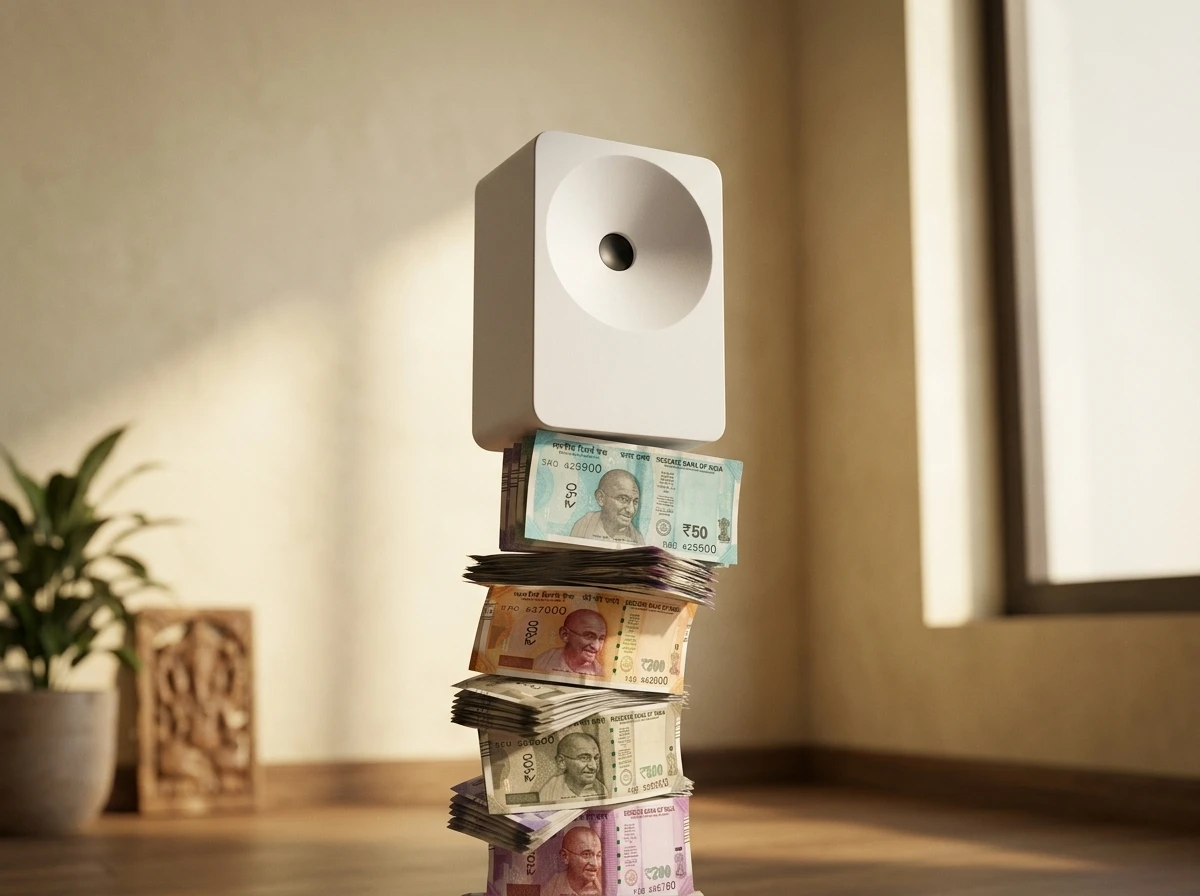
Samsung India switched on sales of its new Music Studio Wi-Fi speakers on Thursday, pricing the Music Studio 5 at Rs 27,900 (roughly $300) and the flagship Music Studio 7 at Rs 49,900. Both speakers reach Indian shelves seven months after debuting on a Las Vegas stage, built around a sculpted “dot” design rather than raw wattage.
The wager underneath the launch is bigger than the hardware. India’s wireless speaker buyers have mostly stuck to Bluetooth boxes priced under Rs 5,000, and Samsung wants a slice of them to pay well over five times that for furniture-grade audio tied to the rest of a Samsung living room.
Two Speakers, One Sculptural Language
The Music Studio 5, model LS50H, is the smaller of the pair, built for rooms where design carries as much weight as decibels. It pairs a 4 inch woofer with dual tweeters and a built-in waveguide, tuned by Samsung’s Audio Lab, and leans on AI Dynamic Bass Control to keep low end clean without a separate subwoofer.
The Music Studio 7, model LS70H, is the centerpiece. It runs a 3.1.1 channel layout, meaning left, front, right and a top-firing driver work together for height and spread from one cabinet. Samsung’s Pattern Control Technology is meant to stop those channels from smearing into each other, and the speaker supports Hi-Res Audio up to 24-bit/96kHz through a super tweeter that reaches 35kHz.
Samsung’s own newsroom post confirmed the Rs 27,900 starting price and said the line is sold through Samsung.com, major electronics retailers and e-commerce platforms.
| Feature | Music Studio 5 (LS50H) | Music Studio 7 (LS70H) |
|---|---|---|
| India price | Rs 27,900 | Rs 49,900 |
| Channel layout | 2.1 channel | 3.1.1 channel spatial audio |
| Drivers | 4 inch woofer, dual tweeters, waveguide | Left, front, right and top-firing drivers, plus super tweeter to 35kHz |
| Signature tech | AI Dynamic Bass Control | Pattern Control Technology, AI Dynamic Bass Control, Hi-Res Audio to 24-bit/96kHz |
| Wired input | Optical audio in | Optical audio in, plus HDMI with CEC and eARC |
Both models connect over Wi-Fi and Bluetooth, using Samsung’s Seamless Codec for phone and tablet streaming, and both take voice commands through the SmartThings app.
The Designer Behind the Dot Is No Stranger to Samsung
Samsung credits the shared look, what it calls a “Dot Design,” to Erwan Bouroullec, the French designer who studied contemporary art in Paris and co-founded a design studio with his brother Ronan in 1999, working since with Vitra, Alessi, Kartell, Magis and Hay. His relationship with Samsung goes back a decade, to The Serif, a television that won an iF Design Gold Award in 2016 and pushed the company to treat screens as furniture rather than appliances.
Music has the power to surround you and transform your mood and emotions.
Bouroullec told Samsung Newsroom in his account of designing speakers as furniture, describing sound and light as forces that shape a room’s atmosphere even when nothing is playing. The circular body, he has said, traces back to the shape a speaker cone makes when a child stares straight at it.
India’s Speaker Market Still Runs on Rs 5,000 Boxes
Mordor Intelligence projects a $1.04 billion India speaker market by 2030, up from about $0.40 billion in 2025, a 21.2% annual growth rate. The research firm lists Amazon Retail India, HARMAN’s JBL business, Sony India, Bose India and Samsung itself as the category’s main players.
A separate analysis of the broader consumer speaker category, covering more than just Wi-Fi models, found the market where sub-Rs 5,000 shipments dominate Bluetooth speaker sales, with newer low-power Bluetooth chips concentrated in that band, according to MarkWideResearch. Samsung’s Rs 27,900 entry point sits well over five times that price ceiling.
That gap is the whole bet. Samsung isn’t trying to out-cheap the mass market. It’s trying to convince a smaller slice of Indian buyers that a speaker can double as decor worth a five-figure rupee price tag.
From CES Stage to Indian Shelves in Seven Months
Samsung didn’t build this line for India first.
- December 29, 2025: Samsung previews its full 2026 sound lineup, including the Music Studio 5 and 7, ahead of CES.
- January 6 to 9, 2026: The speakers make their public debut at CES 2026 and The First Look event in Las Vegas, shown as sculpture as much as hardware.
- April 2026: Samsung Electronics America opens US sales at $299.99 for the Music Studio 5 and $499.99 for the Music Studio 7.
- July 16, 2026: Samsung India brings the same two speakers to Indian shelves at Rs 27,900 and Rs 49,900.
The rupee math is not a straight copy of the dollar prices. FoneArena had earlier pegged the US pricing at roughly Rs 27,885 for the Music Studio 5 at prevailing exchange rates, almost identical to the actual India price. But its dollar-to-rupee estimate for the Music Studio 7 worked out to about Rs 46,480, meaning the Rs 49,900 India tag runs roughly 7% higher than pure currency math would suggest. Entry-level buyers pay close to what Americans do. Flagship buyers pay a bit more.
Samsung first previewed its full 2026 sound lineup ahead of CES, calling itself the global leader in soundbars for more than a decade running.
Q-Symphony Wants the Rest of Your Living Room
Samsung’s own India announcement says Q-Symphony can now pair up to five sound devices with one television, tuning channel distribution to room layout. That single sentence explains why the Music Studio Series exists at all.
- Wi-Fi casting and Bluetooth streaming, including Samsung’s Seamless Codec for phone and tablet audio
- Voice control and streaming service access through the SmartThings app
- Group playback across multiple Music Studio units sharing one Wi-Fi network
- Q-Symphony pairing of up to five Samsung sound devices around a single TV
Neither speaker needs a television to work. Play music straight off Wi-Fi and both models function as standalone hi-fi boxes. But the deeper trick, matching a TV’s dialogue to a speaker’s height channel, only fires once a compatible Samsung set is already in the room.
That matters because Samsung’s TV shipments have kept climbing even as TCL narrows the gap, and every Music Studio sale gives a household one more reason to keep buying Samsung screens and soundbars rather than mixing in a rival brand.
Do Reviewers Think the Sound Justifies the Price?
Reviews split roughly down the middle. Outlets that tested the Music Studio 7 in fuller home theater setups came away impressed by its ease of setup and balanced output, while at least one hands-on test of the smaller Music Studio 5 found its imaging underwhelming, and design writers are still asking whether looks alone can pull buyers out of a rival speaker system.
Techlicious called the Music Studio 7 pricey next to some rivals but concluded it’s worth spending a little more given the feature set and setup ease. Music Photo Life, testing the Music Studio 5 in Singapore, praised its loudness and bass but wrote that the speaker “does not convince me in the stereo imaging or instrumentation layering.”
Gear Patrol placed the Music Studio 7 as a direct rival to Sonos’s Era 300 and the Music Studio 5 against the Era 100 on price and size. The Gadgeteer doubted design alone could pull buyers already committed to Sonos or Apple’s device network into switching.
For now, the Rs 49,900 flagship and its Rs 27,900 sibling sit on Indian shelves next to price tags Samsung has never asked local speaker buyers to pay before.
Frequently Asked Questions
What Do Samsung’s Music Studio 5 and Music Studio 7 Cost in India?
The Music Studio 5 costs Rs 27,900 and the Music Studio 7 costs Rs 49,900, both sold through Samsung.com, major offline electronics retailers and e-commerce platforms including Amazon.in. Globally, Samsung has confirmed initial shipments come only in black and white, despite colorful renders shown at the speakers’ CES reveal.
What Is the Difference Between the Music Studio 5 and Music Studio 7?
The Studio 5 runs a compact 2.1 channel setup with a 4 inch woofer and dual tweeters in a gallery-style shape, while the Studio 7 steps up to 3.1.1 channel spatial audio with a top-firing driver and HDMI eARC support. The size gap shows up in weight too: the Studio 7 weighs about 12.35 pounds against the Studio 5’s 5.29 pounds, according to hands-on testing.
Do the Speakers Need a Samsung TV to Work?
No. Both models work as standalone Wi-Fi speakers through the SmartThings app without any television attached. Q-Symphony’s surround-pairing feature is the exception, and it needs a compatible Samsung TV, generally from the BU8000 series (2022) or newer, based on reviewer testing of the connection.
Can Multiple Music Studio Speakers Work Together Around a House?
Yes. Separate from the five-device ceiling used for TV-based Q-Symphony setups, Samsung’s US rollout documentation describes up to ten Music Studio speakers networking across one home for synchronized or independent playback in different rooms.
Who Designed the Music Studio Series?
French designer Erwan Bouroullec, who also designed Samsung’s award-winning Serif television, shaped the Music Studio line’s circular form. He has said consumer electronics can “quickly become outdated if designed in a style that doesn’t endure,” which is why he aimed for a shape rooted in the basic geometry of a speaker cone rather than a passing trend.

-
 TECH1 year ago
Where Garmin Watches are Made and How They are Assembled
-

 AUTO3 months ago
Tesla’s Roadster Is ‘a Few Weeks Away,’ Says Its Chief Designer
-
 NEWS10 years ago
Samsung Releases Galaxy Note7 TV Ad as Reddit AMA Leaks Specs
-
 NEWS10 years ago
Android 7.0 Nougat Rolls Out To Nexus Devices With New Emoji, Features
-
 FINANCE9 years ago
Cardano Price Surges as ADA Enters the Crypto Top Ten List
-
 NEWS10 years ago
Pre-Order the First Camera Made for Facebook Live Streaming Video
-
 FINANCE1 year ago
Binance Suspends Trading and Withdrawals for a System Upgrade
-
 FINANCE9 years ago
RChain Price Jumps Nearly 150% to a New All-Time High of $2.03