
NEWS
Linux clearcpuid Docs Change Targets a Support Trap

Linux clearcpuid is becoming harder to find while remaining in the kernel. The x86 boot parameter can still hide selected processor features from the kernel and from /proc/cpuinfo, but maintainers are removing the public instructions because the knob can make a production system look safer, or simpler, than it is.
That distinction matters for performance labs, distribution support teams and anyone debugging CPU feature code. A clearcpuid test can still be useful when a maintainer wants to rule out one feature path. As a fleet policy, it leaves user-space software with too many ways around the mask and marks the kernel as tainted.
A Hidden Knob Loses Its Welcome Mat
The visible change is small. The current kernel command-line documentation still describes clearcpuid=X[,X…] as an x86 parameter that disables a CPU Identification feature for the kernel, accepts bit numbers or some flag strings from /proc/cpuinfo, and warns that the kernel may malfunction if critical bits are disabled.
The queued x86 change takes a different editorial line. The functionality stays in the code; the manual entry is being stripped so admins do not treat a low-level debug switch as a supported production interface. That is hidden, not removed, which is the whole point of the patch.
There is also timing nuance. The kernel.org mainline release page still listed Linux 7.1-rc5 on May 24 when checked on June 1, 2026, while the clearcpuid pull request was aimed at the next release candidate. In plain terms, this is a near-term mainline change, not a stable kernel update that distribution users will see overnight.
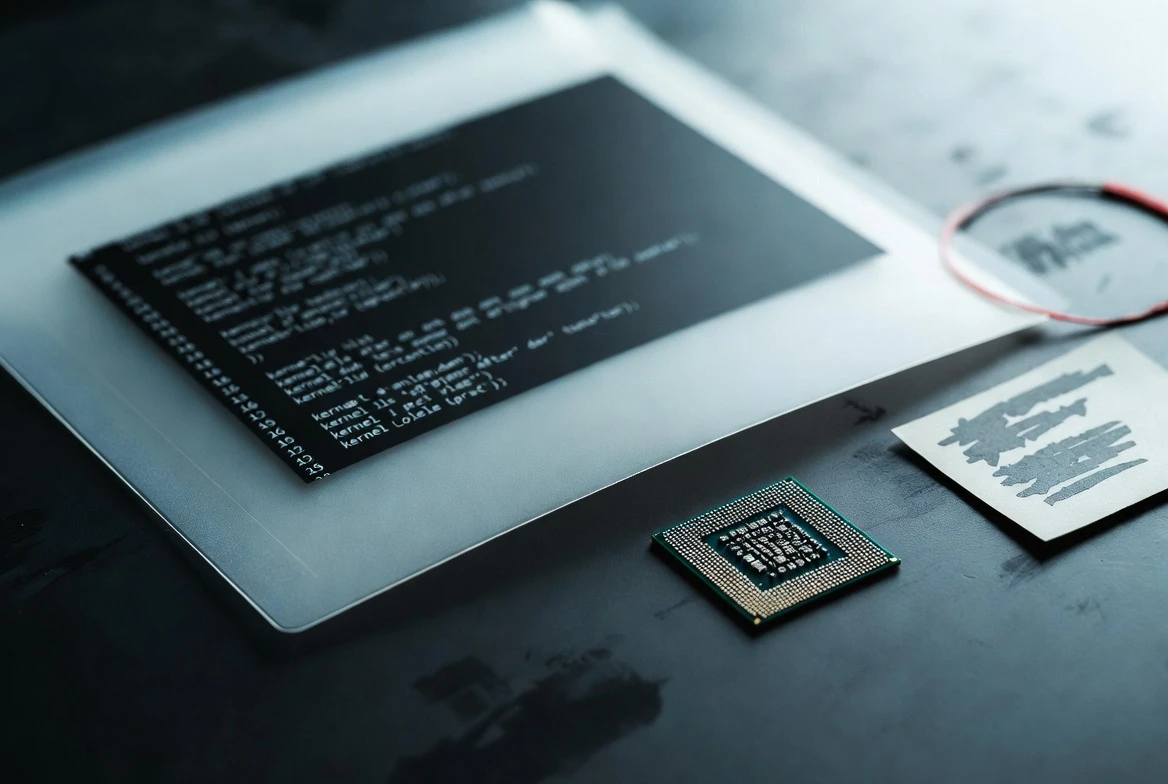
The CPUID Split That Makes clearcpuid Risky
CPU Identification (CPUID, the x86 instruction that software uses to ask a processor what features it reports) sits below the Linux convenience file that most users know. /proc/cpuinfo is a kernel-produced view. CPUID is a hardware query path exposed to software that asks the processor directly. That split is why a boot option can change one view of a system without changing the silicon underneath it.
The Linux x86 docs already say the /proc/cpuinfo flags list is incomplete and mainly shows features the kernel has enabled and supports. The same x86 feature flags documentation says absence of a flag by itself means little to an end user, because hardware support, kernel knowledge and boot-time enablement all affect the list. clearcpuid works in that middle layer. It can stop the kernel from using a feature and stop that feature from appearing in /proc/cpuinfo. It cannot guarantee that every application observes the same fiction.
- Kernel view only: a program that executes CPUID can still see hardware support.
- Software that tries an instruction without checking first can still reach that instruction.
- Critical feature bits can move the kernel into states maintainers did not design as supported operating modes.
- A tainted kernel changes the support conversation after any later crash or warning.
- Flag names from /proc/cpuinfo are easier to type than bit numbers, which also makes accidental reuse easier.
Why Benchmarks Liked a Debug Switch
Benchmarkers have a rational reason to reach for the knob. Advanced Vector Extensions 512 (AVX-512, wide vector instructions used for heavy numeric code) can change which path a library or application selects. Hiding the flag from /proc/cpuinfo can force a fallback path without swapping hardware.
That makes quick A/B work easier, especially when the target application consults the kernel view rather than running its own CPU probe. It also explains why the parameter survived for years: it solves a narrow lab problem with one boot-line edit.
The weakness appears when the test result gets promoted into a policy. A lab run that says one code path slowed down after a flag was hidden may only describe applications that trust /proc/cpuinfo. A different binary can ask the chip directly and select the path the test thought it had suppressed.
| Method | Scope | Good Use | Main Failure Mode |
|---|---|---|---|
| clearcpuid boot parameter | Kernel feature view and /proc/cpuinfo | Short debug run to isolate one feature path | User-space probes can still see hardware support |
| Feature-specific kernel option | One named kernel behavior | Supported disablement when upstream provides it | Only exists for features maintainers chose to expose |
| Virtual machine CPU model | Guest-visible CPU feature set | Repeatable test guests across hosts | Can differ from bare-metal performance and timing |
| Application-level feature switch | One program or library | Benchmarking dispatch paths in the code being tested | Misses interactions with kernel feature enablement |
The Taint Flag Is the Support Message
Kernel tainting turns the patch from a docs cleanup into a support signal. The current parameter docs already warn that clearcpuid use taints the kernel; upstream’s tainted kernels guide says bug reports from tainted kernels often lose value because the triggering event might be connected to a later crash.
DO NOT USE this cmdline option in production
That blunt line is the heart of the x86 urgent clearcpuid commit. Borislav Petkov, an AMD engineer and Linux x86 maintainer, also argued that the option is meant for debugging and that a proper feature disable path needs proper enablement.
The word taint matters because support teams live on reproduction. If a machine has masked a processor feature at boot and then reports a scheduler, memory or driver fault, maintainers have to ask whether the local mask changed the code path. That question alone can slow a bug report.
A Small Patch Fits a Bigger Cleanup
The clearcpuid documentation move makes more sense against the x86 cleanup that landed in 2022. In that 2022 x86 CPU feature merge, Linus Torvalds, Linux’s creator and mainline maintainer, pulled CPU feature work from Borislav Petkov that removed several older x86 feature-disabling options, including nosep, nosmep, nosmap, noclflush and noexec on x86.
The same merge made clearcpuid easier to type by accepting some /proc/cpuinfo flag names instead of only numeric bit positions. That convenience was paired with a new taint path in code. The diff summary showed 20 files changed, with 120 insertions and 203 deletions, a modest net cleanup rather than a feature expansion.
The current patch pulls back on the invitation created by that convenience. Kernel developers still need a last-resort test knob. They do not want a wiki page, vendor ticket or automation script treating it as a clean replacement for a supported CPU feature control.
The Linux 7.1 x86 pull request ties that caution to the release-candidate cycle, where late fixes should reduce risk rather than teach more people a risky command.
Safer Paths for Test Labs and Fleet Owners
The safe reading is simple: keep clearcpuid in the lab notebook, not in the golden image. If the goal is to compare code paths, record the exact kernel version, boot line, CPU model and application feature probe used for the run.
Teams that need repeatable behavior have cleaner choices:
- Use application-level switches when the software exposes them, because they document the test at the layer making the dispatch decision.
- Use a virtual machine CPU model when the goal is to present a stable guest feature set across hosts.
- Ask upstream for a feature-specific kernel control when disabling a feature is a supported operating mode, not a one-off debug guess.
Fleet owners should also check initramfs builders, bootloader templates and provisioning snippets for inherited kernel parameters. Old command lines travel quietly through copied Grand Unified Bootloader (GRUB, a common Linux bootloader) entries and cloud images, then surface only when someone opens a support ticket.
Existing boots that already use the parameter should continue. Future engineers will have fewer official breadcrumbs leading them to it by accident. That is useful friction for a switch that can bend kernel feature detection while leaving user-space discovery untouched.
If the x86 pull lands in the next release candidate, clearcpuid becomes a tool passed between people who already know why they need it. If it slips, the warning has still changed the conversation: a masked CPU feature belongs in the evidence column of a bug report.

-
 TECH1 year ago
Where Garmin Watches are Made and How They are Assembled
-

 AUTO3 months ago
Tesla’s Roadster Is ‘a Few Weeks Away,’ Says Its Chief Designer
-
 NEWS10 years ago
Samsung Releases Galaxy Note7 TV Ad as Reddit AMA Leaks Specs
-
 NEWS10 years ago
Android 7.0 Nougat Rolls Out To Nexus Devices With New Emoji, Features
-
 FINANCE9 years ago
Cardano Price Surges as ADA Enters the Crypto Top Ten List
-
 NEWS10 years ago
Pre-Order the First Camera Made for Facebook Live Streaming Video
-
 FINANCE1 year ago
Binance Suspends Trading and Withdrawals for a System Upgrade
-
 FINANCE9 years ago
RChain Price Jumps Nearly 150% to a New All-Time High of $2.03