
BUSINESS
TCS, Infosys and Wipro Turn India’s Missing AI Model into a Bet
TCS, Infosys and HCLTech pitch India’s lack of a frontier AI model as a neutral edge, even as Beijing weighs curbing the open models the bet needs.

HCLTech beat Infosys to a $1.14 billion contract with Mercedes-Benz on July 3, one of the few clean wins in a brutal year for Indian IT stocks. Four days later, Reuters reported that China’s commerce ministry had spent a month asking Alibaba, ByteDance and Z.ai how far it could restrict the same open AI models Indian software firms are quietly counting on staying free and cheap.
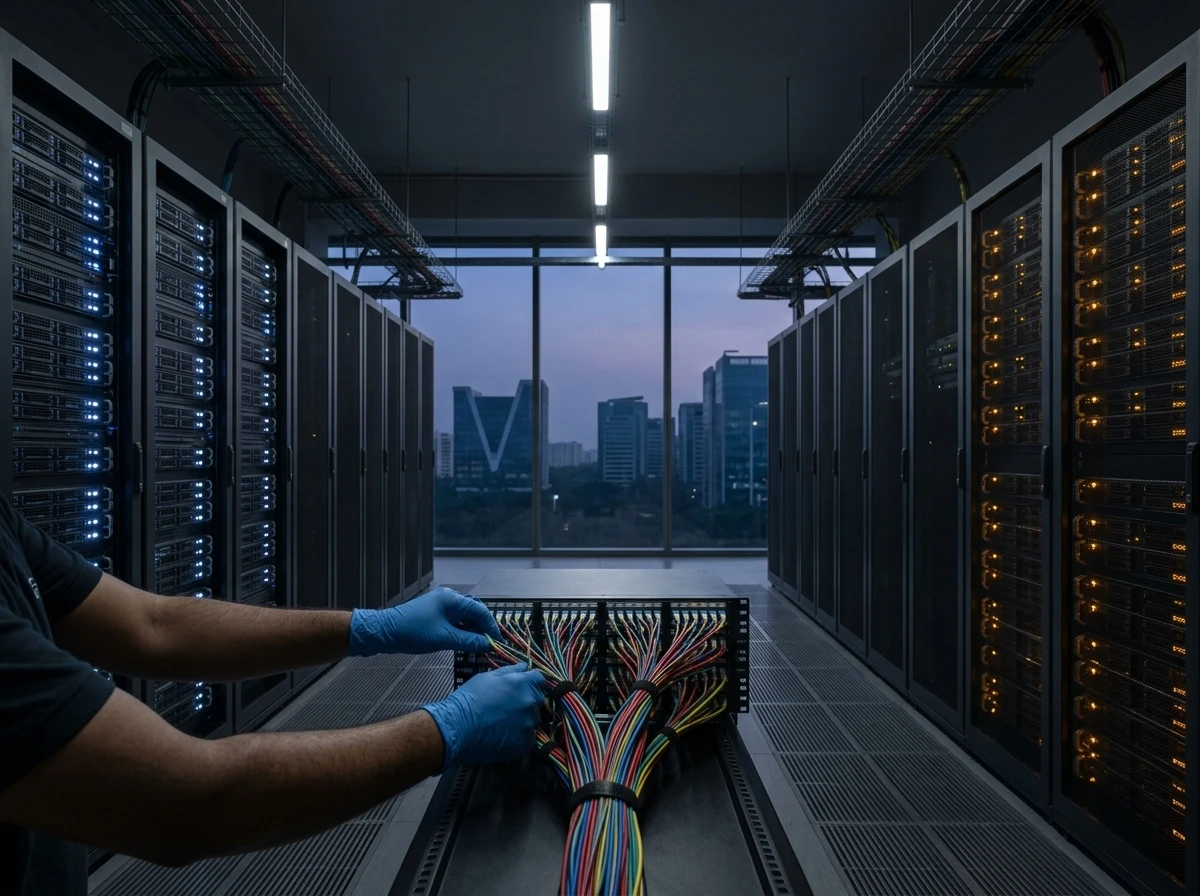
That collision sits at the center of a wager now playing out across India’s IT services industry, an industry ICICI Direct’s research desk sizes at roughly $280 billion. TCS, Infosys, Wipro and HCLTech are pitching themselves to global enterprises as neutral integrators, equally willing to run American, Chinese or homegrown AI systems inside a client’s own walls. Having no frontier AI model of its own has become India’s argument for the job.
TCS, Infosys and Wipro Land New AI Contracts
The pitch has already produced deals. Tata Consultancy Services (TCS), India’s largest IT company, tied up with OpenAI at a government-backed AI summit earlier this year, while Infosys partnered with OpenAI’s rival Anthropic the same week. TCS separately holds agreements with Google Cloud, NVIDIA and Microsoft.
Infosys formalized its partnership in a filing with the U.S. Securities and Exchange Commission (SEC). Anthropic co-founder and chief executive Dario Amodei said, “There’s a big gap between an AI model that works in a demo and one that works in a regulated industry.” Infosys, he added, carries telecom, financial services and manufacturing expertise that closes that gap.
Wipro, meanwhile, launched an Applied AI Center of Excellence built around Anthropic’s Claude models and plans to certify 10,000 employees on them over the next 18 months.
HCLTech’s win looked different in scale. It told stock exchanges on July 3 that it had signed a $1.14 billion deal with an unnamed European company it described only as a Fortune Global 50 name, covering a new AI-driven operating model for the client’s digital workplace and network infrastructure. HCLTech called it entirely new business with zero overlap with existing revenue. The Economic Times later reported, citing people familiar with the matter, that the client is Mercedes-Benz and that HCLTech had unseated Infosys, the account’s incumbent vendor. The contract runs five and a half years, from July 2026 through December 2031, with an option to extend five more. HCLTech shares jumped as much as 6% intraday on the news.
All four companies now disclose how much of their business AI has already become.
| Company | AI Services Revenue | Period |
|---|---|---|
| TCS | $2.3 billion annualized, about 7.5% of total revenue | Most recent quarter, FY2026 |
| HCLTech | $620 million (Advanced AI revenue) | FY2026 |
| Infosys | $275 million | Q3 FY2026 |
| Accenture (global peer) | $2.7 billion, about 4% of revenue | FY2025 |
TCS’s figure is up from $1.8 billion the quarter before. Nasscom, the industry association, puts AI services revenue across all of Indian IT at $10 billion to $12 billion, up from almost nothing three years ago.
Having No Frontier Model Becomes the Whole Pitch
Praveen Gopal Krishnan, who hosts the Two by Two podcast for The Ken, an Indian business publication, has been mapping this argument for weeks and calls it the non-aligned layer. His case: enterprises need somebody who can run any model, American or Chinese, inside their own walls without picking a side, and three decades of enterprise relationships make Indian IT the only plausible candidate for that job.
The pitch rests on a documented problem. An MIT Media Lab study found that 95% of generative AI pilots inside companies fail, largely from weak integration rather than weak models. A separate 2026 Bain survey found 90% of executives are experimenting with AI, yet 60% say their company’s data and technology are not actually ready.
Nandan Nilekani, Infosys’s co-founder and non-executive chairperson, told investors at the company’s AI Day that enterprise deployment is not moving nearly as fast as the technology itself. He called it a “deployment gap” and said that gap “is what we can help to address.”
Pranay Kotasthane, deputy director of the Takshashila Institution, a technology policy think tank, made a similar case for where the money actually sits. Model access gets commoditized over time, he said on The Ken’s podcast, but stitching those models into a working enterprise system does not: “If that requires you to use Claude, you’ll use Claude. If that requires you to use Deepseek, you’ll use Deepseek.”
The market is already moving that way. Some 74% of new IT contracts now carry an AI component, according to Wisemonk’s India IT Services Analyst Report 2026.
Brokerages Are Still Cutting Targets
Investors have not been nearly as convinced. Jefferies cut price targets across Indian IT stocks by as much as 33%, downgrading Infosys, HCLTech and Mphasis to Hold and TCS, LTIMindtree and Hexaware Technologies to Underperform. Its reasoning: AI threatens to shrink the managed-services business that makes up between 22% and 45% of revenue at leading Indian IT firms.
JPMorgan downgraded HCL Technologies, Wipro and Tata Technologies to Underweight, and separately told clients it expects large Indian IT firms to grow just 3% to 4% over the medium term, well below the mid-single-digit pace the industry once considered normal. It prefers Infosys and TCS instead, as AI-led productivity gains eat into billable hours. Kotak Institutional Equities cut earnings estimates across seven companies and trimmed fair values by 15% to 28%.
The Nifty IT index is down 24% in 2026. Nomura has pointed to geopolitical tension in the Middle East, the same unrest pushing oil toward its biggest weekly gain in months, plus uncertain U.S. interest rates, as added drags on client spending.
NVIDIA Chief Executive Jensen Huang has pushed back on the gloom, telling reporters markets have miscalculated how much of a threat AI poses to software companies.
The jobs numbers are harder to spin away. TCS cut 12,000 jobs last year, about 2% of its workforce, and plans to hire just 25,000 graduates this year, down from an average of 40,000 over the prior three years. TCS Chief Executive K Krithivasan has acknowledged seeing deflation in the business, which he called “degrowth.” Net hiring across India’s top five IT firms fell by 7,389 in the year ended March 2026, reversing a gain of 12,718 the year before. Bernstein, the global equity research firm, wrote an open letter to Prime Minister Narendra Modi warning of a deepening employment crisis tied to AI’s effect on IT jobs.
Enterprise budgets tell a different story than the layoffs do. Technology chiefs at more than 250 Indian companies surveyed by Bain & Company expect IT spending to climb 6% to 8% this year, some 200 to 250 basis points above what global peers are budgeting, with AI and data modernization taking the largest share.
Why Would China Keep Giving Away Its Best Models?
China’s commerce ministry has spent the past month asking Alibaba, ByteDance and Z.ai how far it could restrict foreign access to the country’s most advanced AI models, including ones not yet released, Reuters reported on July 7. That is a direct threat to the cheap, open, capable AI supply the entire non-aligned wager assumes will keep flowing.
The proposal on the table is tiered. Basic open-source tools would need only a simple filing, more advanced technology would face security review, and the most sensitive frontier models would be restricted to domestic use or barred from public release entirely. Officials also discussed making any leak or theft of proprietary AI technology a national security law offense, and floated limits on which investors can fund Chinese AI startups. Reuters could not determine when, or whether, any of it takes effect.
The models under discussion are the ones the world actually uses: Alibaba’s Qwen, ByteDance’s Doubao and Z.ai’s GLM-5.2, which has drawn attention for closing in on leading U.S. models at a fraction of the cost. Chinese open-weight models’ share of token usage on OpenRouter, a hub for global AI distribution, grew from under 2% in late 2024 to roughly 61% by the middle of this year. The “cheap” condition was already fraying before Beijing’s talks became public, too. Moonshot’s Kimi K3 has crept toward frontier pricing even as it closes in on frontier performance.
Washington set the precedent Beijing now appears to be copying. The Trump administration briefly restricted Anthropic’s two most advanced models, Fable 5 and Mythos 5, in June on national security grounds, before lifting the curbs and creating uncertainty of its own about how reliable any government’s AI export promises really are.
The bet that India can broker between these two blocs depends on three things holding true about the open models it plans to route around client walls.
- Cheap – open models need to keep undercutting frontier pricing so enterprises have a real reason to treat them as a backup option.
- Open – the weights need to stay downloadable rather than sliding into Beijing’s new filing and security-review tiers.
- Capable – performance needs to stay within reach of the frontier, even without matching it outright.
Kotasthane expects that third condition to get harder, not easier, as the gap between open and closed frontier models widens. He still argues open models survive as a check on pricing power.
You have 200, they work, they are going to deter people, right? So in that sense, the open idea is that you need to have a good, reasonable alternative which gives you a backstop against someone denying you things.
Kotasthane used nuclear deterrence as his analogy on the podcast, arguing that a working backstop does not need to match a rival’s best weapon, only work reliably when called on.
Is India Really Non-Aligned, or Just Multi-Aligned?
Kotasthane rejects the “non-aligned” label the whole pitch depends on. He argues India runs separate, simultaneous relationships with Washington, Beijing, Moscow and others rather than standing apart from all of them, a distinction other geopolitical analysts have made about Indian foreign policy more broadly.
“Whenever people ask which camp is India, India is always in its own camp,” Kotasthane said on the podcast. “A country which is continent-sized will always be in its own camp.”
That distinction matters more for AI than it ever did for the outsourcing contracts Indian IT has run for three decades. The old business rarely touched geopolitics. This one sits on top of chip export controls, rare earth supply chains and a US-China relationship that decides which models a company is even allowed to buy, before India gets anywhere near the deal.
The Huawei Problem Nobody Can Solve
Krishnan pressed his guests on a condition the framework had missed: not whether Chinese open models are capable, but whether a company can ever prove nothing leaks back to Beijing. He drew a parallel to Huawei, where the danger was never the handsets, but the network infrastructure sitting quietly inside telecom systems for years before anyone raised an alarm.
Brady Ng, The Ken’s deputy editor, countered with the obvious point: isn’t the purpose of open weights that any user can inspect what a model is doing? Kotasthane agreed leakage should be technically detectable. But he separated China’s plain exports from its digital ones, arguing that steel is just steel, while anything digital carries a perception problem whether or not it is actually justified.
- Brady Ng argues open-weight models are inherently inspectable, so any data flowing back to Beijing should be catchable by anyone running the code.
- Pranay Kotasthane agrees leakage is technically checkable, but says the deeper risk is what he calls cognitive: nobody knows what is actually in a model’s training data, and if it leans heavily Chinese, the worry shifts to what the model teaches the people using it.
Krishnan called it a double suspicion no other export has carried at once, an infrastructure worry layered on a content worry. Beijing’s own commerce ministry just handed that infrastructure worry fresh, specific fuel.
India’s Two-Year Plan, and Its Missing Five-Year One
The scale riding on this bet is large. Indian IT services could see an incremental AI-led addressable market of $300 billion to $400 billion by 2030, against a current industry size of roughly $280 billion, with an estimated 170 million jobs created against 92 million displaced along the way.
India’s government is already building capability across the stack, from a national semiconductor mission to three operational outsourced semiconductor assembly and test (OSAT) plants. None of it, Kotasthane said, amounts to a five-year plan.
“India has a two-year plan and a fifteen-year plan,” he said. “It does not have a five-year plan.”
Ng made a related point earlier in the same conversation: the distance between a five-year plan and a fifteen-year one is enormous, and a country that cannot articulate the middle stretch will not end up owning more than a layer or two of the stack it hopes to broker. The semiconductor mission has its three plants running. The five-year deadline for any of it, or for the wager Indian IT is now making, does not exist yet.

-
 TECH1 year ago
Where Garmin Watches are Made and How They are Assembled
-

 AUTO3 months ago
Tesla’s Roadster Is ‘a Few Weeks Away,’ Says Its Chief Designer
-
 NEWS10 years ago
Samsung Releases Galaxy Note7 TV Ad as Reddit AMA Leaks Specs
-
 NEWS10 years ago
Android 7.0 Nougat Rolls Out To Nexus Devices With New Emoji, Features
-
 FINANCE9 years ago
Cardano Price Surges as ADA Enters the Crypto Top Ten List
-
 NEWS10 years ago
Pre-Order the First Camera Made for Facebook Live Streaming Video
-
 FINANCE1 year ago
Binance Suspends Trading and Withdrawals for a System Upgrade
-
 FINANCE9 years ago
RChain Price Jumps Nearly 150% to a New All-Time High of $2.03