
NEWS
Handala Hack Claim Puts Holocaust Restitution Files at Risk

The Handala hack claim over a Holocaust support center should be treated as an unverified breach allegation with immediate privacy risk. West Asia News Agency, an Iran-based outlet, reported on May 31 that the hacking group claimed access to more than two million confidential documents, emails and files totaling more than one terabyte. No public forensic proof accompanied the claim.
For families tied to restitution claims, the possible harm begins before any government confirms who got in. A archive built around survivors, heirs, property claims and historical proof can expose living people while also giving a hostile actor material to twist for propaganda.
The Claim Arrived With Propaganda Attached
The report said the group claimed to have breached the systems and databases of a Holocaust victims support body, extracted all databases and confidential correspondence, then published the material on its own site. The same message alleged links between the center and Israeli defense industry companies. Those accusations should be read with care because hack-and-leak groups often mix stolen files, selective excerpts and political claims in a single release.
The first editorial duty is to separate the breach allegation from the narrative wrapped around it. A stolen archive can be genuine while the interpretation pushed beside it is false, incomplete or designed to intimidate the people named in the files.
- 2 million plus documents were claimed in the reported leak.
- More than 1 terabyte of files was the alleged volume.
- Four web domains tied to related Iranian cyber influence activity were seized by U.S. authorities in March.
That last figure matters because this is not a one-off website defacement claim. U.S. investigators have already described a pattern in which cyber personas claim credit for intrusions, publish personal data and use the leak itself as a pressure tool.
Why Restitution Files Are Different
The name in the report appears close to the Holocaust Victims’ Information and Support Center associated with Vienna restitution work. A Jewish Communities of Austria profile says the center was established in July 1999 for Jewish Holocaust survivors in and from Austria, and that it documented individual cases of Nazi persecution and Holocaust-era assets for restitution or compensation.
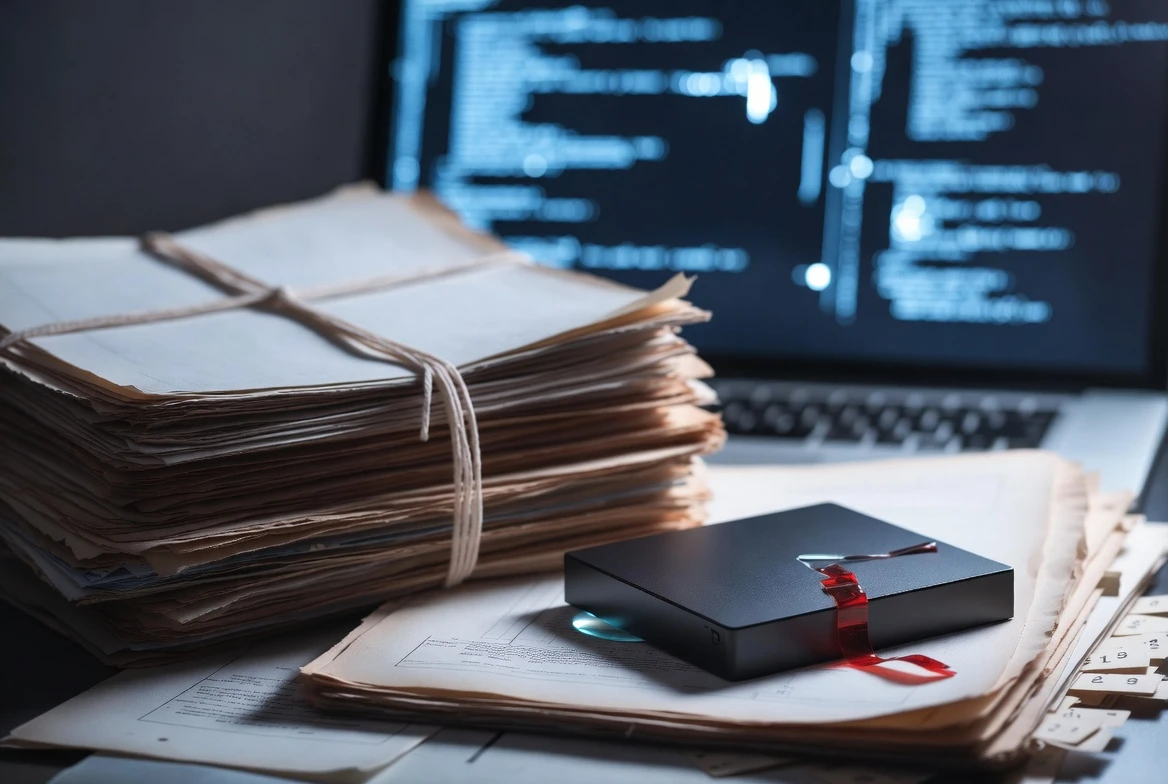
That makes the possible data exposure different from a routine corporate leak. Restitution files can carry family trees, prior addresses, citizenship records, property claims, medical or welfare correspondence, lawyer contacts and proof collected over decades.
| Record Type | Why It Is Sensitive | Risk If Exposed |
|---|---|---|
| Restitution case files | They can connect heirs to confiscated property, family history and legal claims. | Doxxing, fraud attempts and harassment of survivors’ descendants. |
| Email correspondence | Messages may include addresses, phone numbers, lawyers and private disputes. | Targeted phishing, blackmail and impersonation. |
| Historical source indexes | Indexes can link names to deportation, asset loss and persecution records. | Selective distortion of historical evidence. |
| Financial or donor records | Support relationships can be pulled out of context. | Conspiracy claims and pressure campaigns against institutions. |
The overlooked stakeholders are not institutions with press teams. They are families whose paperwork may have been created to restore rights after Nazi theft. If those files were taken, living people sit inside the archive.
Handala Has a Documented Playbook
On March 19, 2026, the U.S. Justice Department announced the seizure of four domains it said were used in hacking and psychological operations conducted by the Islamic Republic of Iran’s Ministry of Intelligence and Security (MOIS, Iran’s intelligence service). The domain seizure notice said the sites were used to claim hacking activity, post sensitive stolen data and call for violence against journalists, dissidents and Israeli persons.
The Justice Department also said one of the seized domains had claimed credit for a destructive malware attack against a U.S.-based medical technology company in March. That matters here because the same style of operation turns a technical incident into a public intimidation campaign.
A separate Federal Bureau of Investigation (FBI) warning dated March 20, 2026, said MOIS cyber actors used Telegram as command and control (C2, the channel attackers use to direct malware) infrastructure to push malware at dissidents, journalists and opposition groups. In the March malware warning, the FBI described the online persona as known for phishing, data theft, extortion and destructive attacks involving wiper malware.
The link between a public persona and a state service is always a hard attribution question. Still, the U.S. documents shift the current claim out of the category of random boasting and into a larger record of hack-and-leak operations aimed at reputational damage.
The Verification Gap Shapes the Response
No responsible reader needs to download an alleged stolen archive to understand the stakes. Downloading leaked files can spread private data, expose a device to malware and help the attackers turn curiosity into distribution.
Verification should move through a narrower set of questions before anyone treats the archive as fact. Those questions are practical, not political.
- Provenance: Which system was accessed, and who controlled it?
- Integrity: Are the files complete, altered, duplicated or mixed with fabricated material?
- Scope: Are living people, legal claims or financial details exposed?
- Notification: Has any affected institution contacted regulators or individuals?
- Attribution: Does technical evidence connect the intrusion to the group making the claim?
Until those questions are answered, the safest wording is alleged leak, claimed breach and purported archive. That language is not timid. It protects readers from laundering a cyber actor’s message as established fact.
Breach Duties Start Before Attribution
European privacy law does not require an organization to solve every attribution question before assessing a breach. The European Commission’s personal data breach guidance says an organization must notify the supervisory authority without undue delay, and at the latest within 72 hours, if a breach is likely to pose a risk to rights and freedoms. If the risk is high, affected individuals should also be informed.
General Data Protection Regulation (GDPR, the European Union privacy law that governs personal data) analysis would depend on the controller, the categories of data and whether technical protections reduced the risk. But the alleged target and the claimed file types point to a simple operating rule: confirmation is not the starting gun for internal scoping.
For U.S. readers watching from the outside, the Federal Trade Commission (FTC) offers a useful baseline. Its data breach response guide tells businesses to secure operations, work with forensic experts, avoid misleading statements, notify law enforcement and notify affected people when personal information may be compromised.
People who believe their names or family records may be in a stolen archive should avoid sharing links to the material. The better path is to preserve any notice they received, contact the institution through a known official channel, watch for tailored phishing messages and seek local advice before sending identity documents to anyone who approaches them after the leak claim.
The Historical Record Becomes a Target
The privacy risk is only half of the case. The reported message also tried to make claims about Holocaust history and the motives of people who preserve survivor records. That is a familiar pressure point. The United States Holocaust Memorial Museum’s Holocaust denial and distortion guidance describes denial and distortion as forms of antisemitism that undermine truth and historical understanding.
Archives are valuable because they resist myth. Names, dates, property files, testimony and correspondence make denial harder. That is why a breach involving Holocaust-related records carries a second-order danger: documents can be clipped, stripped of context and republished as proof for a claim they do not support.
The best public response keeps two ideas together. Investigators should verify the breach, protect people named in the records and disclose enough to reduce harm. Readers, meanwhile, should resist turning a hostile leak site into a research room.
If a victim organization confirms the intrusion, the case becomes a breach response story with survivor notification at the center. If the claim collapses, it still leaves a warning: archival institutions are being used as props in cyber operations built for fear.
Disclaimer: This article is for informational purposes only and does not provide legal, cybersecurity or identity theft advice. Data breach obligations and personal risk steps vary by jurisdiction and facts. Consult a qualified lawyer, incident response firm or identity protection professional. Details are accurate as of publication.

-
 TECH1 year ago
Where Garmin Watches are Made and How They are Assembled
-

 AUTO3 months ago
Tesla’s Roadster Is ‘a Few Weeks Away,’ Says Its Chief Designer
-
 NEWS10 years ago
Samsung Releases Galaxy Note7 TV Ad as Reddit AMA Leaks Specs
-
 NEWS10 years ago
Android 7.0 Nougat Rolls Out To Nexus Devices With New Emoji, Features
-
 FINANCE9 years ago
Cardano Price Surges as ADA Enters the Crypto Top Ten List
-
 NEWS10 years ago
Pre-Order the First Camera Made for Facebook Live Streaming Video
-
 FINANCE1 year ago
Binance Suspends Trading and Withdrawals for a System Upgrade
-
 FINANCE9 years ago
RChain Price Jumps Nearly 150% to a New All-Time High of $2.03