NEWS
iPhone 18 Pro Hikes Stay Modest as Ultra Hits $2,099
Carrier tags and TrendForce put the foldable iPhone Ultra at $2,099 to $2,299, while the iPhone 18 Pro looks like a share-defense hike, not a $300 shock.

Carrier listings and a TrendForce note now put the foldable iPhone Ultra near $2,099, ahead of Apple’s September 9 event. The iPhone 18 Pro looks like a smaller fight: a roughly 10 percent-class bump that can still sit next to Samsung’s Galaxy S26 Ultra.
That split is the leak. Apple is defending the slab phone that pays the bills, and treating the first foldable as a halo with a bill of materials it will not fully eat.
Vodafone’s Egypt and Australia Price Tags
Vodafone Egypt briefly listed the iPhone Ultra at 155,750 Egyptian pounds. The iPhone 17 Pro sits on the same site at 88,799 pounds, so the foldable comes out about 75 percent more expensive than last year’s smaller Pro.
A Vodafone Australia listing, confirmed with the carrier for a September 12 pre-order, is cleaner because it includes storage steps. The 256GB Ultra is 3,699 Australian dollars, against 1,999 dollars for the iPhone 17 Pro, an 85 percent premium. The 512GB and 1TB rows sit 500 dollars apart.
THE AUSTRALIAN STORAGE LADDER
- 256GB: 3,699 Australian dollars for the Ultra against 1,999 for the iPhone 17 Pro.
- 512GB: 4,199 Australian dollars, a 500-dollar step from the base.
- 1TB: 4,699 Australian dollars, another 500-dollar step, and the row that ends the “starting price” debate.
Those steps are why the start price is a decoy. The phone people actually buy will not be the 256GB card. International Data Corporation has already put the Ultra’s average selling price at $2,550, which only happens if buyers climb the ladder.
Egypt also listed the iPhone 18 Pro at 98,000 pounds and the iPhone 18 Pro Max at 105,000 pounds. Against the 17 Pro’s 88,799 pounds, the smaller Pro is about 10 percent higher. Direct dollar conversion of those Egyptian tags is a bad guide; the ratio against last year’s phone is the useful part.
Memory Costs Are Up Nearly 400 Percent
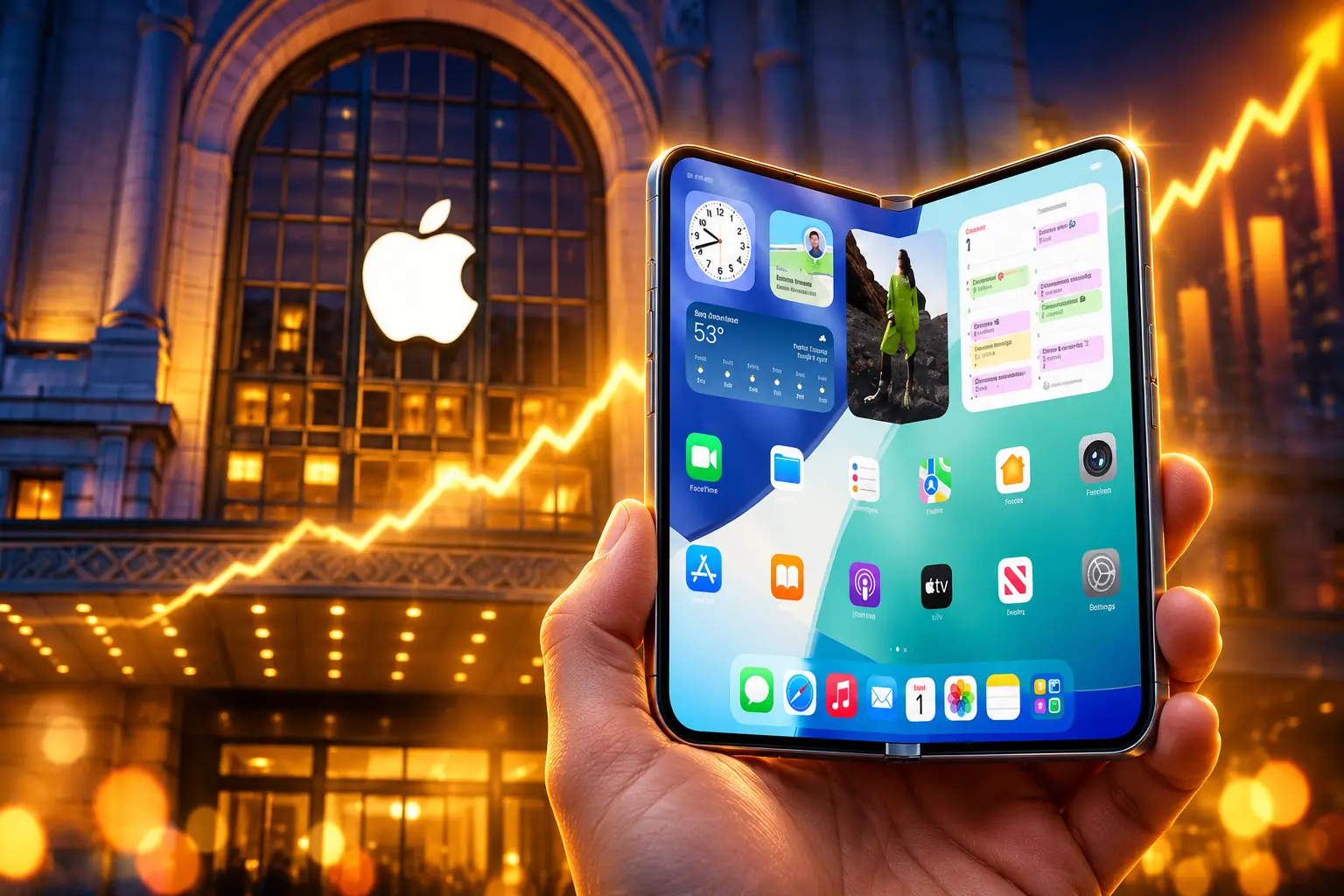
TrendForce, the Taiwan research house, published its bill-of-materials note on September 3 and still uses the working name iPhone 18 Fold. It estimates a U.S. starting price of $2,099 to $2,299, with top storage passing $3,000. Against the current iPhone 17 Pro at $1,099, the low end of that band is 91 percent higher.
The driver is memory, not the hinge. For the 256GB Pro model, TrendForce said memory costs nearly 400 percent higher in the third quarter of 2026 than a year earlier. Other parts got cheaper in talks with suppliers, the firm said, but not by enough to cancel that spike. That is the same memory shortage already priced into the Pros, now showing up as a list-price problem rather than a rumor.
For the 256 GB Pro model, memory costs in 3Q26 are expected to be nearly 400% higher than a year earlier.
TrendForce, September 3, 2026 press note
TrendForce still expects Apple to take a moderate line: prices up around 10 to 20 percent, with the company eating part of the cost to hold share. Hardware costs stay high, so Apple Intelligence cloud services and software subscriptions are supposed to do more of the profit work. The foldable, in that frame, is a benchmark for later generations, not a volume product. TrendForce puts foldables at about 2 percent of global smartphone sales in 2026 and says the Ultra’s late, limited first wave will not move that number quickly.
The iPhone 18 Pro Is the Share-Defense Phone
Apple still sells the iPhone 17 Pro still starts at $1,099 for 256GB, with the Pro Max at $1,199. A $100 U.S. bump, the Egypt ratio mapped onto those lists, would put the 18 Pro at $1,199 and the 18 Pro Max at $1,299.
$1,299 is also where Samsung listed the Galaxy S26 Ultra, 256GB, at its February unpack. The 512GB S26 Ultra is $1,499 and the 1TB is $1,799. Earlier chatter of a $300 iPhone hike would have broken that tie. A $100 move keeps Apple’s best slab even with Samsung’s best slab on the opening sticker.
SLAB FLAGSHIP STARTING PRICES
| Phone | Current or leaked U.S. start | Notes |
|---|---|---|
| iPhone 17 Pro (256GB) | $1,099 | Apple’s live U.S. list |
| iPhone 18 Pro ($100-up case) | $1,199 | Egypt’s 10 percent rise mapped onto $1,099 |
| iPhone 17 Pro Max (256GB) | $1,199 | Apple’s live U.S. list |
| iPhone 18 Pro Max ($100-up case) | $1,299 | Matches the Galaxy S26 Ultra start |
| Galaxy S26 Ultra (256GB) | $1,299 | Samsung’s U.S. launch price |
TrendForce’s 10 to 20 percent band is wider than that $100 case. Twenty percent on a $1,099 Pro is about $220, which would land near $1,319 if Apple used a clean percent and then rounded. The firm’s own point is that Apple will not pass the full memory bill through, because demand is cautious and share still matters. The Pro is the phone that has to stay in the mix with the S26 Ultra. The Ultra does not.
All three fall phones are expected to use an A20 Pro chip on TSMC’s 2nm process, with a shift in memory packaging meant to cut heat, LTPO+ screens, and larger batteries. The Pro models add a mechanical variable aperture on the main camera. Those are real upgrades, and they are not a new product category. They are the argument for paying $1,199 instead of $1,099.
What a $2,099 Foldable Walks Into
Samsung unveiled the Galaxy Z Fold 8 family on July 22 and put the wide 4:3 Fold 8 on sale in the United States on August 7 at $1,899 for 256GB, $2,099 for 512GB, and $2,499 for 1TB. The book-style Fold 8 Ultra starts at $2,099.99. Google’s Pixel 10 Pro Fold still starts at $1,799. Motorola’s Razr Fold, a single 512GB model, is $1,899.
Samsung’s U.S. store has also been offering a $300 credit on the Fold 8 Ultra that brings that phone to $1,799, which undercuts its own $1,899 Fold 8. Apple’s first foldable, on TrendForce’s numbers, arrives above every one of those opening tags except the Fold 8 Ultra’s list price, which it merely ties at the low end.
THE FOLDABLE SHELF THE ULTRA JOINS
| Phone | U.S. starting price | Storage at that price |
|---|---|---|
| Pixel 10 Pro Fold | $1,799 | 256GB |
| Galaxy Z Fold 8 Ultra (store credit) | $1,799 | 256GB after $300 off list |
| Galaxy Z Fold 8 | $1,899 | 256GB |
| Motorola Razr Fold | $1,899 | 512GB only |
| Galaxy Z Fold 8 Ultra (list) | $2,099 | 256GB |
| iPhone Ultra (TrendForce) | $2,099 to $2,299 | 256GB base expected |
iOS exclusivity is the only clean advantage at those numbers. It is also the reason Apple can try a halo price in a category that is still about 2 percent of the market. The Ultra does not have to win a spec sheet against a $1,899 Fold 8. It has to be the foldable that iPhone owners will accept, at a price that does not wreck the Pro Max.
Dual Cameras at a Halo Price
TrendForce’s spec sketch for the first foldable is a 5.5-inch outer OLED, a 7.8-inch inner OLED, an A20 Pro chip, 12GB of RAM, and storage from 256GB through 2TB. The camera side is a compromise: a dual-camera rear module and a conventional capacitive fingerprint sensor, not Face ID. Crease reduction is the hardware boast the firm bothers to single out.
A dual-camera phone at $2,099 is the tell. Samsung’s Fold 8 Ultra is the camera and battery fight at the same list. Apple is selling the software and the hinge, and it is not pretending the Ultra is a Pro Max that folds. Touch ID on a $2,000 phone will be the first complaint in any hands-on, because the price invites Pro Max comparisons the cameras cannot meet.
That is also why the Australian 1TB tag matters more than the Egypt conversion. Once 1TB is 4,699 Australian dollars, the Ultra is no longer a rich iPhone. It is a small-laptop bill with a crease. The 256GB row is the press-release price. The 1TB row is the configuration that makes TrendForce’s “could exceed $3,000” line look conservative in some markets and obvious in others.
The Foldable May Miss the First Weekend
Apple’s public invitation is already live. The company titled the Apple Event on September 9 “Surprise and shine,” at 10 a.m. PT, streamed from the Steve Jobs Theater. The expected trio is the iPhone 18 Pro, the iPhone 18 Pro Max, and the first foldable. The fall launch that omits the standard iPhone 18 leaves this show as a premium-only hour. TrendForce has the regular iPhone 18 and the rest of the cheaper family in the first quarter of 2027.
Vodafone Australia’s listing puts Ultra pre-orders on September 12. TrendForce, on the same week as that leak, said the foldable’s shipment schedule is relatively late and that opening production and inventory are limited, so the first units will not lift foldable penetration on their own. Supply-chain analyst Ming-Chi Kuo has separately said foldable pre-orders may slip into the fourth quarter. Those are different clocks from the Pro models, which still look like a normal mid-September retail wave.
THE SEPTEMBER CLOCK
- July 22, 2026: Samsung unveils the Galaxy Z Fold 8 and Fold 8 Ultra, with the Fold 8 at $1,899.
- August 7, 2026: The Fold 8 goes on sale in the United States.
- September 3, 2026: TrendForce publishes the $2,099 to $2,299 Ultra estimate and the 10 to 20 percent lineup rise.
- September 9, 2026: Apple holds Surprise and shine at 10 a.m. PT.
- September 12, 2026: Vodafone Australia’s leaked Ultra pre-order date.
If the Pros go on sale in mid-September and the Ultra does not, the $2,099 figure is a reservation number, not a phone you can carry out of a store the same weekend. That is the quiet half of the leak: Apple can print a halo price because it does not have to fill every shelf on day one.
TrendForce still treats that first Ultra price as the benchmark later foldable iPhones will be judged against. At $2,099 to $2,299, with a dual camera and a fingerprint button, the benchmark is a scarce iOS foldable, not a rival to the $1,899 Fold 8. The iPhone 18 Pro is the one built to sit on the same shelf as the Galaxy S26 Ultra and still look like a $100 argument instead of a $300 one.

Police Tighten the Ring Around Gyanesh Kumar’s House

Ravi Shankar Calls Hanuman Ansh a Slap to Big Spenders

Microsoft Puts Nvidia in the Surface Laptop Ultra Flagship

Adult Fires on an Armed Juvenile at Longmont Dollar Tree

Jordan Absorbs Iranian Missiles Aimed at Parked US Jets

The iPhone 18 Pro Max Splits Apple’s Fall in Two

OpenAI Calls GPT-6 Astra AGI Then Locks Its Exploits

Clancy Juror Says the Holdout Never Cited Evidence

Russia Closes the Goethe-Institut Berlin Tried to Save

Trump Claims Hormuz Control as Oil Holds Near $96

 NEWS2 months ago
The iPhone 18 Pro Max Splits Apple’s Fall in Two
- NEWS2 months ago
OpenAI Calls GPT-6 Astra AGI Then Locks Its Exploits
- NEWS1 month ago
Clancy Juror Says the Holdout Never Cited Evidence
- LIFESTYLE2 months ago
Russia Closes the Goethe-Institut Berlin Tried to Save
- BUSINESS2 months ago
Trump Claims Hormuz Control as Oil Holds Near $96
- AUTO2 months ago
Volkswagen’s Job Cuts Leave Four Plants Without Cars
- NEWS2 months ago
Dyson Puts Nurovi Robots on Sale Without the UV Flagship
- NEWS2 months ago
The Lincoln’s 286-Day War Cruise Ends at a Thai Pier