
BUSINESS
India Holds Russian Oil Line as Senate Bill Raises Global Supply Stakes
India shows no near-term cut to record Russian oil buys after the Senate’s 86-11 sanctions vote, yet any forced shift risks tighter global markets and higher prices.

India is unlikely to reduce its record purchases of Russian crude in the near term after the US Senate passed the Lindsey O. Graham Sanctioning Russia and Iran Act of 2026 by an 86-11 vote on August 7. The measure authorizes secondary tariffs targeting major buyers, yet Indian refiners and analysts see energy security and existing hedges against Middle East disruptions as stronger drivers than the new policy risk.
Russian oil now covers roughly half of India’s needs. Any forced diversion would test whether enough alternative barrels exist without squeezing already tight global balances.
The Senate’s 86-11 Advance on Secondary Tariffs
The bipartisan bill, renamed for the late Senator Lindsey Graham after his death in July, cleared the Senate easily. Graham’s sister Darline, appointed to his seat, announced the tally to applause. Only one Republican, Rand Paul, joined 10 Democrats in opposition.
Key provisions include sanctions on Russian officials, oligarchs and banks, plus authority for the president to impose tariffs of up to 100 percent on top importers of Russian crude oil or natural gas. The original concept of 500 percent duties was scaled back. Tariffs would apply to the five largest buyers making new purchases after enactment, with limited exceptions for countries taking significant reduction steps or importing under 15 percent of gas needs from Russia. The president can waive measures in the national interest.
- Visa and property-blocking sanctions on Putin, military commanders and defense-linked entities
- Up to 500 percent duties on goods from Russia itself
- Property blocks on Russian financial institutions and certain vessels in the shadow fleet
- Expanded Iran energy and weapons sanctions added at President Trump’s urging
The bill now heads to the House, which reconvenes August 31. Passage is not guaranteed. Some House Democrats have flagged the tariff powers as too broad and open to weaponization. Supporters call it the best remaining lever to cut Moscow’s war revenue.
This Senate grant of tariff powers over Russian oil buyers builds on earlier stalled versions that faced White House resistance until Graham secured a late understanding with Trump.
The scaling back from 500 percent to a ceiling of 100 percent on buyers still leaves a potent tool on paper. Yet the design itself embeds multiple off-ramps. Designation of the five largest buyers, the reduction-step exception, the 15 percent gas threshold, and the national-interest waiver all give the executive branch room to calibrate pressure rather than apply it uniformly.
That architecture matters for large importers. A statute that authorizes tariffs is not the same as a statute that requires them on a fixed timetable. House debate and later rule-making will decide how much of the Senate text survives into practice.
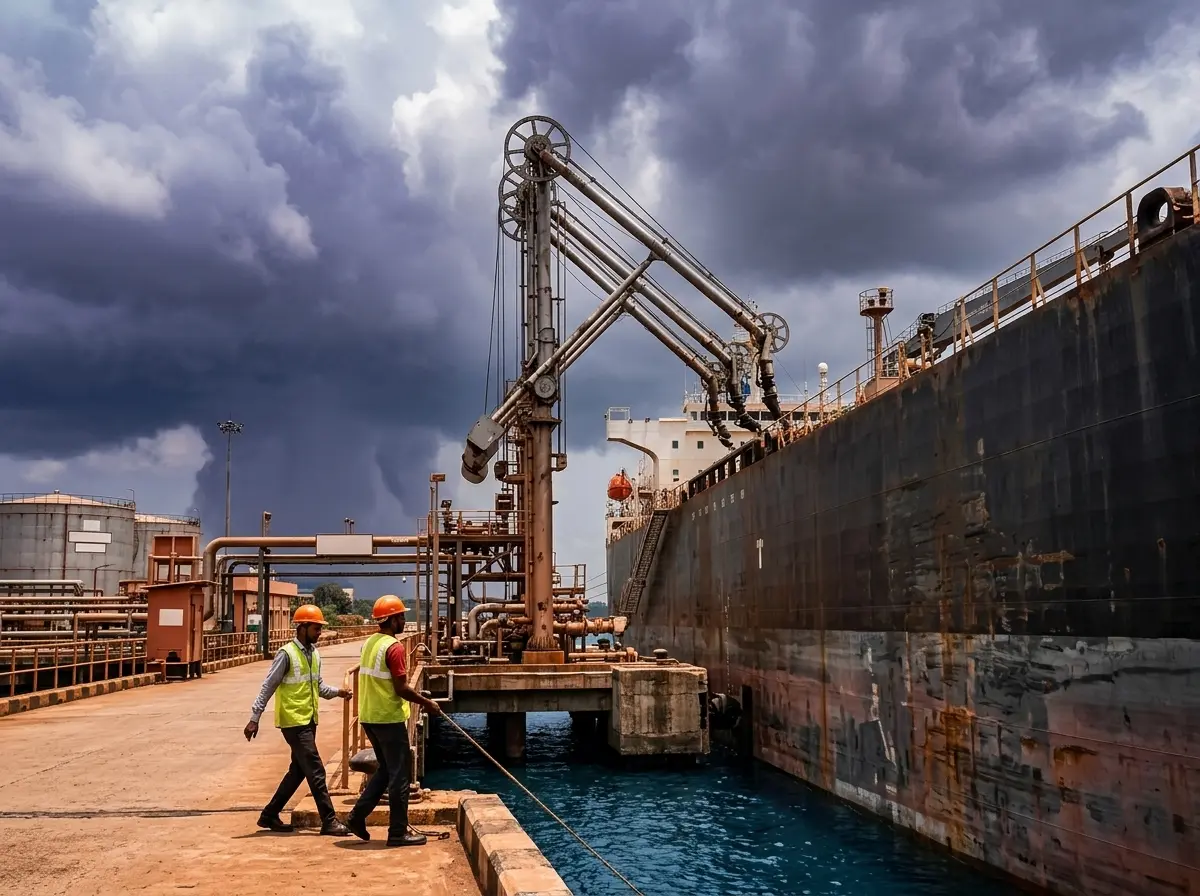
Russian Barrels Cover Half of India’s Needs
India imports about 88 percent of its oil. Kpler ship-tracking data put Russian crude arrivals near 2.7 million barrels per day in June-July, more than 50 percent of total intake. Separate Kpler figures cited across reports show a July record of 2.8 million barrels per day, or 55.5 percent of just over 5 million barrels per day overall. That is up from roughly 1.2 million barrels per day in January.
| Period | Russian Imports (mbd) | Share of India Total | Total India Imports (mbd) |
|---|---|---|---|
| January 2026 | ~1.2 | Lower | – |
| June 2026 | 2.7 | >50% | ~4.9 |
| July 2026 | 2.7-2.8 | 50-55.5% | >5.0 |
Volumes fluctuate with discounts, logistics and geopolitics. Earlier US pressure and a February trade framework produced temporary dips, yet Russian grades rebounded when Middle East risks rose. Discounted Urals and other Russian cargoes remain commercially attractive for complex Indian refiners such as Reliance.
Sumit Ritolia, modelling and refining manager at Kpler, noted that Russian crude has become an important supply hedge. It reduces exposure to disruptions on traditional Middle Eastern routes. Temporary US sanctions flexibility earlier this year kept barrels flowing during heightened West Asia tensions.
The January-to-July swing underscores how quickly the slate can shift when price and security incentives align. A move from roughly 1.2 million barrels per day to a 2.7 to 2.8 million range more than doubled the Russian contribution inside half a year. That pace leaves little spare room in the rest of the import mix if policy suddenly demands a reverse move.
For an economy that already relies on imports for about 88 percent of its oil, concentration at these levels is both a commercial choice and a structural exposure. The same concentration that delivers discounts also raises the cost of any abrupt exit.
When Physical Supply Security Comes First
The bill increases policy risk around Russian flows to India and China. It does not automatically impose tariffs. Implementation hinges on House passage, presidential signature and how aggressively the administration applies or waives the tools.
The US Senate’s vote to advance tougher sanctions on Russia increases policy risk around Russian crude flows, but does not change our near-term outlook for Indian or Chinese purchases. The measures still face further legislative and administrative hurdles, with the eventual impact depending largely on how aggressively the US administration chooses to implement them, including the use of exemptions or waivers.
Ritolia of Kpler made that assessment. Recent experience shows policymakers retain incentives to avoid steps that disrupt crude availability when physical security is the concern.
An industry source told Moneycontrol the legislation does not translate into automatic tariffs. India continues buying Russian oil because energy security is the priority. On X and in Indian commentary, the framing is blunt: cheaper Russian barrels help contain inflation and support political stability. Diversification is already the stated goal, yet abrupt cuts would raise the import bill and widen the current account deficit.
Those domestic stakes explain why New Delhi treats the Senate vote as a watch item rather than an immediate pivot point. Policy risk has risen. The hierarchy of drivers has not. Physical barrels, freight economics and inflation control still rank above secondary-tariff headlines in day-to-day purchasing decisions.
China faces a similar calculus under the same legislative language. Parallel exposure among the largest buyers is precisely why the bill’s waiver and exception clauses will draw intense scrutiny once the House acts.
Replacing 2.7 Million Barrels Is Not Simple
Global crude balances remain tight. The West Asia conflict has elevated the value of non-Middle East sources. A material restriction on Russian crude to India would not merely reshuffle trade. Analysts say it would tighten the broader market.
Ritolia put the core issue clearly: the question is not simply whether Russian barrels can be redirected to other buyers, but whether enough alternative crude exists to replace them without further tightening. At current Indian volumes, full replacement would be challenging or impossible in the short run. China faces parallel dynamics. Sudden removal of several million barrels of Russian export capacity has historically risked sharp price spikes, as seen in 2022.
A Kpler assessment of locked-in Russian volumes earlier this year already showed cargoes fixed weeks ahead and economics favoring discounted grades. That inertia still applies. The EIA short-term global oil market outlook has tracked post-conflict inventory builds and price declines after Hormuz reopened, yet any fresh supply shock would reverse the easing.
The replacement problem has two layers. One is finding physical barrels of suitable quality on short notice. The other is doing so without bidding up prices across the wider market that India and other importers already face. Tight balances leave little idle capacity to absorb a sudden 2.7 million barrel per day reallocation.
- Indian Russian intake near 2.7 to 2.8 million barrels per day at the July peak
- Total Indian imports just over 5 million barrels per day in the same period
- Russian share at 50 to 55.5 percent of that total
- Prior temporary dips under US pressure that later reversed when Middle East risks rose
Those figures show why analysts describe full near-term replacement as challenging or impossible. Redirecting cargoes to other buyers does not create new supply. It only rearranges existing flows inside a market that the EIA has described as only recently easing after earlier disruption.
Refiners Treat Russian Grades as Reliable Hedge
Indian refiners have demonstrated technical flexibility. They can run non-Russian grades. Commercial margins, freight and quality differentials still tilt toward Russian cargoes when discounts hold. Reliance’s re-entry after brief pauses underscores the pull.
Past US secondary tariffs and pressure produced temporary volume drops. January 2026 saw lower Russian shares before the rebound. Officials have repeatedly stated that energy decisions rest on commercial and strategic grounds. A May 2026 petroleum ministry comment reiterated that India would continue buying regardless of waiver status and saw no shortage risk.
Crowd discussion on X echoes the same hierarchy. Sanctions are viewed as a cost problem for India rather than a foreign-policy lever. Some observers warn that aggressive secondary measures could accelerate efforts by large buyers to deepen non-Western energy and payment ties.
- August 7, 2026: Senate passes the bill 86-11
- August 31, 2026: House expected to reconvene and consider the Senate version
- Thereafter: Possible presidential signature, followed by rule-making, designations of top buyers, and waiver decisions
House skepticism over tariff breadth remains the immediate obstacle. Even if enacted, waivers and phased enforcement could blunt the effect on India, especially while Middle East risks linger.
The refiners’ record of pausing and then returning to Russian grades shows that policy pressure can alter volumes for a time. It also shows that the commercial case reasserts itself once discounts and logistics line up again. Technical ability to run other crudes does not erase the margin advantage when Urals and similar grades remain cheaper delivered.
Waiver Clauses Give Washington Flexible Leverage
The bill’s own text supplies the main reason near-term Indian buying is unlikely to collapse. Presidential waiver authority in the national interest, exceptions for countries taking significant reduction steps, and the 15 percent gas-import threshold all create discretion after any final enactment.
That discretion sits alongside the requirement to focus on the five largest buyers making new purchases. Designation is not automatic for every barrel. Timing, thresholds and political judgment all intervene between a signed law and a tariff at the border.
Recent experience with temporary US sanctions flexibility earlier this year already showed how executive choices can keep barrels moving when West Asia tensions flare. The same institutional preference for avoiding physical disruption would confront any administration asked to impose 100 percent tariffs on a buyer that takes roughly half its crude from Russia.
Supporters still see the package as the strongest remaining lever against Moscow’s war revenue. Critics in the House focus on the breadth of the tariff power and the risk of weaponization. Both sides are arguing over a tool whose force depends on later choices, not on the Senate tally alone.
| Decision Point | What It Controls |
|---|---|
| House passage | Whether tariff authority exists at all |
| Presidential signature | Whether the bill becomes law |
| Buyer designation | Which of the five largest importers face measures |
| Waiver or exception use | Whether India or others receive relief |
Until those steps resolve, the legislation raises the political temperature without rewriting India’s import arithmetic. Refiners and ministries continue to weigh discounts, freight and Middle East hedge value more heavily than a bill that has not cleared the House.
Middle East Risk Keeps the Hedge Logic Intact
The West Asia conflict and earlier Hormuz-related disruption raised the premium on supply sources outside traditional Middle Eastern routes. Russian crude filled that role for Indian refiners. Kpler’s Ritolia described it as an important supply hedge precisely because it lowers exposure to those chokepoints.
Inventory builds and price declines tracked by the EIA after Hormuz reopened eased the immediate crisis tone. They did not erase the memory of tightness. Any fresh shock, whether from renewed regional conflict or from a sudden policy-driven loss of Russian barrels, would reverse that easing.
That backdrop explains the resilience of Indian demand even after earlier US pressure and the February trade framework produced temporary dips. When regional risk rose again, Russian grades rebounded. The pattern is consistent: policy can dent volumes, yet physical security concerns pull them back.
Diversification remains the stated long-term goal. In the near term, the combination of still-tight global balances, locked-in cargoes and the inflation benefit of discounted barrels keeps the hedge in place. Secondary tariffs would have to overcome that stack of incentives, not merely add a new line to the risk register.
Policy Risk Rises Without Changing the Near-Term Math
For now the numbers and the hedge logic point the same way. India is set to keep taking Russian crude at elevated levels. The Senate vote raises the political temperature and the chance of future friction with Washington. The second-order consequence sits in the market: any genuine curtailment of these volumes would hit global availability harder than it would simply punish Moscow. Replacing them cleanly is the hard part. That calculation, more than the bill’s text, shapes India’s near-term choices.

-
 TECH1 year ago
Where Garmin Watches are Made and How They are Assembled
-

 AUTO2 months ago
Tesla’s Roadster Is ‘a Few Weeks Away,’ Says Its Chief Designer
-
 NEWS10 years ago
Samsung Releases Galaxy Note7 TV Ad as Reddit AMA Leaks Specs
-
 NEWS10 years ago
Android 7.0 Nougat Rolls Out To Nexus Devices With New Emoji, Features
-
 FINANCE9 years ago
Cardano Price Surges as ADA Enters the Crypto Top Ten List
-
 NEWS10 years ago
Pre-Order the First Camera Made for Facebook Live Streaming Video
-
 FINANCE1 year ago
Binance Suspends Trading and Withdrawals for a System Upgrade
-
 FINANCE9 years ago
RChain Price Jumps Nearly 150% to a New All-Time High of $2.03