
FINANCE
Kospi Retail Fury Turns Lee Reforms Into Their Own Undoing
Korean mom-and-pop traders dumped a record amount of shares after the worst monthly Kospi loss since 2008.

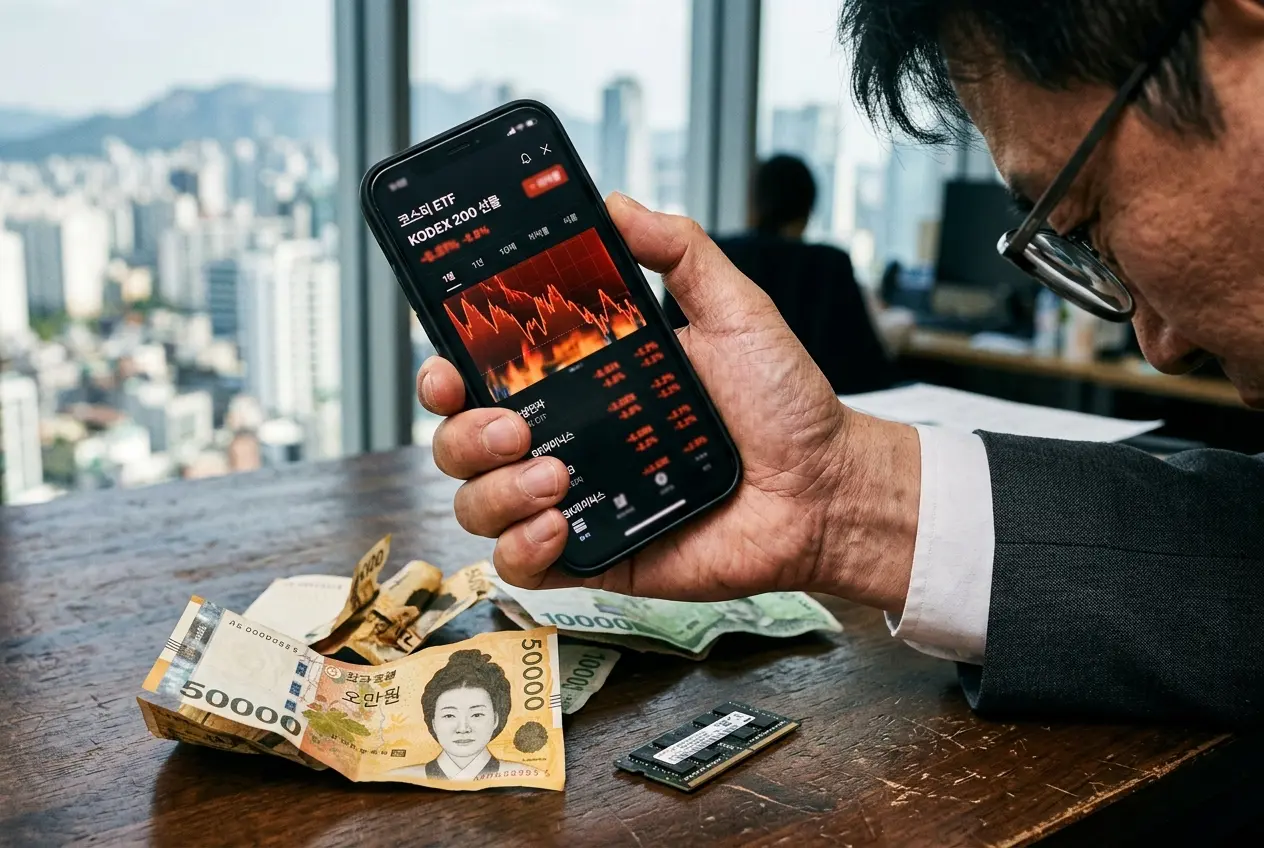
Retail investors dumped a record volume of Kospi shares on the last Friday of July even after the index staged an 18% single-day surge. The gauge still closed the month 22% lower, its steepest monthly loss since the global financial crisis, and many Korean traders now say they are done with the market for good.
The anger targets President Lee Jae Myung’s reform drive and the single-stock leveraged ETFs launched in late May. Those tools were meant to broaden access and keep money at home. Instead they helped create the crowded, leveraged trade that unraveled.
Record Rebound Could Not Stop the Selling
Friday’s bounce was the largest one-day gain on record for the Kospi. Samsung Electronics jumped 27% and SK Hynix 30% as Wall Street tech strength spilled over. Yet retail accounts kept selling. The month’s net result stood at a 22% decline, worse than any month since the 23% drop of October 2008.
The index finished roughly 30% below its June peak. Trading halted four times in July under circuit breakers, a tool rarely triggered before this year and never so often in one month.
- 22% Kospi monthly drop in July, steepest since 2008
- 18% record single-day rebound on the final Friday
- 78 trillion won ($54.2 billion) retail inflows in May and June
- Four circuit-breaker halts in one month
Kim Han-kyung, a Seoul resident in her late 30s who began buying Korean stocks in early May, captured the mood. “That was the era of the Kospi mania,” she said. “I got completely swept up in the frenzy. Now, I’m honestly scared. I’ve engraved two rules in my mind now. First: don’t invest in the Korean stock market. Second: follow the first rule.”
How Policy and Product Design Built the Mania
Optimism had been building for months. The Kospi more than doubled in the first half of 2026 on the back of AI memory demand, becoming one of the world’s best-performing major markets. Samsung and SK Hynix, which together account for more than half the index, rode the wave. An analysis of the first-half doubling shows domestic investors led the charge.
President Lee’s stock-market reform push added fuel. So did the late-May debut of single-stock leveraged ETFs that promised twice the daily move of Samsung or SK Hynix shares. The products were sold as a way to give retail traders more options and reduce outflows into foreign leverage vehicles.
Mom-and-pop accounts poured roughly 78 trillion won into Kospi shares across May and June. Margin debt climbed. Many concentrated bets on the two chip giants. The record close above 6,615 on chip strength earlier in the year had only reinforced the FOMO.
- Late May 2026: Single-stock leveraged ETFs linked to Samsung and SK Hynix begin trading.
- May-June: Retail nets about 78 trillion won of Kospi buying; margin financing hits records near 60 trillion won.
- Mid-June peak: Index approaches or exceeds levels near 9,000 before sentiment turns.
- Mid-July: Regulators halt new leveraged ETF listings and raise deposit requirements.
- Late July: Finance Minister apologizes; further curbs discussed.
Leveraged ETFs Turned Daily Moves Into Cascades
The ETFs use derivatives to deliver leveraged daily returns. That structure requires constant rebalancing. In a rising market the flows amplify gains. In a falling one they force selling into weakness, accelerating the drop.
Retail investors bought a net 14 trillion won of the products while foreigners took far less, according to KB Financial Group data cited in coverage. The KODEX SK Hynix Single Stock Leverage ETF fell more than 80% from its June peak. The Samsung equivalent dropped almost 75% from its early June high.
| Product / Stock | July / Peak Drawdown | Longer Context |
|---|---|---|
| Kospi index | -22% for July | ~30% below June peak |
| Samsung Electronics | -21% in July | Still up more than 4x since start of 2025 |
| SK Hynix | -35% in July | Still up nearly 10x since start of 2025 |
| KODEX SK Hynix Leverage ETF | >80% from June peak | 2x daily SK Hynix moves |
| Samsung leverage equivalent | ~75% from June peak | 2x daily Samsung moves |
Lee Jung-min, 40, who took a 50 million won loan against his apartment to trade, put it bluntly: “The government put fuel into the fire with those leveraged ETFs. I think it’s wrong how they turned the stock market into a casino.”
Lale Akoner, global market analyst at eToro, called it “a textbook example of what happens when a crowded trade meets leverage.” Deleveraging, she said, would take more than a few days and further sharp swings in tech and semiconductor names should be expected. The AI investment case itself, she added, was not collapsing.
Four Circuit Breakers and a Historic Monthly Drop
Volatility reached levels that made normal price discovery hard. Four full trading halts in one month marked a record. Crowd discussion on X pointed to multi-layered margin (credit on top of credit) and widespread forced liquidations. One widely shared tally claimed hundreds of thousands of accounts hit, though exact official counts vary. ZeroHedge highlighted reports of one in 30 Koreans facing margin calls at the height of the stress.
The drop ranked as the second-worst monthly decline on record after the 27% slump of October 1997 during the Asian financial crisis. July’s 22% loss beat every month of the global financial crisis except that single 2008 print. Strong earnings from Samsung and SK Hynix did little to slow the selling once the leverage machine turned.
Earlier coverage of the earlier Kospi surge and AI fragility had already flagged how concentrated the market had become. Two names driving more than half the index left little room for error once sentiment flipped.
Apologies Arrive After the Damage
Authorities moved in stages. In mid-July the Financial Services Commission announced a temporary halt on new single-stock leveraged ETF listings until conditions stabilize. The minimum cash deposit for trading them rose to 30 million won (about $20,300) from 10 million won, effective early August. Marketing bans and requirements for higher-quality liquidity providers followed. The FSC temporary ban on new listings was framed as protection for retail investors.
By late July Finance Minister Koo Yun-cheol apologized in a parliamentary session, acknowledging the products had been introduced without careful enough consideration. FSC Chairman Lee Eog-weon said officials were weighing limits that would restrict the ETFs to professional investors only and possibly cut the leverage multiple below 2x.
Retail investors are furious with the government. The level of anger and criticism is at its peak.
Jung Eui-jung, head of the Korean Stockholders’ Alliance with 64,000 members, delivered that assessment after the month closed. Francis Tan of Indosuez Wealth Management in Singapore called the environment a significant challenge for the government. Many participants said the response simply arrived too late.
Chip Giants Still Carry the Index
Samsung and SK Hynix remain the core of the Kospi story. Their combined weight exceeds 50%. Both still show massive multi-year gains even after July’s damage. The AI memory demand that powered the first-half rally has not vanished. Record profits were reported even as share prices collapsed under the weight of positioning and leverage.
The market’s status as a real-time barometer for the global AI trade means the July swings echoed into Nasdaq sessions. Yet the rebound on the final Friday showed how quickly sentiment can snap back when overseas tech stabilizes. The longer-term question is whether domestic retail capital returns in force or stays on the sidelines.
Some X commentary framed the episode as retail being “carried out” just before the next leg of the semi cycle. Others saw pure policy error that regulators are now hurriedly correcting. Both readings can be true at once: the underlying chip thesis survived, the leveraged retail layer did not.
Trust Will Take Longer Than Prices to Recover
The Kospi remains among 2026’s stronger major markets even after the pullback. Prices can reclaim lost ground if AI spending holds and earnings keep delivering. Rebuilding the confidence of the investors who poured 78 trillion won into the mania is a slower process.
Kim Dong Woo, a 33-year-old trader with more than seven years of experience, said the volatility still showed the market was not functioning normally. For first-timers like Kim Han-kyung the lesson was simpler and more permanent: stay out. Lee Jung-min’s casino comparison has stuck across social media.
Regulators have more tools left: higher suitability tests, lower leverage caps, possible professional-only access. Whether those steps restore faith or simply confirm that the experiment went wrong will shape domestic participation for years. The same forces that delivered outsized gains proved just as capable of taking them away in weeks. For a generation of Korean retail investors that lived through the July reverse, the memory may prove more durable than any single rebound.
Frequently Asked Questions
What was the Kospi’s exact performance in July 2026?
The index fell 22% for the full month, its worst monthly performance since the 23% drop in October 2008 during the global financial crisis. It finished about 30% below its June peak even after an 18% record one-day surge on the final Friday.
How much capital did retail investors put into Kospi shares before the drop?
Mom-and-pop traders piled roughly 78 trillion won, or about $54.2 billion, into Kospi shares over May and June alone. Separate data showed retail net purchases of the new single-stock leveraged ETFs reached 14 trillion won.
What specific measures did South Korean regulators take on leveraged ETFs?
In mid-July the Financial Services Commission temporarily banned new listings of single-stock leveraged ETFs until market conditions stabilize, tripled the minimum cash deposit to 30 million won effective August 5, banned marketing of the products, and required better liquidity providers. Officials later discussed limiting access to professionals and cutting the 2x multiple.
How do single-stock leveraged ETFs amplify market moves?
These funds use derivatives to target a multiple, typically 2x, of an individual stock’s daily return. Daily rebalancing means the funds must buy more of the underlying on up days and sell on down days, creating extra flow that can exaggerate both rallies and selloffs beyond ordinary investor activity.

-
 TECH1 year ago
Where Garmin Watches are Made and How They are Assembled
-

 AUTO2 months ago
Tesla’s Roadster Is ‘a Few Weeks Away,’ Says Its Chief Designer
-
 NEWS10 years ago
Samsung Releases Galaxy Note7 TV Ad as Reddit AMA Leaks Specs
-
 NEWS10 years ago
Android 7.0 Nougat Rolls Out To Nexus Devices With New Emoji, Features
-
 FINANCE9 years ago
Cardano Price Surges as ADA Enters the Crypto Top Ten List
-
 NEWS10 years ago
Pre-Order the First Camera Made for Facebook Live Streaming Video
-
 FINANCE1 year ago
Binance Suspends Trading and Withdrawals for a System Upgrade
-
 FINANCE9 years ago
RChain Price Jumps Nearly 150% to a New All-Time High of $2.03