
GAMING
Little Nightmares 2 on Switch 2 Tests Bandai’s Port Bet

Little Nightmares 2 Switch 2 finally has the Enhanced Edition Nintendo players missed in 2021: Bandai Namco Entertainment Europe, the publisher’s regional arm, launched the upgraded suspense platformer on May 29 for Nintendo’s newer console, with 60 frames per second, better resolution, faster loading, extra visual effects and a 4.4 GB download listed by Nintendo.
The port looks small next to a new mainline game, but it gives away Bandai’s horror strategy. The publisher has spent the past year putting Little Nightmares back on stronger hardware, then adding new chapters around the same damp nightmare world.
A Five-Year Gap Lands on Nintendo’s New Hardware
Nintendo’s Switch 2 product page now lists the digital edition with a May 29 launch, a 4.4 GB download, handheld, tabletop and TV play, and Nintendo Account family-group lending. It also puts the game in action and adventure tags, which is dry store language for a horror platformer built around hiding, timing and bad rooms.
The timing closes a platform gap opened by Bandai’s original Enhanced Edition breakdown, which brought the upgrade to PlayStation 5, Xbox Series X|S and PC in August 2021. The base Switch version stayed outside that wave, leaving Nintendo players with the standard edition while other platforms moved to the upgraded spec.
| Version | Where It Sat | Ownership Path | Technical Pitch |
|---|---|---|---|
| Original Switch release | Original hardware cycle | Standard Switch game | Portable play, but outside the 2021 Enhanced Edition wave |
| PS5, Xbox Series X|S and PC Enhanced Edition | Newer hardware wave in 2021 | No additional charge for supported existing owners | Ray-traced reflections, volumetric shadows, interactive particles and immersive audio |
| Switch 2 Enhanced Edition | Nintendo’s newer console in 2026 | Dedicated digital edition listed by Nintendo | 60 frames per second, higher resolution, improved loading and 3D soundscape mix |
The release reads as backfill. Bandai waited until Nintendo had hardware strong enough to sell the upgrade as a native edition, then put the second game beside the first game remaster and Little Nightmares III on the same shelf.
The Upgrade Is About Mood, Then Frame Rate
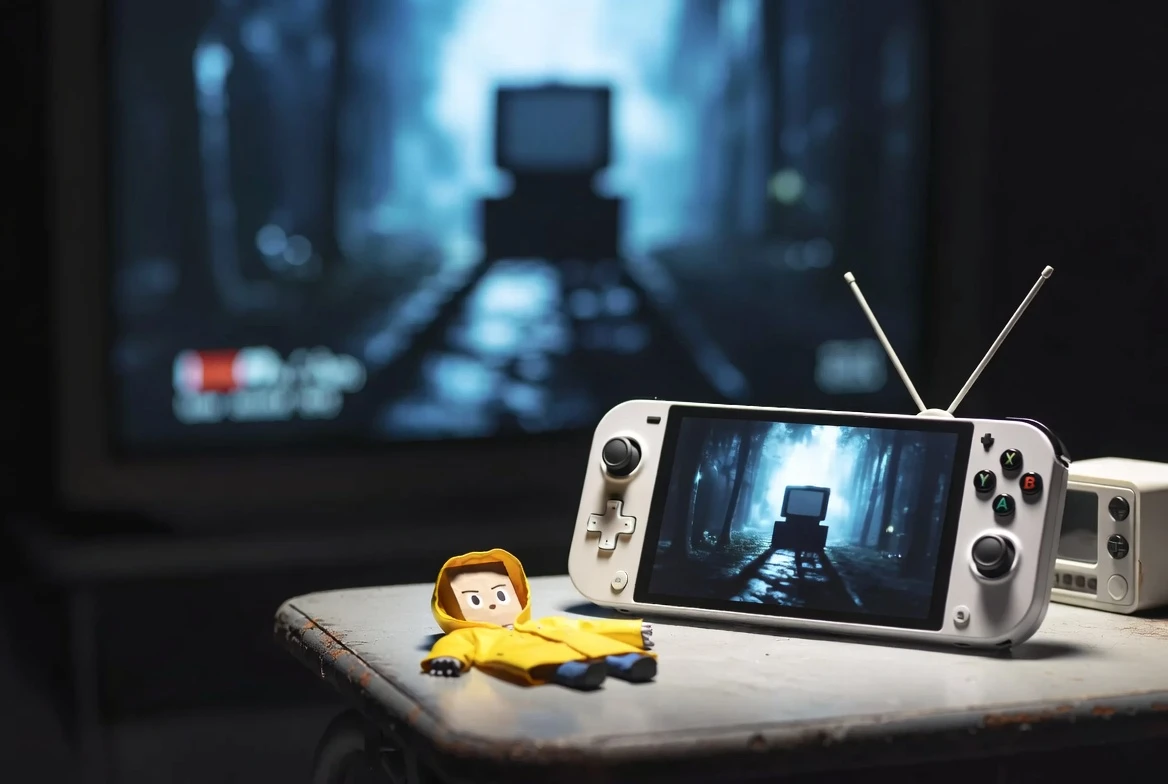
Little Nightmares II runs on discomfort. Mono and Six move through rooms that feel too tall, too quiet and too damp, with chases that often depend on the player noticing a shape before the monster does. A technical upgrade only works here if it keeps that pressure intact.
The older Enhanced Edition spec centered on ray-traced reflections, improved volumetric shadows, interactive particles and immersive audio for 5.1 or 7.1 systems. On the Switch 2 store page, Nintendo’s public wording names improved loading, higher resolution, interactive particles and a new 3D soundscape mix. That difference in wording matters because the portable pitch is less about screenshots and more about steadier motion in dark scenes.
Frame rate has extra weight here. Little Nightmares II asks for tiny movement corrections under stress, from crouching under desks to pushing through chase corridors where one missed beat means a restart. A steadier image can make the game feel fairer without changing the level design.
Still, no visual pass fixes the parts of Little Nightmares II that some players bounced off: trial-and-error chases, narrow jumps and puzzle timing that can feel harsh on a first run. The upgrade smooths the presentation around those decisions and leaves them intact.
Nintendo Players Face a Separate Purchase Path
The awkward ownership split is easy to miss. In 2021, Bandai said owners on PS5, Xbox Series X|S and PC could get the Enhanced Edition at no additional charge if they already owned the game through supported paths. Nintendo’s current listing instead presents a dedicated Switch 2 digital edition, so original Switch buyers should treat it as a separate purchase unless Nintendo or Bandai says otherwise.
- Players who first bought on PlayStation had a stated path from the older console version to the newer console version.
- Players who first bought on Xbox or PC were included in Bandai’s no-additional-charge language for the 2021 Enhanced Edition.
- Players who first bought on original Switch now see a separate Switch 2 product page rather than an upgrade entitlement in Nintendo’s public listing.
That leaves free on the other main hardware paths as the phrase that will sting for Switch loyalists. The technical reason may be mundane, with a new console product listing, store rules and save data all in play. The consumer result is simpler: the same named upgrade carries a different ownership story depending on where someone first bought Mono’s trip through Pale City.
Bandai’s Horror Catalog Now Has a Switch 2 Spine
The port lands in a busier run than the title alone suggests. Bandai has been treating Little Nightmares as a franchise maintenance move, a way to keep every major chapter visible while the series grows beyond the first two Tarsier games.
- the first Little Nightmares Enhanced Edition release put Six’s original escape on PS5, Xbox Series X|S, Switch 2 and PC, with higher resolution, more particles, ray tracing and 60 FPS.
- the Little Nightmares III launch plan brought Low and Alone to Switch 2 on the same day as other major platforms, making Nintendo part of the mainline launch instead of a late stop.
- the Little Nightmares VR release page pushed Dark Six into virtual reality (VR, a headset-based format that lets players look through the scene) on PlayStation VR2, Meta Quest and SteamVR.
The second game’s Switch 2 release fills the odd blank left between those moves. For a publisher, a horror series with small protagonists, recognizable monsters and short, streamable chapters is more useful when new players can buy the whole ladder without hunting through mismatched versions.
Commercial logic explains the back catalog push. The artistic risk sits in the opposite direction: the Nowhere can start to feel managed. Little Nightmares works best when its world looks half-remembered, so the best use of Switch 2 may be to make the old chapters easier to find without sanding off their rough edges.
The Developer Hand-Off Still Shadows the Port
Tarsier Studios, the Malmo developer behind the first two games, gives this release most of its texture even years later. Embracer Group, the Swedish games holding company, said in the Tarsier acquisition filing that Bandai Namco owned the Little Nightmares intellectual property and that Tarsier would complete Little Nightmares 2 while shifting to new intellectual property under Embracer.
That ownership split explains the strange afterlife of the series. The work being sold now is still built on Tarsier’s silhouettes, camera language, sound cues and cruel sense of scale. Yet the franchise’s future has moved through other hands, with Supermassive Games, the Guildford-based horror developer, leading Little Nightmares III.
For returning players, the Switch 2 port has two jobs. It has to preserve Tarsier’s feel on a handheld screen, and it has to sit neatly beside the newer Bandai-led entries without making the series look patched together.
Performance can be measured in motion and load times. Taste shows up more quietly, in whether the light, scale and panic still feel handmade. A clean port can earn trust; a lazy one would remind players that Little Nightmares is now a publisher-held property being extended beyond its founding studio.
The Late Port Lives or Dies on First-Time Players
The best audience for the Switch 2 edition may be the Nintendo-only player who met the series through the first Enhanced Edition or Little Nightmares III and now wants the missing chapter with the same console polish. That reader does not need a debate about ray tracing history. They need to know whether this is the version to buy.
For that player, the value case is clear enough: a stronger version of a core chapter, playable portable, with the audio and visual work that the game’s mood benefits from. For the owner who already bought on original Switch, the pitch is colder. Better shadows rarely erase the feeling of buying the same nightmare twice.
If Switch 2 owners treat the port as the missing middle of the series, Bandai has turned a late release into a useful shelf repair. If they treat it as a second charge for an old trip to Pale City, the Signal Tower will have a harder time humming through the eShop.

-
 NEWS10 years ago
Samsung Releases Galaxy Note7 TV Ad as Reddit AMA Leaks Specs
-
 NEWS10 years ago
Android 7.0 Nougat Rolls Out To Nexus Devices With New Emoji, Features
-
 FINANCE9 years ago
Cardano Price Surges as ADA Enters the Crypto Top Ten List
-

 AUTO1 month ago
Tesla’s Roadster Is ‘a Few Weeks Away,’ Says Its Chief Designer
-
 NEWS10 years ago
Pre-Order the First Camera Made for Facebook Live Streaming Video
-
 FINANCE12 months ago
Binance Suspends Trading and Withdrawals for a System Upgrade
-
 FINANCE9 years ago
RChain Price Jumps Nearly 150% to a New All-Time High of $2.03
-
 NEWS10 years ago
Google Play App Icons Get Fresh New Look: See the Latest Design Update