
GAMING
Godzilla: Destroy All Monsters Melee Remastered Launches November 3
Godzilla Destroy All Monsters Melee Remastered launches November 3 on PS5, Switch 2 and Steam for $29.99, with online play and 12 kaiju campaigns.

Godzilla: Destroy All Monsters Melee Remastered will hit PlayStation 5, Xbox Series X|S, Nintendo Switch 2, the original Nintendo Switch and Steam on November 3, 2026, Atari and developer Pipeworks confirmed at IGN Live 2026. The 2002 GameCube arena fighter returns rebuilt in Unreal Engine 5 at $29.99 across most platforms, with online multiplayer added for the first time and individual single-player campaigns for each of the twelve playable kaiju.
Atari published the original 24 years ago, and Pipeworks built it in Eugene, Oregon. The same two companies are steering the remaster, joined this time by Toho International, Toho Co.’s U.S. licensing subsidiary. Their announcement adds what the original never had: a competitive online mode and a progression system that no longer gates monsters, arenas and gallery items behind a mandatory, sequential campaign grind.
From Retail Leak to Official Trailer
The news broke through billbil-kun, a writer for the French deals site Dealabs whose retail-sourced gaming leaks carry a reliable track record for unannounced titles. The original report named November 3, all five target platforms and a tiered pricing structure. The official confirmation followed the same day, alongside a debut trailer screened at IGN Live 2026.
Toho had signaled a renewed push into console games in April 2025 as part of a global licensing expansion. The Godzilla gaming community had been watching retailer databases with close attention since, and the billbil-kun listing confirmed what many had been anticipating. The announcement also covered pre-orders, which opened June 6 at Atari’s online store.
Physical editions are confirmed for PlayStation 5 at $29.99 and for Nintendo Switch 2 at $39.99. Xbox Series X|S is digital only. PC via Steam and the original Nintendo Switch are both confirmed at $29.99.
- PlayStation 5: $29.99, digital and physical
- Xbox Series X|S: $29.99, digital only
- Nintendo Switch 2: $39.99 physical; digital pricing to be confirmed
- Nintendo Switch: $29.99
- Steam (PC): $29.99
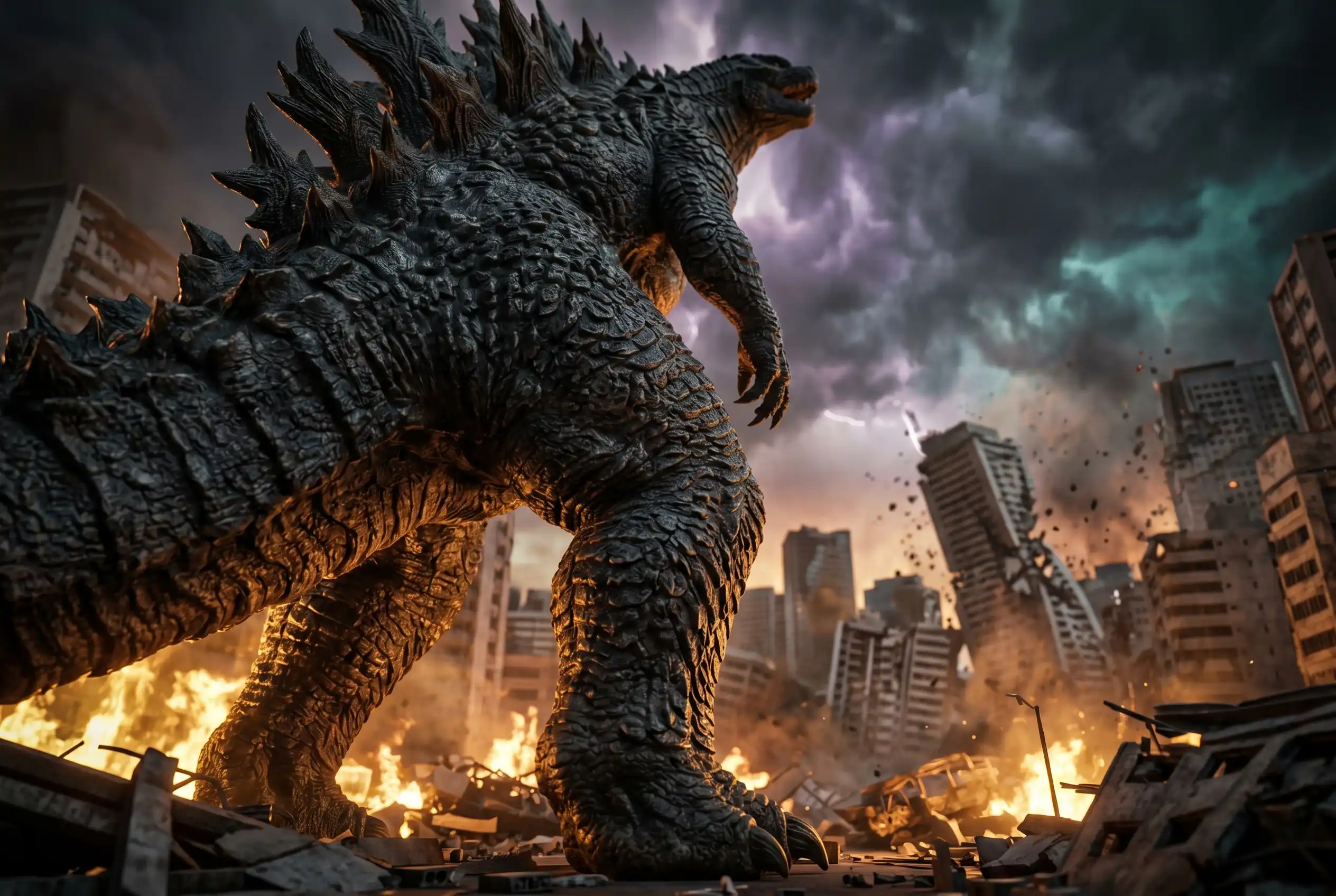
The GameCube Original’s Long Cult Life
A Divisive Critical Reception
The 2002 game shipped for the GameCube in October, published by Infogrames, and arrived with reviews that split on a specific fault line. IGN gave it an 8.4 out of 10 and called it "one of GameCube’s very best." Metacritic’s aggregated score settled at 73 out of 100, with critics on the lower end citing combat mechanics they found shallow and stages that felt interchangeable across multiple runs. The Academy of Interactive Arts and Sciences nominated it for Console Fighting Game of the Year at the 6th Annual Interactive Achievement Awards. Tekken 4 won.
The move set for each kaiju ran on direction-plus-button combinations. You could pick up Big Ben and hurl it at Megalon. You could swing Rodan into a skyscraper. The combat was simple by the standards of contemporary fighters. Four players on a couch watching buildings fall was the mode it was built for, and Adventure mode’s solo progression suffered by comparison. Clearing it required grinding through the same scenario repeatedly with different kaiju in a mandatory sequence, just to unlock the full roster.
- 73/100: Metacritic score, GameCube version, 30 reviews
- 8.4/10: IGN score ("one of GameCube’s very best")
- $40 to $50: current resale price range for complete original copies
- 10,000+: signatures on the Change.org petition calling for the trilogy’s return
Why the Game Stayed Expensive
Godzilla: Destroy All Monsters Melee was the first game in the franchise to support four-player gameplay. An Xbox port arrived April 16, 2003, adding MechaGodzilla 3, two extra arenas and improved graphics. A PS2 version had been planned but was cancelled before release. A GBA companion title, Godzilla: Domination!, released the same year by WayForward Technologies rather than the trilogy’s main developer. Two sequels followed: Godzilla: Save the Earth in 2004 and Godzilla: Unleashed in 2007.
When the franchise license lapsed, all three Pipeworks titles left the market and never returned digitally. They were never added to Xbox backwards compatibility. Complete original copies sell for $40 to $50 on the collector market now. A Change.org petition calling for the trilogy’s revival generated significant attention, and the developer publicly acknowledged watching its count climb past 10,000 signatures. Toho’s April 2025 announcement of a renewed console gaming push was what finally moved the project toward announcement.
How the Remaster Addresses the Original’s Gaps
Online Multiplayer and Per-Kaiju Campaigns
The 2002 game ran local multiplayer only, four players maximum, which made it a party staple on its original hardware but left solo players without a competitive outlet once they had cleared Adventure mode. The remaster adds online multiplayer with matchmaking and native support for modern haptics.
Per-kaiju campaigns also arrive for the first time. In the original, every player ran through the same Adventure mode structure regardless of chosen monster: the alien Vortaak race has seized Earth’s creatures, one breaks free, battles across eight environments including Tokyo and San Francisco and the Alien Mothership, and the run ends. The selected kaiju had a distinct moveset, but the scenario was identical. The remaster gives each of the twelve a separate narrative path through that structure.
Rebuilding the Unlock System
The original’s unlock path required beating the campaign with one monster to access the next in a fixed chain. Getting the full roster meant multiple complete runs in a mandatory sequence. The remaster replaces that with a currency-based system where kaiju, arenas and gallery items can all unlock in any order the player chooses.
The visual rebuild runs on Unreal Engine 5. All eight locations return, including the Alien Mothership as the final stage. The roster of twelve playable kaiju, confirmed to include the fan-favorite Showa-era Mechagodzilla, adds one character over the North American original’s eleven.
| Feature | Original (2002) | Remastered (2026) |
|---|---|---|
| Multiplayer | Local 4-player only | Local and online matchmaking |
| Single-player campaigns | One shared Adventure mode | Individual campaign per kaiju |
| Playable kaiju | 11 (N. America release) | 12 |
| Unlock system | Linear, fixed sequence | Currency-based, any order |
| Engine | Custom (2002) | Unreal Engine 5 |
| Haptics | None | Native modern haptics |
The Pipeworks Trilogy and What Comes Next
Pipeworks, headquartered in Eugene, Oregon, joined Virtuos in 2025. Virtuos is a global game development services group, and the move into that infrastructure gave the studio the production capacity to take on a remaster of this scope. Licensed games from the sixth console generation have a poor preservation record: source code gets lost, rights expire, studios close. The original developer handling its own licensed title’s remaster is uncommon in any era, and Toho’s renewed involvement as IP holder is what completed the three-party alignment.
It is only natural that Atari, as the original publisher in 2002, would partner with Pipeworks, the original developer and kaiju experts, to bring their creation back to center stage.
Mike Mika, chief creative officer of Atari, delivered those remarks at the June 6 IGN Live 2026 announcement. The confirmed release covers only Destroy All Monsters Melee. The trilogy includes two more titles, Godzilla: Save the Earth and Godzilla: Unleashed, and fan publication Kaiju United, which has tracked the revival campaign since Toho’s 2025 gaming announcement, characterized this remaster plainly as a test run. The studio has publicly said it wants to bring the full trilogy back. How this one performs will determine whether it gets to.
The same week’s release calendar adds context. The company announced Toy Story: Retro Roundup and Toy Story 3 Complete Edition for Nintendo Switch 2 and the original Switch alongside the kaiju brawler. Atari manages more than 400 games and franchises and has been reviving legacy IP in sequence. Destroy All Monsters Melee is the one the Godzilla gaming community had been watching most closely, and it’s the one that arrived first.
Godzilla Day and the November Window
November 3 is Godzilla Day in Japan, designated by Toho to mark the theatrical premiere of Ishiro Honda’s 1954 original film. The remaster launches on the franchise’s 72nd birthday, with Toho International among the three publishing partners on the announcement. That pairing of IP holder and calendar date is not coincidental.
Grand Theft Auto VI launches November 19, sixteen days later. Most publishers have cleared that late-November window, anticipating Rockstar Games’ release will absorb most of the available player attention. At $29.99, the remaster gives players a compact co-op option to run through in the weeks before GTA VI commands every screen. The $39.99 Switch 2 physical edition carries the premium Nintendo has set for new-generation cartridge releases, but the digital price holds at the base tier across all other platforms.
Atari’s official announcement trailer for Godzilla: Destroy All Monsters Melee Remastered, screened at IGN Live 2026, shows the visual upgrade across the returning city arenas. Pre-orders for physical editions opened June 6.

-
 AUTO1 month ago
Tesla’s Roadster Is ‘a Few Weeks Away,’ Says Its Chief Designer
-
 NEWS10 years ago
Samsung Releases Galaxy Note7 TV Ad as Reddit AMA Leaks Specs
-
 NEWS10 years ago
Android 7.0 Nougat Rolls Out To Nexus Devices With New Emoji, Features
-
 FINANCE9 years ago
Cardano Price Surges as ADA Enters the Crypto Top Ten List
-
 NEWS10 years ago
Pre-Order the First Camera Made for Facebook Live Streaming Video
-
 FINANCE12 months ago
Binance Suspends Trading and Withdrawals for a System Upgrade
-
 FINANCE9 years ago
RChain Price Jumps Nearly 150% to a New All-Time High of $2.03
-
 NEWS10 years ago
Google Play App Icons Get Fresh New Look: See the Latest Design Update