
BUSINESS
Sun Pharma Bets Medicaid Discounts Against a US Tariff Shield
Sun Pharma traded Medicaid most-favored-nation prices and future-launch MFN terms for more than two years of Section 232 cover, shielding its US specialty bet.

Sun Pharmaceutical Industries agreed on August 31 to sell medicines to US Medicaid at most-favored-nation prices in return for a delay of more than two years on Section 232 tariffs. The Mumbai group also pledged those MFN terms on future innovative launches, a concession that sits on the same franchise the tariff holiday is meant to protect.
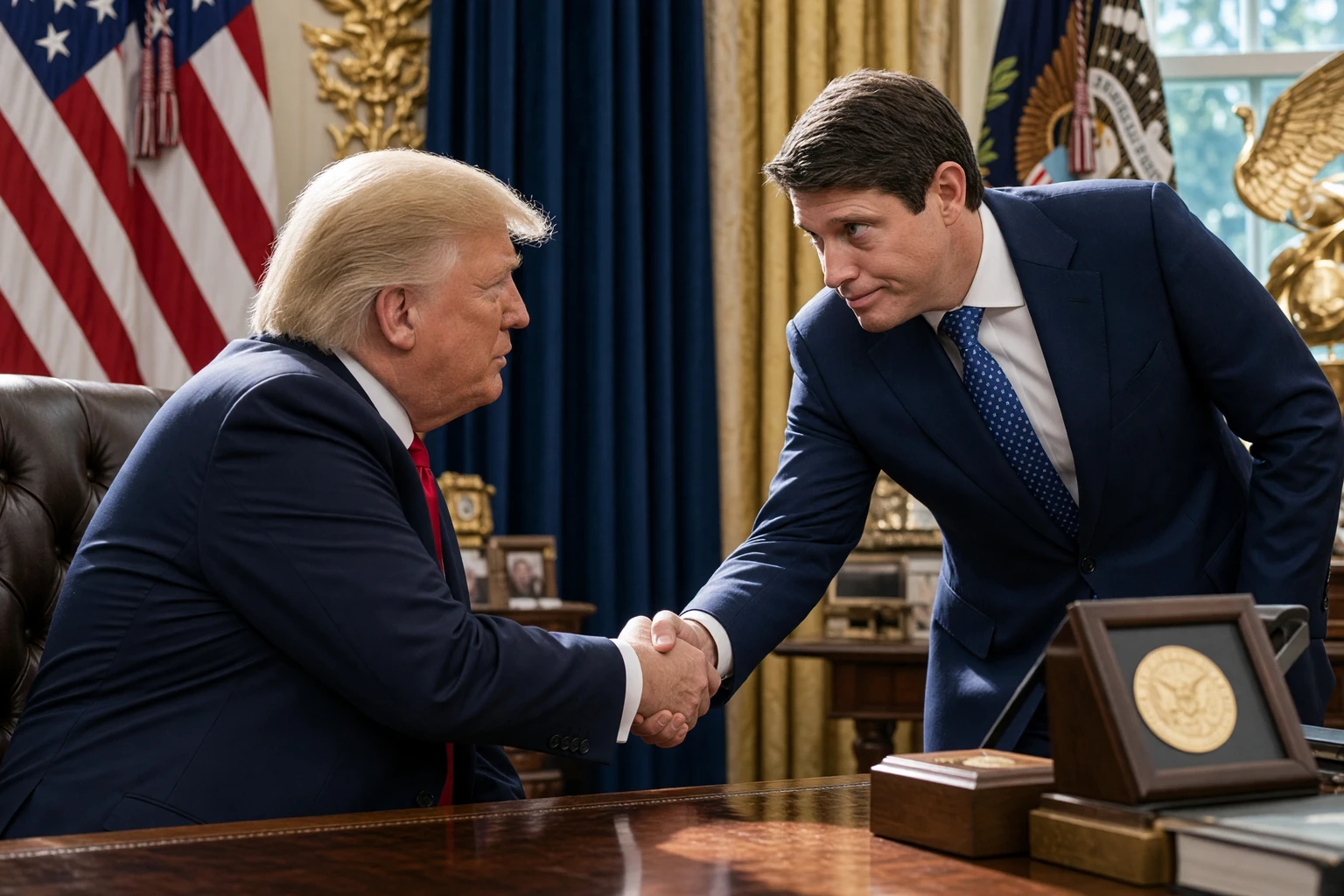
Rick Ascroft, Sun Pharma’s North America chief, signed in the Oval Office beside eight other midsize drugmakers. Shares were 0.60 percent lower at 1,944.25 rupees on the BSE in Tuesday trade after the filing.
Sun Pharma Trades Medicaid Discounts for a Tariff Shield
The company’s exchange filing said it will extend MFN pricing to state Medicaid programs and apply the same rule to innovative medicines it has not yet launched. In return, the filing said, the deal is delaying Section 232 tariffs for over two years on innovative pharmaceutical products, a pause the company tied to its US investment. Further terms stay confidential.
The United States is a key area of investment and expansion for Sun Pharma across clinical development, sales and marketing, and both API and finished products manufacturing. We are proud to play our part in delivering the medicines that millions of American patients count on every day.
Rick Ascroft, North America CEO, Sun Pharma, at the White House
MFN, in this setting, means a US buyer pays a price in line with the lowest paid in other developed countries. Medicaid already extracts large statutory rebates. The new cut is an extra rebate aimed at an international benchmark, not a new copay at the pharmacy counter.
WHAT WE KNOW
- Medicaid prices: Sun will offer MFN pricing to state Medicaid programs on products covered by the deal.
- Future launches: The same MFN rule applies to innovative medicines the company brings to the US later.
- Tariff pause: Section 232 duties on its innovative products are delayed for more than two years.
- Reserve pledge: Sun will send 71.4 tons of clindamycin and 6.75 tons of doxycycline to the Strategic Active Pharmaceutical Ingredients Reserve.
WHAT IS UNCONFIRMED
- Sun’s factory bill: The nine firms together pledged at least $19.6 billion of near-term US manufacturing; Sun’s own slice was not disclosed.
- Product list: The filing does not name which current brands fall under the Medicaid MFN price.
- Commercial channel: It is not public whether private-plan prices on existing drugs move, or only Medicaid and new launches.
That gap is why the stock barely moved. The visible bill is a Medicaid discount on a book that already sells at a rebate. The hidden bill is the promise to price tomorrow’s specialty launches off foreign nets.
The September 29 Clock on Patented Imports
The April 2 proclamation set a 100 percent duty on patented drugs and their ingredients, on national-security grounds. Generics and their ingredients are left out for now. So is a list of orphan drugs, nuclear medicines, plasma therapies, fertility treatments, cell and gene therapies, and antibody-drug conjugates, if they meet set tests.
Companies with approved onshoring plans face 20 percent, a rate that rises to 100 percent on April 2, 2030. Firms that execute MFN pricing deals and onshoring terms can sit at zero until January 20, 2029. That window is the “more than two years” in Sun’s filing, counted from the August 31 signing.
The Food and Drug Administration’s own figures, cited in the proclamation, show about 53 percent of patented products distributed in the United States are made abroad, and only 15 percent of patented API volume is produced at home. Washington is using that import share as leverage, in pharmaceuticals and in other trades, including a Canada-US tariff match that left supply chains exposed.
THE TARIFF CALENDAR
- May 12, 2025: President Donald Trump signs the order directing most-favored-nation prescription drug pricing.
- July 31, 2025: Letters go to 17 large manufacturers setting out the steps Washington wants on price.
- September 30, 2025: Pfizer becomes the first company to close an MFN deal.
- April 2, 2026: The Section 232 proclamation imposes the 100 percent patented-drug duty, with carve-outs for MFN signers and onshoring plans.
- July 31, 2026: Extra duties begin for the 17 companies named in Annex III.
- August 31, 2026: Sun Pharma and eight other midsize firms sign. The roster of MFN manufacturers reaches 26.
- September 29, 2026: The extra duty is scheduled to hit patented imports from companies outside that first group.
- January 20, 2029: The zero-tariff window for qualifying MFN signers is set to end.
Sun was not in the original 17. The September 29 date is the one that applied to its patented line, 29 days after the Oval Office ceremony. Signing was the way off that clock. The Commerce secretary can still raise the rate if commitments slip.
What Most-Favored-Nation Pricing Means for Medicaid
The operational vehicle is GENEROUS, the CMS Innovation Center model that launched in January 2026 and runs five years. It is voluntary for manufacturers and for states. States have until September 10, 2026 to apply.
CMS says Medicaid net drug spending of $60 billion in 2024 was $10 billion higher than in 2022. Under the model, a participating manufacturer reports an international net unit price. States then invoice a supplemental rebate so the Medicaid net lands on that benchmark. Coverage criteria are meant to be standardized across participating states, which is the carrot for the manufacturer: one set of rules instead of 50 separate fights.
Medicaid patients already pay small copays. The cash that moves is the rebate from the manufacturer to the state and federal programs. Lindsay Bealor Greenleaf of ADVI has put the typical pharmacy-counter payment in Medicaid in a low single-digit range, which is why this round of deals is a budget event more than a wallet event. Savings claims from the White House Council of Economic Advisers run to $600 billion over ten years across the whole MFN program, a figure that mixes Medicaid cuts on drugs already on the market with prospective prices on launches that have not happened.
Sun’s US dermatology book is the piece most exposed to that Medicaid math. The company ranks second by prescriptions in that segment and is pushing into immunology, cutaneous oncology, and ophthalmology. Ilumya, Cequa, and Odomzo led innovative-medicine growth in the June quarter. Ilumya has a US FDA decision date in October 2026 for psoriatic arthritis. Those are the brands a Medicaid MFN price would actually touch, if they sit on state formularies.
A $11.75 Billion Organon Bet Needs American Air Cover
The US is already the profit engine Sun is trying not to crack. In the quarter ended June 30, US formulation sales of $427 million were down 9.7 percent as generics, including lenalidomide, eroded, and still made up 26.6 percent of group sales. The company describes that market as about 27 percent of global revenue and its largest for innovative medicines.
SUN PHARMA Q1 SALES MIX
| Market | Sales | Share of group | Change |
|---|---|---|---|
| India formulations | Rs 54,749 million | 36.1% | +16% |
| United States | $427 million | 26.6% | -9.7% |
| Emerging markets | $311 million | 19.4% | +4.2% |
| Rest of world | $218 million | 13.6% | n/a in dollar terms |
| Global innovative medicines | $351 million | 21.9% | +12.8% |
Group sales were Rs 151,836 million, up 10.1 percent. Innovative medicines grew even as the US total fell, which is the mix shift the tariff deal is built to defend. R&D was Rs 8,264 million, or 5.4 percent of sales. The US pipeline the company cites includes 558 approved ANDAs and 57 approved NDAs.
On April 27 Sun signed a definitive deal to buy Organon & Co. for $14.00 a share in cash, an enterprise value of $11.75 billion. Combined revenue is put at $12.4 billion. Organon shareholders approved the deal on July 23. Managing director Kirti Ganorkar said on the July 31 results call that closing is on track for early 2027. The US share of the merged company is still planned at 27 percent, with a larger women’s-health and biosimilars book sitting inside that number.
A 100 percent duty on patented imports would have landed on that thesis in 29 days. MFN on future innovative launches is the other side of the same coin: the Organon brands and Sun’s own pipeline will, if the confidential annex says what the public language says, come to the US already benchmarked to foreign nets.
Clindamycin, Doxycycline and a Strategic Reserve
Price was not the only chip. The White House said several of the nine firms will donate active ingredients to SAPIR, a federal stockpile meant to cut reliance on foreign plants in an emergency. Sun’s contribution is two older antibiotics, not the dermatology biologics that drive its US specialty sales.
API TONS PLEDGED TO SAPIR
| Company | Ingredient | Quantity | Use |
|---|---|---|---|
| Sun Pharma | Clindamycin | 71.4 tons | Bacterial infections |
| Sun Pharma | Doxycycline | 6.75 tons | Bacterial infections |
| UCB | Levetiracetam | 163 tons | Seizure control |
| Teva | Metronidazole | 45 metric tons | Bacterial and parasitic infections |
| Teva | Amlodipine | 4.8 tons | Blood pressure |
| Astellas | Tacrolimus | 25 kg | Transplant rejection |
Sun’s two lots add to 78.15 tons. UCB’s single anticonvulsant shipment is more than double that. Because the proclamation left generic medicines and their ingredients outside the extra duty, these donations sit in a bucket Washington is not currently taxing. They are a supply-chain gesture, not a tariff workaround for Ilumya.
The nine companies also committed to invest at least $19.6 billion in US manufacturing in the near term. CSL has talked publicly about expanding a plant in Illinois. Sun did not attach a dollar figure or a site to its name.
Nine Midsize Drugmakers Join a 26-Company Club
The August 31 round was the second wave. The first 17 were the large branded houses, from Pfizer through Regeneron. This group is midsize and mixed: eye care, rare disease, plasma, generics, and Sun.
THE NINE SIGNATORIES
- Alcon: Eye-care products, including glaucoma and related vision drugs named in the White House disease list.
- Astellas Pharma: Transplant and other specialty brands; also a tacrolimus donor to SAPIR.
- BeOne Medicines: Oncology; one of the few firms to say it had secured a Section 232 exemption rather than a delay.
- BridgeBio: Rare disease, including the heart drug Attruby; it said orphan-only approvals may sit outside its future-price pledge.
- CSL: Plasma and vaccines, with a disclosed Illinois manufacturing expansion.
- Kyowa Kirin: Specialty; reported as receiving a deferral rather than a full exemption.
- Sun Pharma: The only Indian manufacturer in the nine, and the only Indian innovator among all MFN signers to date.
- Teva Pharmaceuticals: Generics and specialty; still described in some company comments as finalizing parts of its deal.
- UCB: Neurology and immunology, and the largest SAPIR donor in this round.
The White House said the new pacts bring the total to 26 manufacturers covering 89 percent of the branded drug market. Disease areas listed for this round include hemophilia, Parkinson’s, macular degeneration, glaucoma, liver disease, skin conditions, and several cancers. TrumpRx.gov, a separate cash-pay site launched on February 5, is the consumer-facing twin of the same MFN push; the White House said patients have saved more than $700 million on it since February.
For other Indian exporters of patented or specialty products, the September 29 clock did not move. Sun’s presence in the 26-firm club is a competitive fact as much as a political one. A peer that stays outside still faces the extra duty on patented goods, while Sun’s innovative line does not, at least until the pause expires.
Why Bernstein Sees a $1.2 Billion Franchise at Stake
Bernstein kept an outperform rating and a 2,235 rupee target, and called Sun the sole Indian company among the nine. The house put the innovative-medicines franchise at $1.2 billion to $1.3 billion and argued that lower Medicaid nets could widen access and ease prior-authorization friction on biologics. That is the bull case for taking the deal: give up some net price, pick up volume and a tariff holiday.
HSBC kept a buy rating and a 2,120 rupee target. Its note said the MFN deal removes the tariff overhang for two years and that an illustrative case implies a limited hit to FY29 earnings, with more detail still to come. That is the other reading, and it fits the share price. If the Medicaid cut is small and the tariff risk was large, the trade is cheap insurance.
WHERE THE HOUSES LAND
- Bernstein: Outperform, 2,235 rupee target; deal protects and may expand a $1.2 billion to $1.3 billion innovative book.
- HSBC: Buy, 2,120 rupee target; two-year tariff cover, limited modeled FY29 earnings impact, terms still thin.
- The open risk: MFN on future launches, including Organon products after an early-2027 close, is the clause that can still reprice the growth story.
The live objection is not that Medicaid will suddenly pay list. It is that a company spending $11.75 billion to own more US branded drugs has just promised to bring new innovative medicines in at foreign-linked prices, while the rest of the contract remains in a drawer. HSBC’s “wait for further clarity” line is the honest one. The pause runs past two years. The Organon close is still months away. The Commerce secretary keeps the right to lift the duty if the investment and pricing pledges do not show up.
Frequently Asked Questions
What Is Most-Favored-Nation Pricing for Medicaid Drugs?
Under the GENEROUS model, a manufacturer reports an international net unit price and then pays states a supplemental rebate so Medicaid’s net matches that benchmark. CMS says those extra rebates do not reset Medicaid Best Price and therefore do not change 340B ceiling prices. States invoice the rebates quarterly, on top of the older statutory Medicaid rebate that already applies to brand drugs.
What Are Section 232 Tariffs on Patented Medicines?
They are extra import duties imposed under the Trade Expansion Act after a Commerce Department national-security probe. The April 2 proclamation set 100 percent on patented drugs and related ingredients, 20 percent for firms with approved onshoring plans until April 2, 2030, and zero until January 20, 2029 for companies that close MFN pricing deals and meet the onshoring tests. Generic drugs and their ingredients are not in the extra-duty net at this time.
Which Ingredients Did Sun Pharma Pledge to the US Reserve?
Clindamycin and doxycycline, two antibiotics used for bacterial infections, in lots of 71.4 tons and 6.75 tons. The Strategic Active Pharmaceutical Ingredients Reserve is an emergency stockpile. Because generic ingredients are outside the current Section 232 patented-drug tariff, the donation does not by itself change duty treatment for Sun’s specialty brands.
How Long Does the GENEROUS Medicaid Model Last?
CMS launched the model in January 2026 and set it to run five years, with manufacturer and state participation both voluntary. Participating states can choose which of a manufacturer’s covered outpatient drugs they want at the international-linked price, and manufacturers that join receive standardized coverage criteria across those states instead of negotiating each program one by one.
Sun bought time through January 20, 2029, on terms that remain partly hidden, and it did so 29 days before the patented-import duty would have applied. The Organon close, the Ilumya decision, and whatever sits in the confidential annex will show whether the premium was cheap.
Disclaimer: This article is news reporting and analysis of a corporate and policy development, and it is for information only. It is not investment advice, a recommendation to buy or sell Sun Pharmaceutical Industries or Organon securities, or a forecast of tariff, rebate, or earnings outcomes. Readers who are considering any investment decision should consult a registered investment adviser or other qualified financial professional who can review their own holdings and risk tolerance. Figures, deal terms, tariff dates, and closing timelines reflect the company filing, White House materials, and CMS pages as of September 2, 2026, and may change as confidential annexes, state applications, and regulatory reviews move.

-
 TECH1 year ago
Where Garmin Watches are Made and How They are Assembled
-

 AUTO3 months ago
Tesla’s Roadster Is ‘a Few Weeks Away,’ Says Its Chief Designer
-
 NEWS10 years ago
Samsung Releases Galaxy Note7 TV Ad as Reddit AMA Leaks Specs
-
 NEWS10 years ago
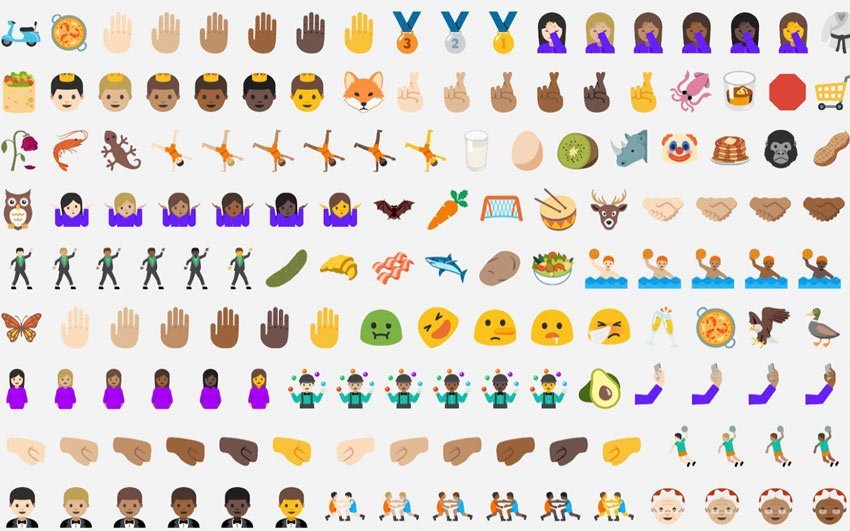
Android 7.0 Nougat Rolls Out To Nexus Devices With New Emoji, Features
-
 FINANCE9 years ago
Cardano Price Surges as ADA Enters the Crypto Top Ten List
-
 NEWS10 years ago
Pre-Order the First Camera Made for Facebook Live Streaming Video
-
 FINANCE1 year ago
Binance Suspends Trading and Withdrawals for a System Upgrade
-
 FINANCE9 years ago
RChain Price Jumps Nearly 150% to a New All-Time High of $2.03