
FINANCE
AI Beats and Soft CPI Lift Stocks but War Scar Limits Relief
Super Micro and CoreWeave surged on strong results while July CPI eased to 3.4%, cutting Fed hike odds, yet Iran-war yields still constrain broader gains.

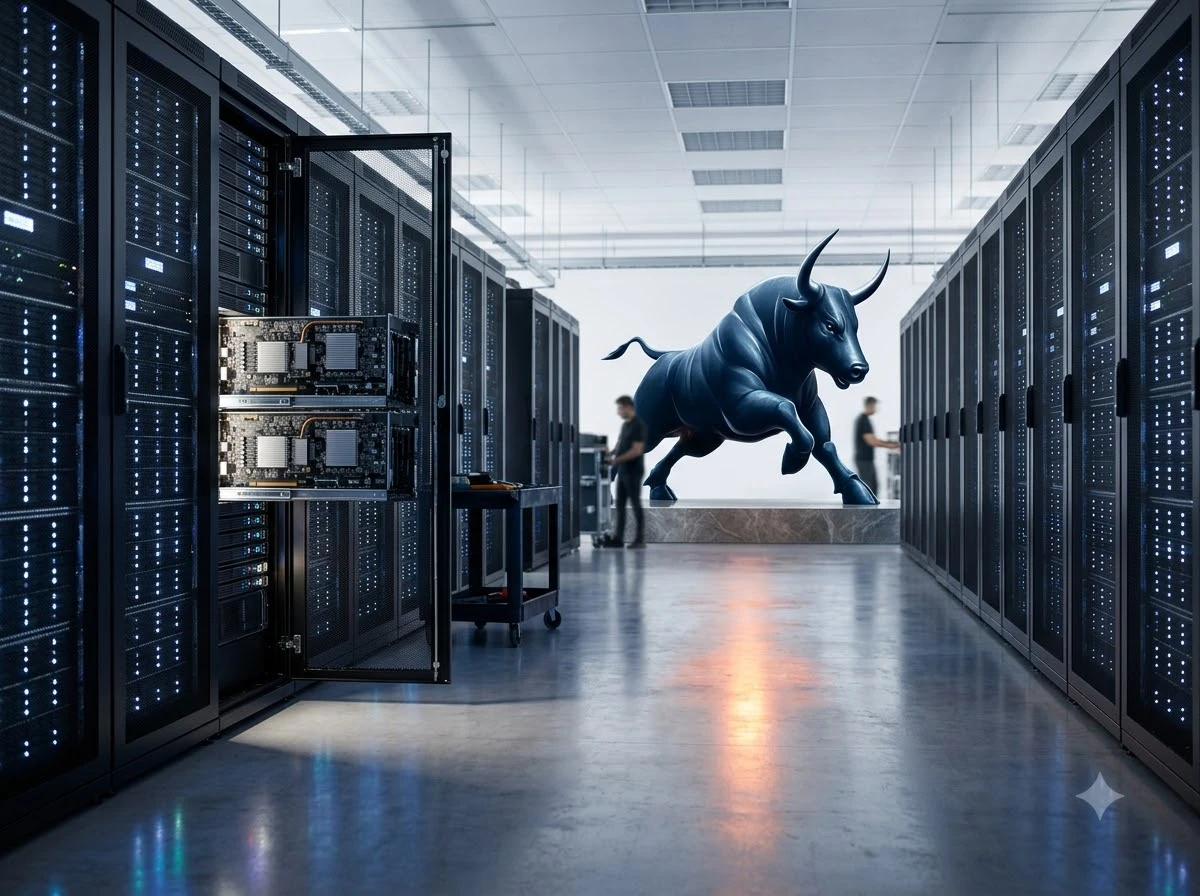
Wall Street edged closer to fresh records Wednesday as artificial intelligence stocks led gains after Super Micro Computer and CoreWeave posted results that topped forecasts, while July consumer prices eased to a 3.4% annual rate. The S&P 500 rose 0.3% in morning trade, the Nasdaq Composite advanced 0.7%, and the Dow Jones Industrial Average added 0.1%, according to market data cited in an Associated Press report carried by The Times of India.
The session marked a rebound for the AI group after months of volatility that tested whether heavy capital spending was converting into profits. Soft inflation data also pulled Treasury yields lower and reduced the odds of a Federal Reserve rate increase in September.
The two threads reinforced each other in morning trade. Cooler prices eased pressure on discount rates just as fresh earnings supplied proof that AI infrastructure demand was still scaling. That pairing helped technology reclaim leadership after a stretch in which valuation doubts had dominated the tape.
Indexes Climb on Narrow Tech Leadership
By mid-morning Eastern time the major averages sat higher, with technology outperforming. Nvidia, whose chips underpin much of the cloud AI buildout, gained 3.1% and ranked among the largest positive contributors to the S&P 500.
Super Micro Computer jumped 14.2% after its fiscal fourth-quarter report. CoreWeave surged 18.6%. The moves came after the sector had pulled back from earlier peaks as investors questioned lofty valuations.
- S&P 500: +0.3%, tracking toward its first gain since Friday’s all-time high
- Nasdaq Composite: +0.7%
- Dow Jones Industrial Average: +57 points, or 0.1%
- 10-year Treasury yield: down to 4.65% from 4.70%
Overseas, South Korea’s Kospi rose 3.7%, reflecting heavy exposure to Samsung Electronics and SK Hynix, key suppliers in the AI memory and chip chain. European and other Asian markets were mixed.
The narrowness of the advance mattered as much as the direction. A handful of AI-linked names drove index gains while breadth stayed limited, a pattern that leaves the tape sensitive to any single miss on guidance or adoption.
July Prices Cool but Energy Remains Elevated
The Bureau of Labor Statistics said the Consumer Price Index for All Urban Consumers increased 0.1% seasonally adjusted in July after a 0.4% decline in June. Over the 12 months ending July, the July CPI rose 3.4 percent, down from 3.5% in June.
Core CPI, which excludes food and energy, rose 0.2% on the month and 2.5% over the year, easing from 2.6%. Shelter accounted for roughly two-thirds of the monthly all-items increase. Energy fell 1.5% in July, with gasoline down 2.9%, yet the energy index was still up 14.7% over 12 months. Gasoline alone stood 24.6% higher than a year earlier.
| Category | July MoM | 12-Month |
|---|---|---|
| All items | +0.1% | +3.4% |
| Core (ex food & energy) | +0.2% | +2.5% |
| Food | +0.1% | +3.0% |
| Energy | -1.5% | +14.7% |
| Shelter | +0.1% | +3.2% |
| Gasoline | -2.9% | +24.6% |
The moderation gave traders room to dial back rate-hike expectations. CME Group data showed the probability of a September increase falling to 38% from roughly even odds the prior day. Higher rates slow growth by raising borrowing costs for households and firms; they also pressure stock valuations.
Monthly cooling in energy and a softer all-items print created space for the market to treat September as a lower-probability event. The still-elevated 12-month energy and gasoline readings, however, keep officials from declaring the inflation path fully settled.
Shelter’s large share of the monthly rise shows why core services remain sticky even when goods and fuel ease. That split explains why a single friendly CPI release can cut hike odds without erasing the gap to the 2% goal.
AI Server and Cloud Results Restore Some Faith
Super Micro reported net sales of $11.1 billion for the quarter ended June 30, up from $5.8 billion a year earlier. Gross margin reached 17.5%. Net income hit $1.178 billion, or $1.62 per diluted share. On a non-GAAP basis the company delivered non-GAAP diluted EPS of $1.70, well above the prior-year $0.41 and consensus estimates that had clustered near $0.96.
CEO Charles Liang said the company added several hundred enterprise customers, generated more than $60 billion in new orders, and entered fiscal 2027 with record backlog. Guidance calls for first-quarter fiscal 2027 sales of $14.5 billion to $15.5 billion and full-year fiscal 2027 sales of $65 billion to $72 billion.
CoreWeave posted revenue of $2.575 billion, more than double the year-earlier $1.212 billion. The net loss narrowed in absolute terms relative to some forecasts at $626 million, or $1.14 per share. Adjusted EBITDA reached $1.510 billion with a 59% margin. The company highlighted a CoreWeave revenue backlog of $104 billion as of June 30, plus more than $25 billion of net new commitments early in the following quarter.
Customer demand is accelerating, as enterprise adoption broadens and we continue to deepen our technology platform.
Michael Intrator, CoreWeave co-founder, chairman and chief executive, said the quarter marked an inflection as scale translated into operating leverage. The firm expanded active power capacity and completed early validation work on next-generation Nvidia platforms.
These prints supplied the concrete evidence many investors had sought: that AI infrastructure spending is converting into revenue and, in Super Micro’s case, sharply higher profitability and margins. Similar conviction has appeared around other AI bets, including ASML’s large stake in Mistral AI.
| Metric | Super Micro | CoreWeave |
|---|---|---|
| Quarterly sales / revenue | $11.1B (from $5.8B) | $2.575B (from $1.212B) |
| Profit signal | Non-GAAP EPS $1.70 vs $0.96 consensus | Adj. EBITDA $1.510B, 59% margin |
| Demand book | More than $60B new orders | $104B backlog; $25B-plus new commitments |
| Forward view | FY2027 sales $65B-$72B | Scale and power capacity expansion |
Side by side, the reports answer different parts of the same question. Super Micro showed that server demand can lift both top line and margins at once. CoreWeave showed that specialized cloud capacity can lock in multi-year backlog even while GAAP losses persist.
Together they reduced the fear that capital spending was running far ahead of recognizable revenue. That is why the AI group could rebound on the same morning that softer inflation lowered the discount-rate overhang.
Yields Fall but Stay Far Above Pre-War Levels
The 10-year Treasury yield slipped to 4.65% after the CPI release. That remains well above the 3.97% level seen before the outbreak of the war with Iran. The conflict drove oil prices higher and intensified inflation worries earlier in the year.
Brent crude eased 0.4% to $88.55 a barrel on Wednesday. Energy’s 14.7% year-over-year contribution to CPI shows the shock has not fully faded even as monthly gasoline prices declined. Long-term mortgage rates have already climbed to their highest level in a year on the earlier rise in yields, weighing on housing activity.
Investors on X noted the dual drivers. One widely shared summary of Super Micro’s numbers highlighted the EPS beat, margin expansion and $60 billion order haul as destroying near-term bear cases. Others treated the CPI reaction as real-time confirmation that disinflation still has room, while cautioning that volume later in the session would test conviction in the AI names that gapped higher.
The yield drop from 4.70% to 4.65% was modest in size yet large in signal. It confirmed that traders were willing to reprice the near-term Fed path on a single softer print, even with the 10-year still far above its pre-war 3.97% mark.
- Earlier this year: War with Iran lifts oil and inflation fears, pushing yields and mortgage rates higher.
- June CPI: All-items index falls 0.4% on the month, setting up the July comparison.
- July CPI release: Annual rate eases to 3.4%; core cools to 2.5%; September hike odds fall to 38%.
- Wednesday trade: Super Micro and CoreWeave report; AI names lead; 10-year yield slips to 4.65%.
Selective Winners and the Rate-Sensitive Drag
Clear beneficiaries sit in the AI hardware and specialized cloud layer. Super Micro, CoreWeave and Nvidia captured the bulk of attention and index contribution. Memory and equipment suppliers tied to the buildout, visible in the Kospi surge, also participated.
| Company | Move | Key Driver |
|---|---|---|
| Super Micro Computer | +14.2% | EPS beat, margin jump, strong guidance |
| CoreWeave | +18.6% | Revenue double, $104B backlog |
| Nvidia | +3.1% | AI chip demand proxy |
On the other side stand rate-sensitive corners. Higher mortgage costs already pressure housing. Any sustained period of elevated long-term yields raises financing expenses for consumers and businesses outside the AI boom. Broader market breadth remains narrower than the headline index gains suggest when a handful of mega-cap and AI-linked names dominate contribution.
The Iran conflict’s second-order footprint also shows up in global energy importers. The same oil dynamics that fed U.S. CPI earlier have produced distinct pressure points, including the Hormuz standoff oil impact on India.
That split leaves the session looking stronger at the index level than across the full market. AI hardware and memory suppliers absorbed the bid. Housing and other rate-sensitive areas still carried the cost of yields that, even after the morning decline, remain high by recent standards.
What Keeps the Ceiling in Place
Federal Reserve officials remain divided on whether rate increases should already have resumed. Wednesday’s data reduces the near-term urgency but does not erase the gap between current inflation, especially energy, and the central bank’s 2% goal. Core services and shelter continue to move higher on a monthly basis even as goods and energy cool.
Valuations in the AI cohort still require continued delivery. Super Micro’s gross margin expansion to the mid-teens and CoreWeave’s backlog growth help the fundamental case. Yet the sector had already run hard before the recent pullback, and any disappointment on future guidance or slower enterprise adoption could reverse the rebound quickly.
Oil prices around the high $80s keep a floor under energy’s contribution to inflation. A durable de-escalation that returned Brent closer to pre-conflict ranges would ease that pressure further; the reverse would quickly revive hike talk. For now the market is pricing a pause as the base case, with the 38% September hike probability reflecting that shift.
Wednesday’s combination of earnings proof points and a cooler CPI print delivered a clean risk-on impulse led by AI infrastructure. The durable question is how much of that impulse survives once the focus returns to still-elevated real yields and the unfinished energy shock.
Backlogs Anchor the Multi Year Buildout Case
Order books and guidance now carry as much weight as the quarterly profit lines. Super Micro’s more than $60 billion in new orders and record backlog into fiscal 2027 give investors a multi-quarter runway rather than a one-time spike.
CoreWeave’s $104 billion revenue backlog as of June 30, plus more than $25 billion of net new commitments early in the next quarter, points the same way. Demand is being contracted forward, not merely recognized in a single period.
- Super Micro: several hundred new enterprise customers; Q1 fiscal 2027 sales guided at $14.5 billion to $15.5 billion
- Super Micro: full-year fiscal 2027 sales guided at $65 billion to $72 billion
- CoreWeave: revenue more than doubled year over year with a 59% adjusted EBITDA margin
- CoreWeave: active power capacity expanded; early validation on next-generation Nvidia platforms
Those figures help explain why the AI group could bounce after months of volatility. Investors had been asking whether heavy capital spending converted into profits and locked-in demand. The backlog and guidance numbers speak directly to the second part of that test.
They do not remove valuation risk. They do, however, give the bull case a calendar of deliverables against which future quarters can be judged.
Cooler Inflation Reworks the Near Term Fed Path
The CPI details and the CME probabilities form a simple transmission chain. A 0.1% monthly rise in all items and a 3.4% annual rate, down from 3.5%, let traders cut the September hike odds to 38% from roughly even money.
Lower odds pulled the 10-year yield down to 4.65% from 4.70%. That small move still matters for equity math because it trims the discount rate applied to long-duration growth stories, including AI infrastructure names that dominate the Nasdaq.
Energy remains the open variable. Gasoline’s 24.6% year-over-year jump and energy’s 14.7% annual rise keep a floor under the headline index even after July’s 1.5% monthly energy drop and Brent’s slip to $88.55. Shelter’s share of the monthly increase keeps core services from falling as fast as goods.
Officials can therefore treat Wednesday’s print as permission to wait without treating it as proof that the 2% target is in reach. The market’s base case is a pause. The ceiling on how far risk assets can run still depends on whether energy and shelter cooperate in the prints that follow.

-
 TECH1 year ago
Where Garmin Watches are Made and How They are Assembled
-

 AUTO2 months ago
Tesla’s Roadster Is ‘a Few Weeks Away,’ Says Its Chief Designer
-
 NEWS10 years ago
Samsung Releases Galaxy Note7 TV Ad as Reddit AMA Leaks Specs
-
 NEWS10 years ago
Android 7.0 Nougat Rolls Out To Nexus Devices With New Emoji, Features
-
 FINANCE9 years ago
Cardano Price Surges as ADA Enters the Crypto Top Ten List
-
 NEWS10 years ago
Pre-Order the First Camera Made for Facebook Live Streaming Video
-
 FINANCE1 year ago
Binance Suspends Trading and Withdrawals for a System Upgrade
-
 FINANCE9 years ago
RChain Price Jumps Nearly 150% to a New All-Time High of $2.03