
NEWS
Air India AI2379 Drug Result Forces Reckoning on Pre-Flight Tests
Post-flight cannabis result on AI2379 after 300-foot loss reveals why DGCA never mandated pre-departure drug screens and now orders a review.

The pilot-in-command of Air India flight AI2379 was never given a psychoactive-substance test before departing Phuket on August 4 because DGCA rules do not require one before every flight. After a sudden 300-foot altitude loss that injured about 20 people, post-flight screening returned a non-negative result for cannabis, and a confirmatory test reportedly detected the substance.
That sequence has pushed the Civil Aviation Ministry to order a review of the framework. The 2020 decision to leave pre-flight drug testing for “due course” is now meeting its consequences.
The Upset Over Odisha
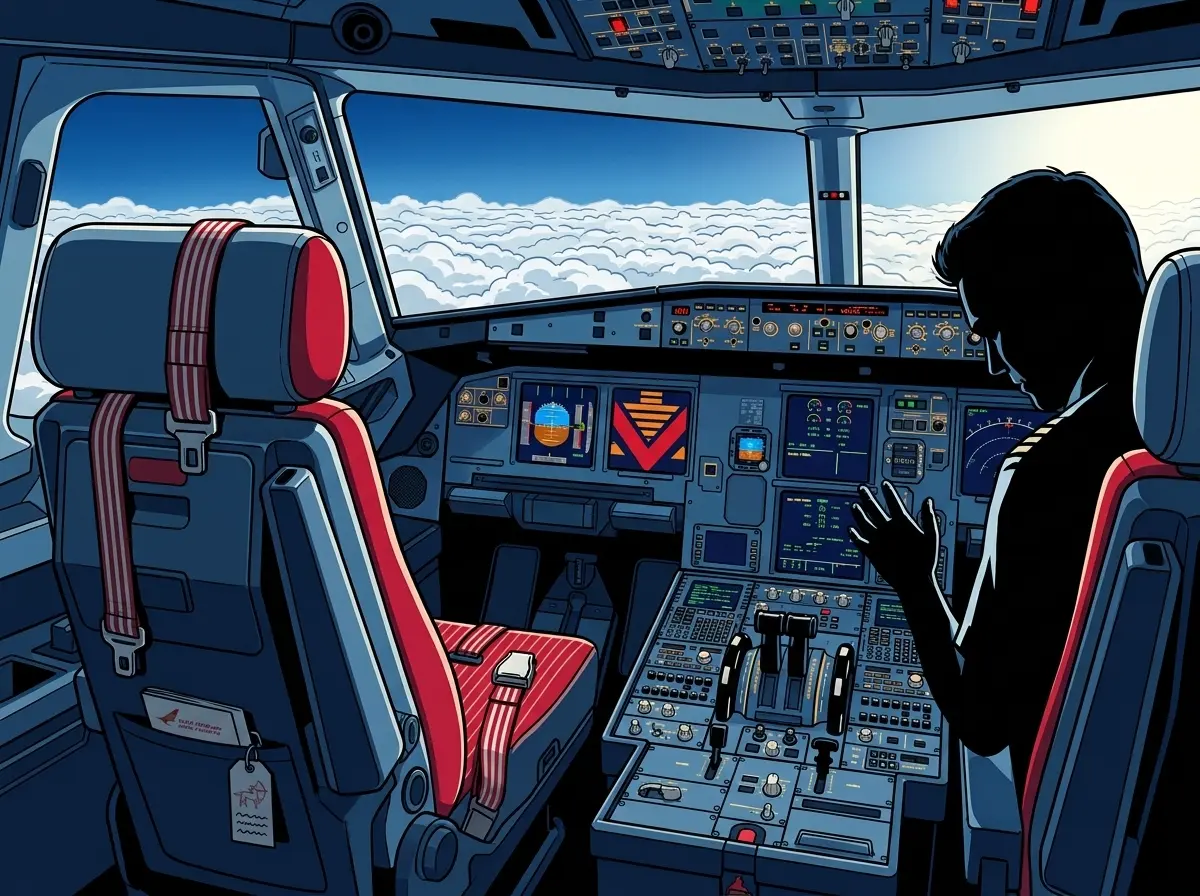
Air India’s Airbus A320 VT-EXO was cruising from Phuket to Delhi with 137 passengers and eight crew when systems alarms erupted. An internal flight safety report accessed by NDTV describes the captain standing behind the first officer’s seat discussing the air-conditioning system.
A stall warning flashed. The autopilot disengaged and the nose pitched up. The first officer, who was flying, pushed the nose down in a trained stall-recovery manoeuvre. The jet briefly went weightless under negative g, floating loose objects and the unstrapped captain. The aircraft lost a maximum of 300 feet before recovery.
- August 4, cruise phase: Sudden altitude loss of around 300 feet over Odisha; aircraft stabilises and continues to Delhi.
- Post-landing: Both pilots undergo breathalyser (negative) then psychoactive screening under standard post-occurrence procedures.
- Initial screen: Pilot-in-command non-negative; confirmatory samples sent to authorised laboratory; both pilots taken off roster.
- Confirmatory result: Sources say marijuana/cannabis detected; first officer clear.
- Investigation: AAIB classifies it a serious incident, with technical help from Airbus and France’s BEA; engineering logs show triple hydraulic indications and elevator fault.
Cabin injuries included passengers and crew. The captain later walked the cabin and requested medical teams. Sources told NDTV he appeared unable to stand on CCTV after landing and was on medication for sleep problems. A cabin crew member reportedly filed a complaint alleging he had smoked cannabis. The pilot has denied wrongdoing. He was not in his seat when the upset began.
Rules That Test After, Not Before
The governing text is DGCA Civil Aviation Requirements, Section 5, Series F, Part V, on examination for psychoactive substances. It covers flight crew and air traffic controllers. The DGCA psychoactive substance examination procedure states the test shall be carried out post flight, post shift or during the duty period. NDTV notes the CAR explicitly defers a pre-flight testing requirement “in due course.”
No blanket urine screen exists before every departure. That stands in contrast to the separate, mandatory pre-flight breathalyser regime for alcohol.
| Regime | Timing | Method | Coverage trigger |
|---|---|---|---|
| Alcohol (separate CAR) | Pre-flight mandatory | Breathalyser | Every applicable duty |
| Psychoactive substances (Series F Part V) | Post-flight, post-shift, during duty, or random | Urine screen then lab confirmatory | Random (min 10% yearly), pre-employment, post-accident/occurrence, follow-up, certain other cases |
Operators must run random testing that gives every employee an equal chance of selection and covers at least 10 percent of the relevant workforce each year. DGCA also runs its own random programme at major airports. Other mandatory points include before hiring, after accidents, and follow-up on prior positives. Self-declaration is encouraged, with rehabilitation before return to duty.
- Pre-employment and trainee admission screening
- Random selection by operator and by DGCA
- Post-accident or post-occurrence testing (the path used on AI2379)
- Follow-up after a confirmed positive and return-to-duty clearance
- Refusal treated as a serious breach leading to removal and possible licence suspension
In the AI2379 case the Ministry of Civil Aviation said testing followed standard operating procedures after a serious occurrence. Whether any random element also applied remains secondary to the post-event trigger that actually caught the result.
Alcohol Breath Versus the Full Urine Panel
The two systems are deliberately different. Breathalysers catch recent alcohol quickly and non-invasively at the gate. The psychoactive programme looks for a wider panel: cannabis/marijuana, cocaine, amphetamines, opiates, barbiturates, benzodiazepines and others listed in the CAR. Collection is urine under chain-of-custody rules, with immediate screening and laboratory confirmation of any non-negative.
A non-negative screen is not a final positive. It only means the initial test detected something that requires lab confirmation. The employee is removed from safety-sensitive duties while that process runs. That is why early official language spoke of “requiring confirmatory testing” rather than declaring a confirmed positive on day one.
Delhi High Court rulings have noted the pre-flight breath-analyser duty and its safety purpose. They do not convert that duty into a pre-flight urine drug screen. The distinction is built into the regulations themselves.
What a Confirmed Positive Triggers
The CAR sets a graduated ladder. A first confirmed positive leads to medical evaluation and rehabilitation or de-addiction measures as applicable. Return to safety-sensitive duties requires fresh negative tests and clearance by the organisation’s chief medical officer and treating psychiatrist. A Medical Review Officer can examine whether a result came from legitimate therapeutic use.
A second confirmed positive can bring a three-year licence suspension. A third can cancel the licence. Refusal to test triggers immediate removal and, without a full profile within a week, suspension.
Key numbers from the framework:
- 10 percent: minimum annual random coverage of flight crew and ATCOs by operators
- First positive: rehab path, not automatic permanent ban
- Second positive: three-year suspension exposure
- Third positive: licence cancellation path
Captain CS Randhawa, president of the Federation of Indian Pilots, told The New Indian Express the pilot “needs to be debarred for life” and called the case further reason for a stronger Civil Aviation Authority. Civil Aviation Minister Ram Mohan Naidu said any substance abuse would be treated “very seriously” and that the ministry would tweak legislation if needed. Air India has said it was not given the test results and conducts its own testing in line with regulations. Both pilots remain off roster. Sources expect the airline’s internal zero-tolerance culture to produce termination even if the CAR’s first-offence path is more measured.
How Other Regulators Frame the Same Risk
India’s post-duty and random model is not an outlier. The United States requires drug and alcohol testing of safety-sensitive aviation employees under the Omnibus Transportation Employee Testing Act and the FAA industry drug and alcohol testing program. The 14 CFR Part 120 drug testing requirements list pre-employment, random, post-accident, reasonable suspicion, return-to-duty and follow-up tests. They do not impose a urine drug screen before every single departure the way breath alcohol often functions for duty.
EASA and ICAO Annex 1 language likewise bar licence holders from exercising privileges while under the influence of psychoactive substances that impair safety. Implementation details vary, but universal pre-flight urine panels for every sector are rare because of cost, logistics, privacy and the detection windows of different drugs. Cannabis metabolites can linger well beyond impairment, which complicates “fitness for this flight” testing compared with alcohol’s clearer recent-use signal.
Sources told NDTV that existing Indian norms broadly track international standards, yet the ministry still wants the DGCA to study foreign protocols and decide whether strengthening is required. The AI2379 case supplies the concrete incident that makes the abstract comparison urgent.
Ministry Review Already Underway
After the confirmatory reports circulated, the Civil Aviation Ministry directed the DGCA to re-examine the psychoactive-substance framework. Naidu met outgoing Air India CEO Campbell Wilson with DGCA and AAIB officials present. He stressed that safety is the top priority and that no side, regulator or airline, should compromise.
What we know
- Post-occurrence testing was authorised and produced a reported confirmatory cannabis result for the pilot-in-command.
- The CAR does not mandate pre-flight urine drug tests for every flight; para language keeps testing post-duty or random and once promised pre-flight “in due course.”
- AAIB investigation continues on technical, operational, medical and human-factor evidence, including hydraulics and the stall event.
- Both pilots remain off flying duties; ministry has ordered a rules review.
What remains unconfirmed
- Exact laboratory report language and any Medical Review Officer findings on therapeutic sources.
- Whether the captain’s absence from the seat or any impairment contributed to the sequence that produced the stall warning.
- Final AAIB causal findings and any Air India disciplinary outcome.
- Specific changes, if any, the DGCA will propose after comparing foreign protocols.
Public reaction on X has been blunt: passengers asking why a positive pilot reached the cockpit at all, and why the system only samples after something has already gone wrong. That pressure sits alongside the pilots’ federation demand for lifetime exclusion and the minister’s openness to legislative tweaks.
The graduated CAR penalties and the 10-percent random floor were written to balance deterrence, rehabilitation and operational reality. AI2379 shows the cost of the missing pre-flight layer: detection arrived only after the aircraft had already pitched, the cabin had already been injured, and the safety case had already been made the hard way. The review now has a live case file, cockpit data, medical results and international benchmarks. Whatever language replaces the old “in due course” sentence will be written under that shadow.

-
 TECH1 year ago
Where Garmin Watches are Made and How They are Assembled
-

 AUTO2 months ago
Tesla’s Roadster Is ‘a Few Weeks Away,’ Says Its Chief Designer
-
 NEWS10 years ago
Samsung Releases Galaxy Note7 TV Ad as Reddit AMA Leaks Specs
-
 NEWS10 years ago
Android 7.0 Nougat Rolls Out To Nexus Devices With New Emoji, Features
-
 FINANCE9 years ago
Cardano Price Surges as ADA Enters the Crypto Top Ten List
-
 NEWS10 years ago
Pre-Order the First Camera Made for Facebook Live Streaming Video
-
 FINANCE1 year ago
Binance Suspends Trading and Withdrawals for a System Upgrade
-
 FINANCE9 years ago
RChain Price Jumps Nearly 150% to a New All-Time High of $2.03