
NEWS
Samsung TV Shipments Rise as TCL Claims Hotter Growth

Samsung TV shipments rose in the first quarter, but TCL grew faster in the categories that now matter most. According to Counterpoint’s Q1 TV shipments tracker, global TV shipments were up 3% from a year earlier, with Samsung up 8% and TCL growing in the 20% range.
Samsung Electronics, the Korean electronics group, still leads the market it has controlled for two decades. The pressure comes from the mix: TCL Electronics, the Hong Kong listed TV maker, is adding share in screen sizes, Mini LED and brand partnerships that can move profits, not just unit volume.
Two Trackers Point to the Same Squeeze
TV market trackers rarely line up perfectly. They can differ on shipment timing, brand ownership, channel checks and whether a unit belongs to a manufacturer, a brand licensee or a retail partner. That matters here because the exact numbers vary, but the direction does not: the market grew at a low single digit pace, the Korean leader stayed first, and the Chinese challenger grew faster.
TrendForce’s first-quarter TV shipment survey counted 47.12 million global TV brand shipments, up 3.3% from a year earlier and the best first quarter since the pandemic period. It ranked the top five as Samsung, TCL, Hisense, LG Electronics and Xiaomi, and put TCL shipments at 7.68 million units, up 11.3%.
| Source | Q1 Reading | Useful Signal |
|---|---|---|
| Counterpoint Research | Global shipments up 3%; Samsung up 8%; TCL in the 20% growth range | TCL’s pace was the main threat inside a growing quarter |
| TrendForce | 47.12 million TVs shipped globally; TCL at 7.68 million units and up 11.3% | Samsung kept first place, but the gap narrowed in volume |
| Samsung company results | TV profitability improved through premium and big-size sales | The leader is defending value, not just chasing units |
| TCL company results | Mini LED shipments more than doubled globally | The challenger is moving into higher-margin screen categories |
Viewed together, the data cuts against an easy victory lap. A stronger Samsung quarter still left room for its nearest challenger to accelerate.
TCL’s Growth Comes From the Expensive End
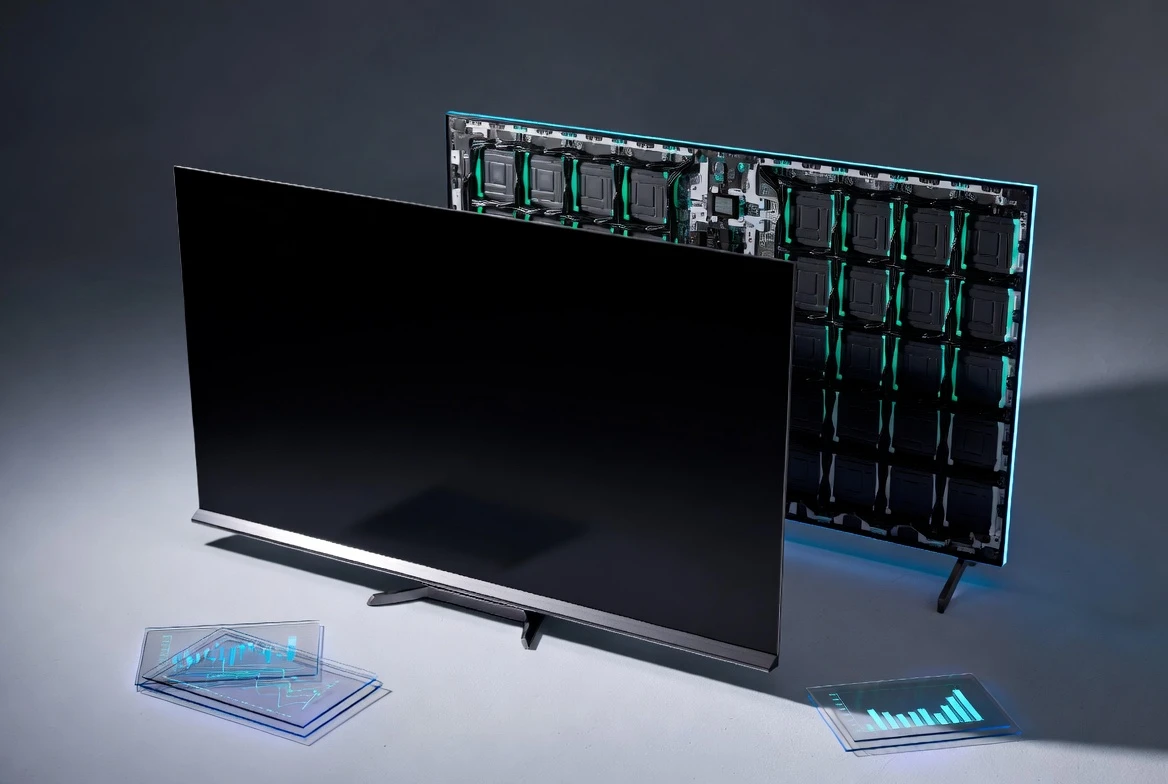
TCL’s own numbers show why the quarter matters. In TCL’s first-quarter results statement, revenue rose 15.3% to HK$29.2 billion, profit after tax rose 236.0% to HK$392 million, and adjusted profit attributable to owners of the parent rose 140.0% to HK$384 million. The TV detail that rivals will care about most was Mini LED, a liquid crystal display backlight technology that uses many small light-emitting diodes for tighter brightness control.
- 102.1% – TCL Mini LED TV shipment growth globally in the first quarter.
- 178.3% – Overseas Mini LED shipment growth for TCL.
- 55.6 inches – TCL’s average TV product screen size, up 2.3 inches from a year earlier.
- 32.6% – TCL’s shipment proportion for TVs at 65 inches and above.
Those are not small-TV numbers. Mini LED lets a manufacturer sell brighter, larger LCD sets near premium price points without relying on organic light-emitting diode (OLED, a self-emissive premium screen technology) panel economics. That gives TCL a broader ladder: low price at the bottom, large screen in the middle, and a sharper pitch at the expensive end.
Memory Costs Push Brands Toward Bigger Screens
TV demand did not suddenly snap back. TrendForce tied the first-quarter lift to pull-forward orders as brands tried to protect themselves from rising component costs. Dynamic random access memory (DRAM, short-term working memory chips) and NAND Flash memory have become tighter because artificial intelligence (AI, computing systems that perform tasks such as pattern recognition and automation) servers are competing for the same supply base.
The cost math changes which models get shelf space. TrendForce said memory’s share of production cost for a 32-inch TV rose from 6% to 7% previously to 15% in the first quarter. For a 65-inch model, the memory burden rose from 2% to 3% to 10%, still painful but easier to absorb in a larger and higher-priced set.
- Small TVs lose their bargain math – when memory becomes a larger share of the bill of materials, low-margin models get squeezed first.
- Large TVs absorb cost better – panels, cabinets and logistics matter more, so memory inflation is spread across a higher ticket price.
- Mini LED gets promoted harder – it gives brands a visible upgrade story without forcing every buyer into OLED pricing.
This is why the race matters beyond rank. If the market mix keeps moving toward 65-inch and 75-inch sets, the challenger with cheaper backlight supply can attack the leader’s profit pool, not only its entry shelf.
Samsung’s Premium Wall Still Looks Tall
The Korean group still has serious protection. In Samsung’s 20-year TV leadership announcement, the company said Omdia, the Informa TechTarget research firm, measured its global TV revenue share at 29.1% in 2025. It also said the company held 54.3% of the segment above $2,500 and 52.2% of the segment above $1,500.
Company earnings add another layer. Samsung’s first-quarter results said its Visual Display and Digital Appliances businesses, the group that includes TVs and home appliances, posted KRW 14.3 trillion in revenue and KRW 0.2 trillion in operating profit. The TV business improved profitability through premium and big-size sales, along with tighter resource use.
That premium wall has several layers: OLED, Neo QLED, Micro RGB and AI television software. The hardware helps justify price. The software keeps users inside a TV operating system where search, recommendations, ads and services can matter long after the unit ships.
Unit share is only half the contest. Samsung can lose some growth momentum and still defend revenue if buyers keep paying more for large-screen, premium and software-tied models.
The Sony Deal Gives TCL a Premium Passport
The Sony partnership makes TCL’s share gain more than a quarterly chart item. Sony’s TCL partnership filing said Sony Corporation, Sony Group’s electronics unit, signed legally binding definitive agreements with TCL for a home entertainment joint venture. The planned company, BRAVIA Inc., would be 51% held by TCL and 49% held by Sony, with operations expected to start in April 2027.
The transaction also carries industrial weight. Sony said the new company would inherit product development, design, manufacturing, sales, logistics and customer service for consumer TVs, business displays, projectors and home audio. The filing put the enterprise value of the transferred businesses and Sony EMCS (Malaysia) Sdn. Bhd. at about 102.8 billion yen, with TCL’s assumed consideration at about 75.4 billion yen before final adjustments.
For TCL, the prize is not just volume. BRAVIA gives it a premium name, picture-processing heritage and a stronger route into shoppers who might not otherwise consider a Chinese TV brand. The risk sits in the same place. Sony buyers care about calibration, motion handling and quality control. If the new venture feels like a cost-cutting exercise, premium customers will notice fast.
The Gap Will Be Decided in the Store Aisle
The next test is less a shipment league table than a merchandising fight. On a retail wall, shoppers compare brightness, size, motion, operating system and price in minutes. That favors brands that can make an upgrade visible without making it feel expensive.
For the market leader, the task is to keep the premium story coherent. OLED buyers need black levels and gaming features. Mini LED buyers need brightness and size. AI TV features need to feel useful, not like menu clutter. Each weak spot gives the challenger a price opening.
For TCL, the task is harder than growing units. It needs to persuade shoppers that a Mini LED set can be a premium choice, not a discount substitute. The Sony deal may help, but brand transfer takes time and product quality will speak louder than any ownership ratio.
If Samsung holds premium pricing while TCL keeps taking growth in Mini LED and large screens, the crown stays put but the margin fight tightens. If TCL’s first-quarter pace carries into the holiday build, the next race will be measured less by who ships more TVs and more by who controls the profitable inch.

-
 TECH1 year ago
Where Garmin Watches are Made and How They are Assembled
-

 AUTO2 months ago
Tesla’s Roadster Is ‘a Few Weeks Away,’ Says Its Chief Designer
-
 NEWS10 years ago
Samsung Releases Galaxy Note7 TV Ad as Reddit AMA Leaks Specs
-
 NEWS10 years ago
Android 7.0 Nougat Rolls Out To Nexus Devices With New Emoji, Features
-
 FINANCE9 years ago
Cardano Price Surges as ADA Enters the Crypto Top Ten List
-
 NEWS10 years ago
Pre-Order the First Camera Made for Facebook Live Streaming Video
-
 FINANCE1 year ago
Binance Suspends Trading and Withdrawals for a System Upgrade
-
 FINANCE9 years ago
RChain Price Jumps Nearly 150% to a New All-Time High of $2.03