
NEWS
OnePlus US Exit Rumor Gives Samsung and Google a Carrier Win

The OnePlus US exit story is not as settled as the viral version suggests. As of June 1, 2026, OnePlus has not posted a primary US closure notice, while its North America launch, support and sales pages remain live. The danger for buyers is simpler: Samsung and Google already control the carrier aisle.
If the reported pullback turns into a formal American retreat, the immediate winners are not exotic Android rivals. They are Galaxy and Pixel, because they have the two things OnePlus never made durable in the United States: broad carrier placement and clean monthly financing.
The Closure Claim Has a Proof Problem
The late-March report that lit the fuse came from 9to5Google, which said an unnamed person familiar with the company’s internal plans had confirmed shutdowns in certain global markets as early as April. That wording matters. It did not include a firm date, and OnePlus did not publish a matching US notice.
The company had already pushed back on shutdown claims earlier in the year, and its North America operation was described then as continuing support, software updates and user rights commitments. The later reporting changed the temperature, not the evidence standard. A commercial exit is a primary-source event when a company tells customers what will happen to sales, service and warranties.
Primary evidence still points in two directions. The company announced the OnePlus 15 North America launch notice on November 13, 2025, with US pricing listed at $899.99 for the 12 gigabyte model and $999.99 for the 16 gigabyte model. It also warned that US pricing and availability were subject to change because of market conditions.
That caveat is where the story lives. A phone can remain technically for sale while the company behind it pares back marketing, staff, retail support, or future launches. For buyers, the test is not whether the website loads today. The test is whether the next flagship gets carrier shelves, trade-in credits, warranty handling, and timely software attention after the rumor cycle ends.
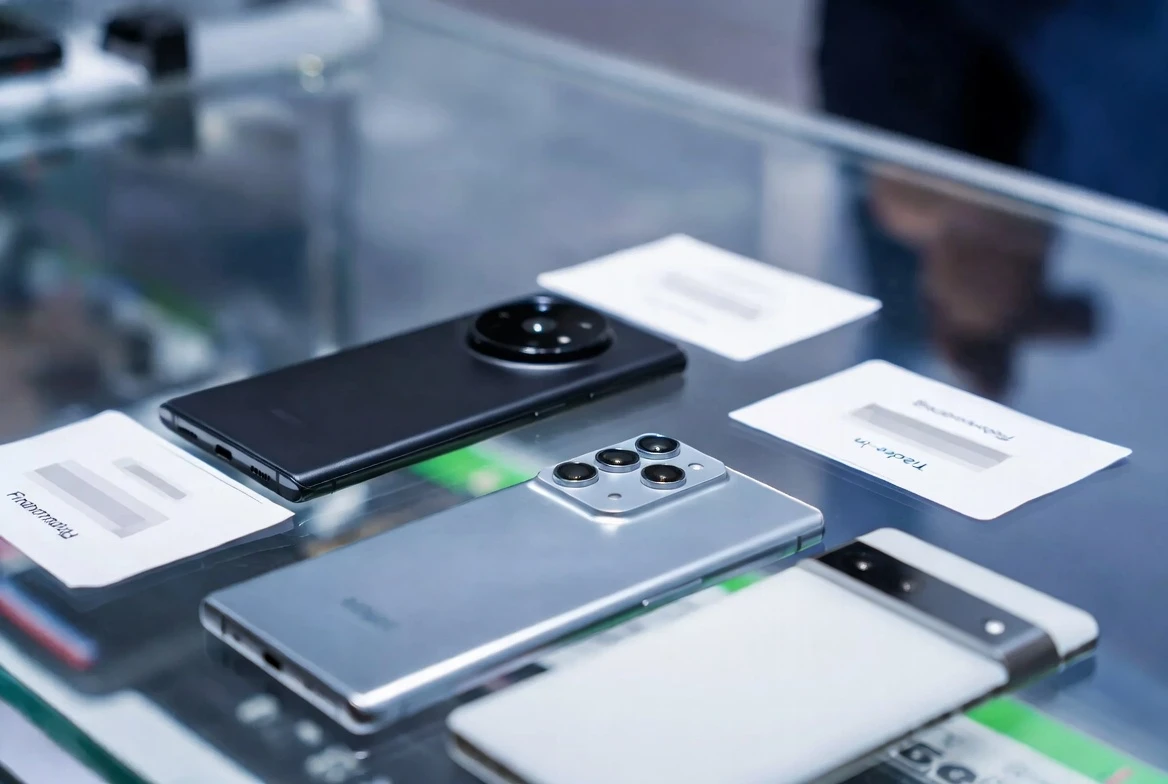
Carrier Financing Is the US Gate
Unlocked phones get attention online, but the US market is still trained by carrier counters. A flagship buyer sees a monthly bill, a trade-in value, and a promo credit before seeing a chipset name. That is the gap OnePlus never closed.
T-Mobile says its Equipment Installment Plan for devices can run for 24 monthly payments depending on the device. Verizon says its device payment program for smartphones uses 36 monthly installments with 0 percent Annual Percentage Rate (APR, the yearly cost of credit) and no finance charges. Both systems turn a high launch price into a line item on an existing wireless bill.
- 24 payments can make a premium handset feel closer to a subscription than a purchase.
- 36 installments give Verizon a longer window to attach trade-in credits and keep customers from moving lines.
- 0 percent APR matters less as a finance term than as a merchandising tool at the point of upgrade.
Carrier placement is expensive before a single box moves. A manufacturer must handle network testing, launch inventory, sales training, warranty routing, promotion funding and return logistics. Samsung can spread that burden across huge volumes. Google can support Pixel with its own store, Fi Wireless and a services business that wants the phone in more hands.
That machinery favors the brands already embedded in carrier systems. Samsung can launch with every major US operator ready to advertise, finance and service the device. Google can pair Pixel with retail, software and account ties. A smaller online-first brand starts every launch one step behind.
OnePlus Still Has the Spec Sheet Samsung Can Ignore
The irony is that the missing challenger had the hardware case. The OnePlus 15 technical sheet lists a Snapdragon 8 Elite Gen 5 platform, 12 or 16 gigabytes (GB, a standard measure of memory or storage) of random access memory (RAM, short-term working memory for apps), Universal Flash Storage (UFS, fast built-in phone storage) 4.1, a 7,300 mAh dual-cell battery, 80-watt wired charging in the US and 50-watt wireless charging.
Samsung’s own launch material says the Galaxy S26 series US availability page put the phones at Amazon, Best Buy, Samsung stores, Samsung.com and carriers nationwide, with general availability starting March 11. Google’s Pixel 10 phone lineup leans on seven years of updates, trade-in, financing, repair and Google Store support.
| Brand Offer | Hardware Hook | US Sales Advantage | Buyer Risk |
|---|---|---|---|
| OnePlus 15 | Large battery, fast charging, $899.99 start | Strong direct channel and enthusiast demand | Future local roadmap is unclear after exit reports |
| Galaxy S26 Series | Artificial intelligence (AI) features, broad model range, Ultra from $1,299.99 | Carrier nationwide plus big retail reach | Higher prices and slower charging expectations |
| Pixel 10 Family | Tensor G5, seven years of updates, Google services | Google Store, financing, trade-in and repair support | Narrower hardware range than Galaxy |
That comparison shows why a retreat would matter. OnePlus pressures rivals where spec sheets are measurable: battery capacity, wired charging and launch storage. Samsung and Google pressure shoppers where US decisions get made: financing, support and retail trust.
Battery chemistry is the warning sign. Chinese brands have moved faster on high-density cells, while US shelves still treat extreme endurance as a niche selling point. If the most visible battery-first challenger fades, Samsung and Google can take longer to match that advantage without paying an immediate sales penalty.
Samsung and Google Own the Visible Android Aisle
Samsung’s biggest advantage is boring, which is why it works. It can put Galaxy phones in carrier stores, Best Buy, its own stores and online channels at the same time. Its new series also arrives with trade-in language built into the launch, including up to $900 in eligible instant credit through Samsung’s own pre-order offer.
Google’s path is narrower but cleaner. Pixel does not need to beat Galaxy unit for unit to gain from OnePlus confusion. It needs to be the second premium Android answer when a shopper wants long updates, Google services, AI features and a phone that will still have visible support years later.
Apple sits outside this Android fight, but it shapes the floor. The iPhone trains US buyers to expect polished retail, simple financing and long software life. Samsung can answer that at scale. Google can answer it with software identity. OnePlus answered it with value and power, which is harder to sell from the edge of the store.
For Samsung, the benefit of a weaker OnePlus is price breathing room. For Google, it is permission to define the non-Samsung Android choice around software instead of charging speed. Neither company has to match every OnePlus spec if the rival cannot meet buyers where they pay.
The Buyer Loses More Than a Brand Name
The lost option goes beyond nostalgia. OnePlus made premium Android feel less settled. Its best phones tended to ask an annoying question for Samsung and Google: why does a phone with a lower price sometimes charge faster, game harder or last longer?
Without that pressure, buyers have fewer ways to punish slow hardware choices. Silicon-carbon batteries can stay niche longer. Faster wired charging can remain a China-market feature. Storage upgrades can keep acting like a pricing ladder rather than a basic expectation.
OnePlus was also useful to people who never bought one. A loud challenger gives reviewers, retailers and customers a comparison point. Once that comparison fades, the mainstream brands get to decide which upgrades count as premium and which can wait for the next cycle.
The effects show up in ordinary purchase decisions:
- Shoppers who want a high-end Android under $1,000 have fewer flagship-grade choices with US warranty comfort.
- Gamers and heavy travelers lose a battery-first Android option that did not require a folding-phone budget.
- Carrier customers see fewer reasons for Galaxy and Pixel promotions to get more aggressive.
- Unlocked-phone buyers face a harder choice between import models and weaker network or service guarantees.
Motorola, Sony, Asus and gaming-phone brands can fill pieces of the gap, but none has the same mix of mainstream recognition, flagship pricing and enthusiast loyalty in the United States. The hole would be small in unit share and large in competitive irritation.
Support Questions Keep the Story Open
Current owners need less drama and more paperwork. OnePlus’ US support pages still show routes for repair status, customer service and returns, and the company lists a 15-day return window plus a 12-month limited warranty for many phone purchases on its US return and replacement policy. Those pages matter more than rumor threads.
The regulatory layer matters too. The Federal Communications Commission (FCC, the US agency that authorizes radio devices) has an equipment authorization registry description saying radio-frequency devices must be authorized before they are marketed or imported into the United States. If future OnePlus models skip US approval or carrier certification, the buyer risk moves from hard to find to wrong product for the network.
Owners should save receipts, warranty records, repair tickets and update commitments before changing devices. Prospective buyers should check whether a specific model has US warranty handling, domestic repair support and the network bands their carrier uses. A cheap import is less cheap if voicemail, emergency alerts, 5G access or warranty service becomes a scavenger hunt.
By early summer, the scoreboard is simple. A confirmed US closure notice would turn Samsung and Google from likely beneficiaries into certain ones. Continued sales without carrier expansion would still leave them with most of the advantage. The weakest version of the rumor is enough to help Galaxy and Pixel because confidence is part of the product.

-
 TECH1 year ago
Where Garmin Watches are Made and How They are Assembled
-
 AUTO2 months ago
Tesla’s Roadster Is ‘a Few Weeks Away,’ Says Its Chief Designer
-
 NEWS10 years ago
Samsung Releases Galaxy Note7 TV Ad as Reddit AMA Leaks Specs
-
 NEWS10 years ago
Android 7.0 Nougat Rolls Out To Nexus Devices With New Emoji, Features
-
 FINANCE9 years ago
Cardano Price Surges as ADA Enters the Crypto Top Ten List
-
 NEWS10 years ago
Pre-Order the First Camera Made for Facebook Live Streaming Video
-
 FINANCE1 year ago
Binance Suspends Trading and Withdrawals for a System Upgrade
-
 FINANCE9 years ago
RChain Price Jumps Nearly 150% to a New All-Time High of $2.03