
NEWS
Gatsby’s $150 Robot Clean Puts Privacy on the Floor

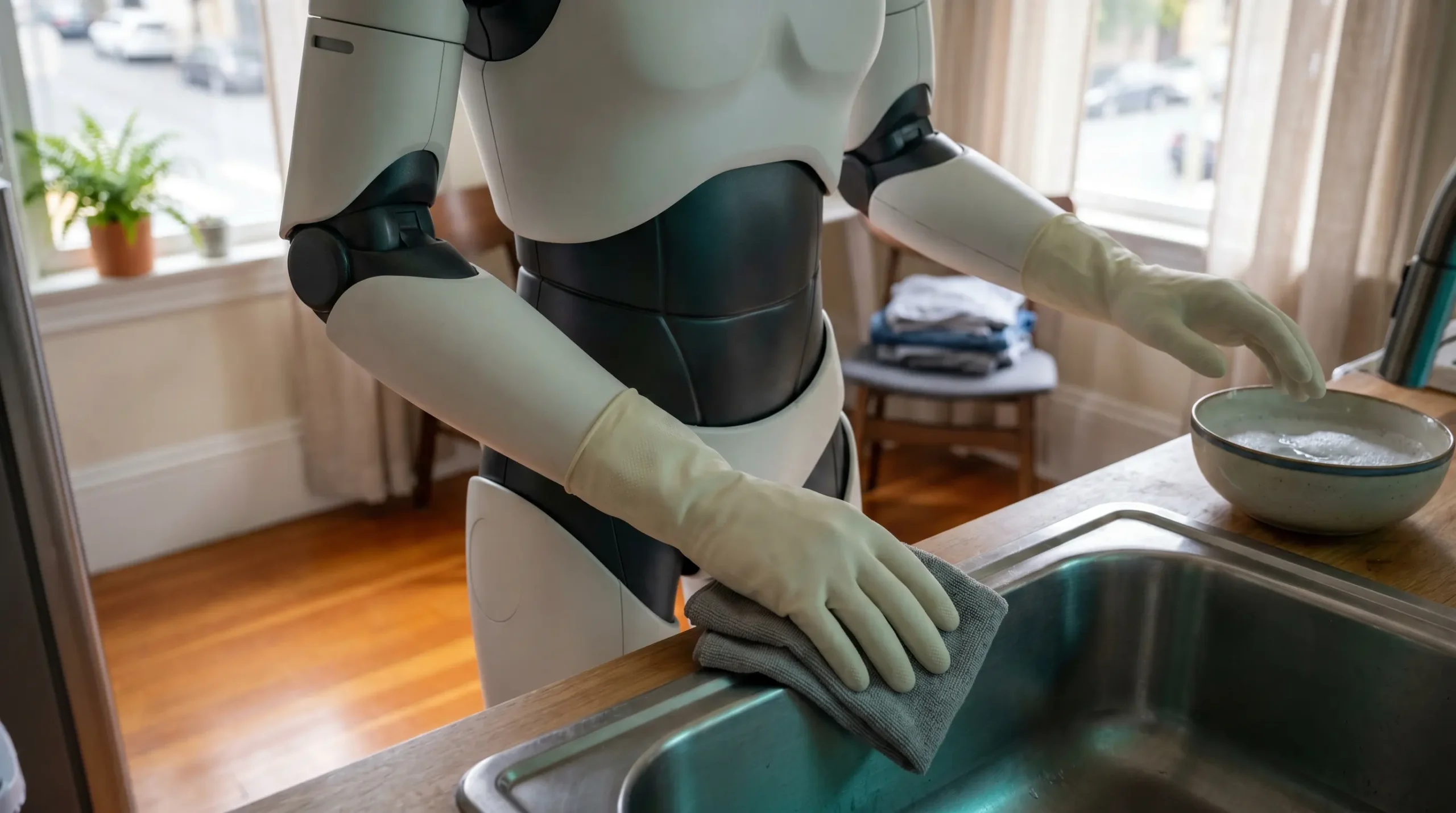
Gatsby robot cleaning is now a live San Francisco service, not just a showroom trick: the startup says a humanoid robot cleaned a customer’s apartment on May 14, booked through an iPhone app, for a $150 flat fee. The bigger test is whether a robot can enter a private home as a service, use remote help when needed, and still feel safer than hiring a human cleaner.
Rather than asking customers to buy hardware, West Egg Labs Company, the parent behind the app, is selling a visit: tap the app, let the machine clean, pay once. That makes the first apartment clean less a victory lap for one robot body than a test of the service contract around domestic robotics.
A Robot Visit With a Cleaning Price
The company said in the company’s May 14 press note that it picked a customer at random from its San Francisco waitlist, delivered a humanoid robot to the apartment and completed the clean with no human cleaner physically inside. That last phrase matters. It tells customers what they will see at home, not necessarily how much human support sits behind the screen.
The published pitch is simple enough to understand without a robotics degree. The service costs $150 flat fee per clean, the same price for a studio or a penthouse, with no tips or surge pricing. The company’s site also shows one recent clean running from 8:42 a.m. to 11:47 a.m., a span of 3 hours and 5 minutes.
That puts the product closer to a cleaning appointment than a gadget purchase. A Roomba sits in the closet and handles floors. This robot is meant to arrive, touch the messier parts of the apartment, handle surfaces and leave. The burden shifts from charging, maintenance and software updates to service reliability.
The Autonomy Label Has a Human Edge
The most important line on the startup’s robot service page is not the price. It is the admission that routine work is autonomous while harder parts are teleoperated by people. Teleoperation means a remote human can supervise or control a robot when the machine runs into a task it cannot complete confidently.
That makes remote human help part of the product, not a footnote. It also makes the privacy bargain more complicated. A resident may not have a stranger standing in the kitchen, but the service can still involve a person who needs enough information to guide a machine through a private room.
We didn’t build this to clean apartments. We built it to give that time back to humanity.
Aron Frishberg, founder and chief executive of the startup, used that line in the company’s launch note. The ambition is broad. The near-term reality is narrower and more interesting: a domestic robot service that may be autonomous for the easy parts and staffed from afar for the parts that still defeat software.
That is not embarrassing. Many useful robots arrive this way. The hard question is whether customers understand when the machine is acting alone, when a human operator joins, what the operator can see and whether any of that footage or map data is stored.
Why Housework Was the Obvious Wedge
Housework is the right first chore because it is universal, repetitive and annoying. The U.S. Bureau of Labor Statistics said 80 percent of people engaged in household activities on an average day in 2024, spending about two hours on them, according to the American Time Use Survey results.
The same survey found 87 percent of women and 74 percent of men spent some time on household activities on an average day. On days they did those tasks, women averaged 2.7 hours and men averaged 2.3 hours. Interior cleaning alone averaged 0.40 hours per day across the population, with women at 0.55 hours and men at 0.25 hours.
That is why a three-hour robot cleaning has a natural audience. The consumer is not being asked to admire robotics research. The consumer is being asked whether a machine can take back a chunk of Saturday, clean without small talk and avoid breaking anything valuable.
Home Robot Strategies Are Splitting
The San Francisco model sits beside a fast-growing but unsettled home robotics race. The International Federation of Robotics said consumer service robots reached close to 20.1 million units sold in 2024, while professional cleaning robots grew 34 percent to more than 25,000 units. Robot as a service (RaaS, rented or subscribed robot capacity) also gained ground, with the professional RaaS fleet up 31 percent, according to the World Robotics service robot report.
The split is now clear: some companies want to own the machine, some want to own the home data and some want to own the customer relationship. The cleaning startup is making a service layer wager, where the app and operations matter as much as the body doing the work.
| Company | Customer Offer | Human Support | Main Risk |
|---|---|---|---|
| West Egg Labs service | Book a $150 robot clean in San Francisco | Harder tasks can be teleoperated | Trust, quality and home privacy |
| 1X NEO home robot | $499 a month or $20,000 ownership | Scheduled Expert Mode for complex tasks | Customer takes hardware risk |
| Figure AI Helix 02 | Humanoid autonomy for home and work | Company says demo tasks are not teleoperated | Demos must become supported products |
| Sunday Memo | Home robot beta before purchase | Says learning does not require human teleoperation | Cost, safety and family fit |
This comparison is the story. The winner in home robotics may not be the company with the flashiest walk cycle. It may be the one that turns messy homes into repeatable jobs without asking customers to become robotics technicians.
The Home Data Test
Policy Language
The published robot cleaning privacy policy says West Egg Labs collects phone number, name, email address, city, home address, unit or apartment number and payment information handled by Stripe. It also lists account identifiers, booking history, Firebase authentication data, IP address and device information.
For California residents, the policy names categories of collected personal information that include identifiers, geolocation data, internet activity information and financial information. A home address in this setting is not just a shipping detail. It is the location where a mobile, camera-equipped machine may operate.
Remote Access
The policy is useful, but the service raises operational questions that privacy policies often treat too lightly. If remote assistance is part of the clean, customers need plain answers about live video, audio, maps, logs, operator training and access controls. Household data is more intimate than ordinary app data because it can reveal room layouts, routines, possessions and who is home.
That risk is why the National Institute of Standards and Technology’s consumer Internet of Things cybersecurity baseline treats the whole connected product as the security problem. Internet of Things (IoT, connected devices and the services behind them) security includes the device, the app, cloud systems and update process.
Customer Checklist
Before booking a robot clean, a customer should ask questions that go beyond whether the floors will shine:
- Can a remote operator see live video from inside the home?
- Does the robot record video, audio, maps or task logs during a cleaning?
- Can the customer pause remote assistance or restrict rooms?
- Who unlocks the apartment, who confirms the robot left and who handles a failed visit?
- What happens if the robot damages a dish, floor, appliance or fragile object?
The company says it will replace items damaged during a clean. That is a strong promise. It still leaves a second question for the service era of robotics: whether customers can audit what happened when the only witness was a machine and the human help was somewhere else.
Cleaners Will Feel the Shift Slowly
Human cleaners should not be written out of the story. A good cleaner does more than move through a checklist. They judge stains, adapt to clutter, protect fragile objects, decide when a room needs deep work and handle all the tiny exceptions that make apartments harder than lab benches.
The near-term split will probably be uneven. Robots can take routine floors, counters, dishes and basic tidying when the environment is friendly. People will still be needed for deep cleans, unusual homes, delicate jobs and customers who do not want a connected machine inside.
Still, price pressure arrives before full replacement. If a robot visit works at a flat fee and never cancels, some customers will compare it with human cleaners in the same app-shaped way they compare rides and food delivery. The labor impact may begin with fewer basic cleanings, not a sudden disappearance of the profession.
The San Francisco Pilot Still Has to Become a Habit
For now, the service remains a local test in a city that is unusually tolerant of strange technology. San Francisco customers are more likely than most to try a humanoid robot once, post about it and forgive a little awkwardness. The second and third clean will matter more than the first.
The company also has to make the boring parts work. Entry, exit, scheduling, refunds, broken items, remote assistance, app support and customer communication will decide whether the product feels like a cleaner or a science project. The robot gets attention. Operations keep the customer.
A service model does give the startup room to swap hardware as the market improves. If a better arm, hand or walking system arrives, customers may never need to know. They booked a clean, not a serial number.
If the San Francisco pilot proves boring, routine and clear on remote access, a $150 robot clean can become a household service. If it keeps needing careful explanation, the novelty will fade before the robot gets through the next apartment.

-
 TECH1 year ago
Where Garmin Watches are Made and How They are Assembled
-

 AUTO2 months ago
Tesla’s Roadster Is ‘a Few Weeks Away,’ Says Its Chief Designer
-
 NEWS10 years ago
Samsung Releases Galaxy Note7 TV Ad as Reddit AMA Leaks Specs
-
 NEWS10 years ago
Android 7.0 Nougat Rolls Out To Nexus Devices With New Emoji, Features
-
 FINANCE9 years ago
Cardano Price Surges as ADA Enters the Crypto Top Ten List
-
 NEWS10 years ago
Pre-Order the First Camera Made for Facebook Live Streaming Video
-
 FINANCE1 year ago
Binance Suspends Trading and Withdrawals for a System Upgrade
-
 FINANCE9 years ago
RChain Price Jumps Nearly 150% to a New All-Time High of $2.03