
NEWS
Mandya Duo Wins Farm Portfolios as Karnataka Cabinet Settles
DK Shivakumar allocates ministries on monsoon session eve, rewarding lobbyists and Mandya farm leaders while leaving the woman berth empty and Nagendra in Planning.

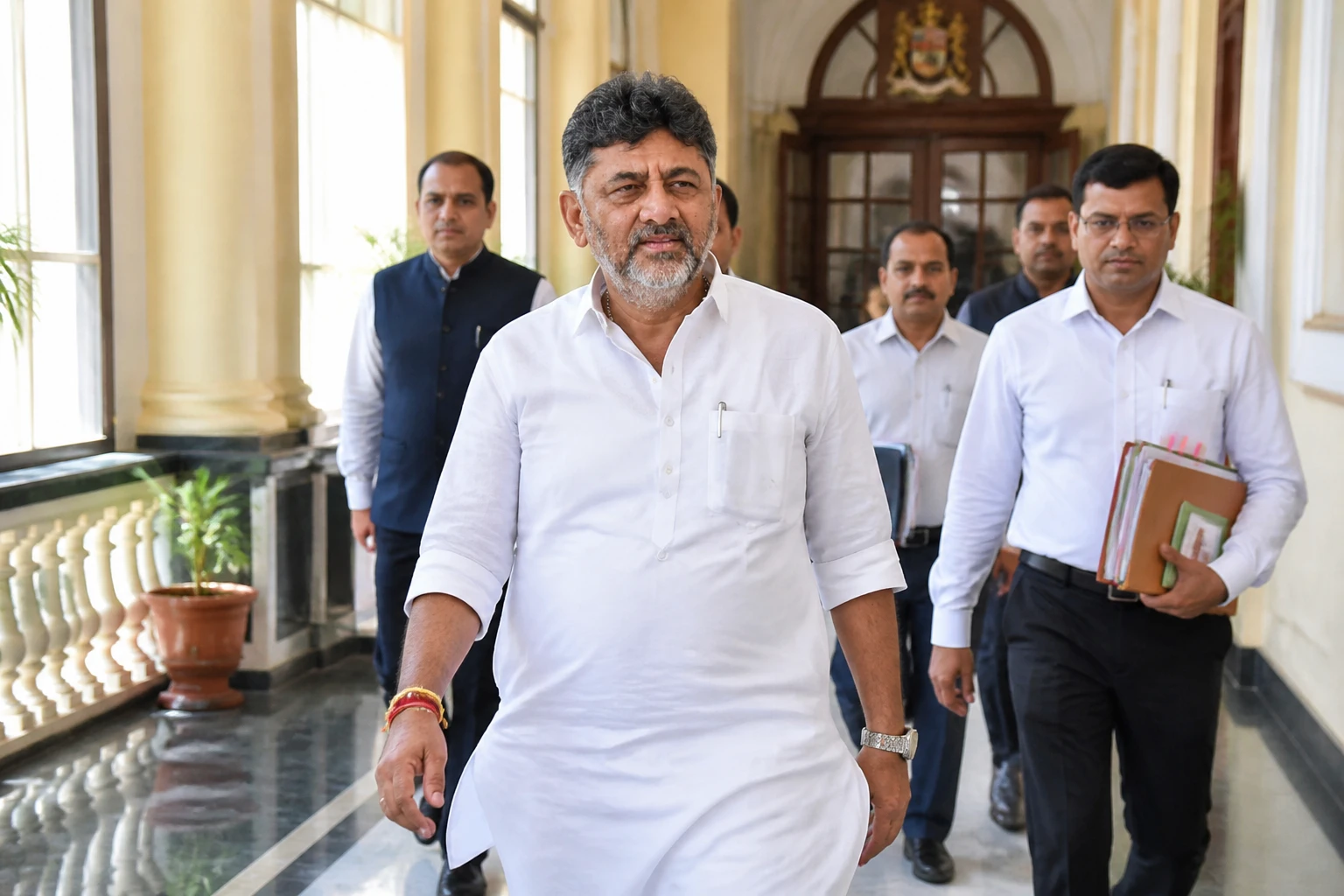
Karnataka Chief Minister D.K. Shivakumar allocated portfolios to 19 newly inducted ministers on Wednesday evening, August 12, hours before the Monsoon Session opens. Two unhappy seniors also received new departments after nearly 10 days of lobbying and Delhi trips.
The move ends the immediate uncertainty around the expanded Congress cabinet but leaves one berth vacant and the government still without a woman minister as farmers face rainfall shortfalls.
Portfolio orders arriving this late leave little room for quiet familiarisation. Ministers must brief themselves overnight, then face the House with files still warm from the printer. That compressed runway shapes every debate that follows.
Key Departments Land With Familiar and New Faces
Shivakumar kept Finance, Cabinet Affairs, Personnel and Administrative Reforms, Intelligence, Information, Law and Justice, Parliamentary Affairs, Agriculture Marketing, Town and Country Planning, and urban bodies under BDA and BMRDA, plus every unallocated portfolio. Deputy Chief Minister G. Parameshwara continues with Revenue and Sports.
| Minister | Portfolio | Note |
|---|---|---|
| K.H. Muniyappa | Social Welfare | Moved from Food and Civil Supplies after lobbying |
| Ramalinga Reddy | Forests, Ecology and Environment | Shifted from Major and Medium Irrigation |
| U.T. Khader | Health and Family Welfare plus Minority Welfare, Haj and Wakf | Additional charge |
| P.M. Narendraswamy | Agriculture | Mandya district |
| N. Cheluvarayaswamy | Major and Medium Irrigation | Mandya district |
| B. Nagendra | Planning and Statistics | Faces Opposition calls over Valmiki case |
| Rizwan Arshad | Food and Civil Supplies, Consumer Affairs | New allocation |
| Madhu Bangarappa | Primary and Secondary Education (School Education and Literacy) | Continued |
Other assignments include B.Z. Zameer Ahmed Khan (Housing), Laxman Savadi (Cooperation), Rudrappa Lamani (Sugar and Textiles), Shivaraj Tangadagi (Backward Classes Welfare and Kannada and Culture), T. Raghumurthy (ST Welfare), Ajay Singh (Minor Irrigation, Science and Technology), Basavaraj Rayareddi (Higher Education), K.M. Shivalinge Gowda (Excise), Puttaranga Shetty (Animal Husbandry and Sericulture), Vijayanand Kashappanavar (Small Scale Industries and Public Enterprises), Santosh Lad (Labour and Employment), K.S. Basavanthappa (Muzrai, Fisheries, Ports and Inland Water), S.S. Mallikarjun (Mines and Geology, Horticulture), and H.C. Balakrishna (Municipal Administration). The full composition of the Shivakumar ministry now stands at 33 members with one seat open.
By retaining the finance and urban levers himself, Shivakumar keeps direct control over money and the Bengaluru growth engine. That choice concentrates bargaining power at the top while the wider list spreads work across regions and communities. The vacant seat still hangs over the arithmetic.
Lobby Pressure Produced Clear Winners
Muniyappa had made no secret of wanting Social Welfare instead of Food and Civil Supplies. He got it. Ramalinga Reddy, unhappy after missing Bengaluru Development and receiving Water Resources earlier, moved to Forests, Ecology and Environment. Both changes followed open discontent that reached the high command.
Several ministers kept the same work they held under former Chief Minister Siddaramaiah:
- B.Z. Zameer Ahmed Khan continues Housing
- Madhu Bangarappa stays with School Education and Literacy
- Shivaraj Tangadagi retains Backward Classes Welfare and Kannada and Culture
- Santosh Lad keeps Labour and Employment
- S.S. Mallikarjun remains with Mines and Geology
Basavaraj Rayareddi returned to Higher Education, a portfolio he held in Siddaramaiah’s first term. Laxman Savadi took Cooperation, which he managed earlier in a BJP government. These continuity picks limited upheaval among the experienced hands.
Open lobbying paid faster than quiet waiting. Seniors who took their unhappiness to Delhi forced course corrections inside a narrow window. Those who stayed silent watched the desirable files move elsewhere. The pattern will not be lost on MLAs still outside the council of ministers.
Continuity also lowered the training cost for departments that cannot afford a cold start. Education, housing, labour and mines keep officers who already know the files. That stability matters when the session agenda is already loaded with drought and water disputes.
Mandya Pair Takes Charge of the Dry Fields
Agriculture went to P.M. Narendraswamy and Major and Medium Irrigation to N. Cheluvarayaswamy. Both hail from Mandya district, a Vokkaliga stronghold closely watched under a Vokkaliga chief minister. Puttaranga Shetty from neighbouring Chamarajanagar received Animal Husbandry and Sericulture.
The timing is direct. The state has recorded substantial rainfall shortfalls through the monsoon season so far, delaying sowing and stressing crops in multiple districts. Earlier official comments put the overall deficit as high as 68 percent at one mid-July point, with groundwater falling in dozens of taluks. Later tallies still showed double-digit shortfalls against normal. Farmers have pressed for faster relief and water management.
Stats snapshot of the pressure:
- Rainfall shortfall, multi-week deficits reported across large parts of Karnataka, tracked via India Meteorological Department rainfall data
- Farm impact, delayed Kharif operations and crop damage claims rising in dry spells
- Political signal, two Mandya leaders now own the two portfolios most visible to rural voters
Whether the pairing delivers faster decisions on irrigation releases and input support will face immediate testing in the session and in the fields.
Placing both farm and major irrigation work with Mandya colleagues creates a single regional channel for rural demands. Petitions on water release, seed supply and compensation can move through ministers who share a district base and a community link to the chief minister. That design can speed answers. It can also concentrate blame if the monsoon stays weak.
Animal husbandry and sericulture sitting with a neighbouring district minister extends the same rural belt logic. Livestock and cocoon incomes often cushion farm households when rains fail. The three portfolios together cover the core livelihood questions voters will ask first.
Old Controversies Walk Back In
B. Nagendra received Planning and Statistics. Opposition parties have demanded his resignation over multi-crore embezzlement allegations tied to the Karnataka State Valmiki Development Corporation. A CBI chargesheet earlier named him among accused in the diversion of funds and related bribery claims. He remains in the cabinet.
First-time legislator K.S. Basavanthappa from Mayakonda took the mixed bag of Muzrai, Fisheries, Ports and Inland Water. Several other first-timers filled specialist slots. The pattern rewards loyalty and regional balance more than clean-sheet novelty.
Keeping Nagendra means every planning debate can reopen the Valmiki file. Opposition speakers need no fresh research to press the point. The government must decide whether to defend the allocation on floor or try to steer discussion back to rainfall and budgets.
Mixed portfolios for newcomers also reveal how the list was balanced. Specialist tags such as fisheries or ports rarely dominate headlines, yet they give first-timers a defined desk and a chance to show delivery before the next round of claims begins.
The Empty Chair That Draws Fire
The government heads into the Monsoon Session without a woman minister. Shivakumar has said the remaining berth will go to a woman legislator. Names such as Laxmi Hebbalkar, Annapoorna E. Thukaram and Kaneez Fathima have circulated, and MLC Gayathri Shanthegowda’s induction was deferred earlier over a Council oath technicality. The vacancy has already drawn sharp political attack.
Ladki Hoon, Lad Sakti Hoon, BUT NOT FOR A CABINET BERTH! In a 33-member Cabinet expanded under CM DK Shivakumar, there is EXACTLY ZERO FEMALE REPRESENTATION.
BJP leader R. Ashoka and other opposition voices used that line in recent posts, framing the all-male list as proof that Congress slogans on women power stop at the door of power. Inside Congress the same gap has produced private grumbling among women MLAs who watched 19 men take oath on August 3.
The high command cleared the expansion two months after the June 3 swearing-in of the initial 14-member team. The long gap itself became a grievance for MLAs left outside. Multiple Delhi visits by the chief minister and meetings with the disgruntled failed to produce an immediate woman pick.
An all-male front bench hands the opposition a ready opening line for every major debate. Representation questions need no new discovery. They attach themselves to drought statements, budget replies and privilege motions alike. Women MLAs inside the party, having watched the August 3 ceremony from outside the oath queue, now measure the delay in days of session time rather than weeks of talks.
Holding the last berth open keeps a promise on paper. It also keeps the controversy alive until a name is notified. Each sitting day without that notification widens the gap between the stated intent and the visible bench.
How the Cabinet Reached Full Working Strength
- 3 June 2026, D.K. Shivakumar sworn in as Chief Minister with 13 other ministers after Siddaramaiah’s mid-term resignation under the party power-sharing deal
- Early June, Ramalinga Reddy briefly tenders resignation over portfolio; high command rejects it
- 3 August 2026, 19 additional ministers sworn in (one of 20 cleared names deferred), taking strength to 33
- 3-11 August, intensive lobbying, CM trips to Delhi, discontent meetings
- 12 August evening, Governor’s office notifies the portfolio order; ministers huddle for session strategy
- 13 August, Monsoon Session begins; first full Cabinet meeting of the expanded team scheduled for the afternoon
Details of the transition and earlier allocations sit on the official Chief Minister of Karnataka site alongside ongoing government announcements.
The timeline shows how long uncertainty lasted after the power-sharing change. From the June swearing-in to the August expansion, MLAs outside the first batch had two months to organise pressure. The further nine days between the mass induction and the portfolio notification then became a second bargaining round for seniors already inside.
Ramalinga Reddy’s early June resignation bid, though rejected, marked the first public crack. Its echo returned when he finally moved off irrigation. The sequence underlines that portfolio peace was negotiated in stages, not settled in a single high command sitting.
Why Continuity And Community Signals Matter Now
The finished list mixes holdovers from the Siddaramaiah years with fresh regional bets. That blend is the mechanism by which the new chief minister steadies the larger council while still marking a shift in emphasis.
Holdover ministers already know their secretaries, pending files and assembly flashpoints. Fresh faces, especially the Mandya pair on agriculture and irrigation, carry a community and district message aimed at rural voters watching the rain gauges. Together the two tracks try to limit administrative drift and political drift at the same time.
- Continuity track: housing, school education, backward classes welfare, labour, mines, and a return to higher education
- Signal track: Mandya ministers on agriculture and major irrigation, neighbouring Chamarajanagar on animal husbandry and sericulture
- Control track: finance, cabinet affairs, personnel, law, parliamentary affairs and leftover portfolios retained by the chief minister
Each track answers a different risk. Continuity reduces the chance of stalled schemes. Community placement answers the farm distress already visible in rainfall tallies. Central control keeps budget and Bengaluru decisions inside the chief minister’s own office while the wider team settles.
The open berth and the unresolved senior claims sit outside those three tracks. They remain the loose ends the session can pull at any moment.
What The Allocation Means For Floor Strategy
Clear departments arrive only hours before the House sits. That forces a simple division of labour on the treasury benches. Farm and water questions route to the Mandya ministers. Money and urban questions stay with the chief minister. Health, education and housing replies fall to ministers who already held those desks.
| Issue cluster | Primary desk | Session pressure |
|---|---|---|
| Rainfall, sowing, irrigation releases | Agriculture; Major and Medium Irrigation | Immediate, district-level |
| Budgets, urban bodies, unallocated work | Chief Minister | Constant, cross-cutting |
| Representation and vacant berth | Whole front bench | Political, every sitting day |
| Valmiki related charges | Planning and Statistics | Opposition driven |
Opposition strategy writes itself from the same map. Drought and Cauvery tensions test the new farm pairing. The missing woman minister supplies a representation charge that needs no fresh paper. The Valmiki allegations supply a conduct charge against one named minister. Each line of attack uses facts already on the public record.
Inside the ruling party the same map sets expectations. Mandya ministers will be judged on relief speed. Holdover ministers will be judged on whether continuity produces quieter departments. The chief minister will be judged on whether keeping finance and urban power delivers coherent replies rather than bottlenecked files.
None of those tests wait for a later reshuffle. They begin when the Monsoon Session opens.
Session Opens With the Clock Already Running
Ministers will walk into the legislature tomorrow with clear departments for the first time since the expansion. The agenda will include drought assessment, farmer relief, irrigation water-sharing disputes (including Cauvery tensions already flaring), and the usual legislative business. An all-male front bench faces opposition questions on representation from the first hour.
Shivakumar’s decision to hold the big urban and finance levers while distributing farm work to Mandya colleagues locks in a regional and community signal. The losers are the women still waiting for the last chair and the senior MLAs who watched others jump the queue. Those frictions do not vanish with a notification. They travel into the House with the files.
The first full Cabinet meeting Thursday afternoon will test whether the new map produces coherent replies on rain, crops and water, or simply freezes the internal score-settling until the next reshuffle talk after the session.
By then the portfolio order will be more than a list of names. It will be the working script for how this expanded team answers the monsoon’s first political test.

-
 TECH1 year ago
Where Garmin Watches are Made and How They are Assembled
-

 AUTO2 months ago
Tesla’s Roadster Is ‘a Few Weeks Away,’ Says Its Chief Designer
-
 NEWS10 years ago
Samsung Releases Galaxy Note7 TV Ad as Reddit AMA Leaks Specs
-
 NEWS10 years ago
Android 7.0 Nougat Rolls Out To Nexus Devices With New Emoji, Features
-
 FINANCE9 years ago
Cardano Price Surges as ADA Enters the Crypto Top Ten List
-
 NEWS10 years ago
Pre-Order the First Camera Made for Facebook Live Streaming Video
-
 FINANCE1 year ago
Binance Suspends Trading and Withdrawals for a System Upgrade
-
 FINANCE9 years ago
RChain Price Jumps Nearly 150% to a New All-Time High of $2.03