
NEWS
OpenAI Offers Washington Equity While Its Partners Absorb the Risk
OpenAI is offering Washington a $42.6 billion stake in its upside while shifting the data center risk it once owned onto Oracle, lenders and two governments.

OpenAI has offered Washington a 5% stake worth about $42.6 billion, just as it walks away from owning the data centers that run ChatGPT. The two moves surfaced within weeks of each other this year. One hands the public a claim on OpenAI’s upside. The other quietly moves the downside onto somebody else.
That somebody else is Oracle, a syndicate of banks, and the governments of the United Kingdom and Norway, all of whom built plans around infrastructure commitments OpenAI has spent 2026 unwinding. The retreat is now large enough to measure: a $1.4 trillion infrastructure pledge has shrunk to $600 billion, two consumer apps are dead, and three senior infrastructure executives have left for Meta.
Washington Gets Offered a Slice of the Upside
The equity proposal, reported first by the Financial Times, would have OpenAI and other major AI labs hand roughly 5% of themselves into a government-backed vehicle modeled on the Alaska Permanent Fund, the oil-revenue account that pays state residents an annual dividend. Sam Altman, OpenAI’s chief executive, has pitched the idea directly to President Trump, Commerce Secretary Howard Lutnick and Treasury Secretary Scott Bessent, according to CNBC’s reporting on the FT story.
At OpenAI’s $852 billion valuation, set in a March 2026 funding round that brought in $122 billion, a 5% slice works out to roughly $42.6 billion. Altman has argued the arrangement is the cleanest way to let ordinary Americans share in whatever wealth AI generates. It would also, not incidentally, hand Washington a reason to go easier on a company facing mounting political scrutiny over jobs, safety and national security.
It isn’t a new playbook. The government already converted CHIPS Act grants into a roughly 10% stake in Intel worth $8.9 billion, and it negotiated a cut of Nvidia and AMD’s China chip sales, 15% at first and later 25% on Nvidia’s H200. Senator Bernie Sanders has gone further, proposing legislation that would take a full 50% of leading AI firms’ equity for a public fund. This is not settled. The FT described the OpenAI talks as early and conceptual, and any deal of this size would likely need an act of Congress.
| Entity | Stake or Share | Approximate Value | Status |
|---|---|---|---|
| Intel | ~10% common stock | $8.9 billion | Completed, August 2025 |
| Nvidia and AMD | 15%, later 25% for Nvidia’s H200, of China chip revenue | Ongoing revenue share | In effect since 2025 |
| OpenAI (proposed) | 5% equity | ~$42.6 billion | Early-stage talks, reported July 2026 |
| Major AI labs (Sanders bill) | 50% equity | Varies by company | Proposed legislation |
What the table shows is a pattern building piece by piece rather than one deliberate policy: chip grants converted to shares, revenue carved out of export licenses, and now a voluntary offer from the company under the most political pressure. Each deal has arrived with the government taking upside exposure while contributing none of the capital risk that built the underlying business.
The $1.4 Trillion Pledge Shrinks to $600 Billion
Compare that upside-only arithmetic with what OpenAI has been doing to its own balance sheet. In January 2025, Altman stood at the White House with Trump, Oracle’s Larry Ellison and SoftBank’s Masayoshi Son to unveil Stargate, a joint venture built to spend $500 billion on American AI infrastructure. By late 2025, Altman was citing a far larger number, roughly $1.4 trillion in combined infrastructure and cloud commitments over eight years.
Then the number started shrinking. In February 2026, OpenAI told investors it was now targeting about $600 billion in total compute spend through 2030, tied explicitly to how fast revenue actually grows. Sarah Friar, OpenAI’s chief financial officer, reportedly told colleagues she wasn’t certain the company’s revenue would support the original commitments, and she pushed internally for waiting until 2027 before pursuing an IPO. That caution sits awkwardly next to what Friar told the Associated Press in April, that OpenAI was already operating with “the good hygiene of a public company.” Both things can be true. A company can prepare its books for public markets while privately doubting it can afford everything it already promised.
Oracle and Two Governments Absorb the Difference
The gap between $1.4 trillion and $600 billion did not simply vanish. It landed on the people who had already committed capital to the bigger number.
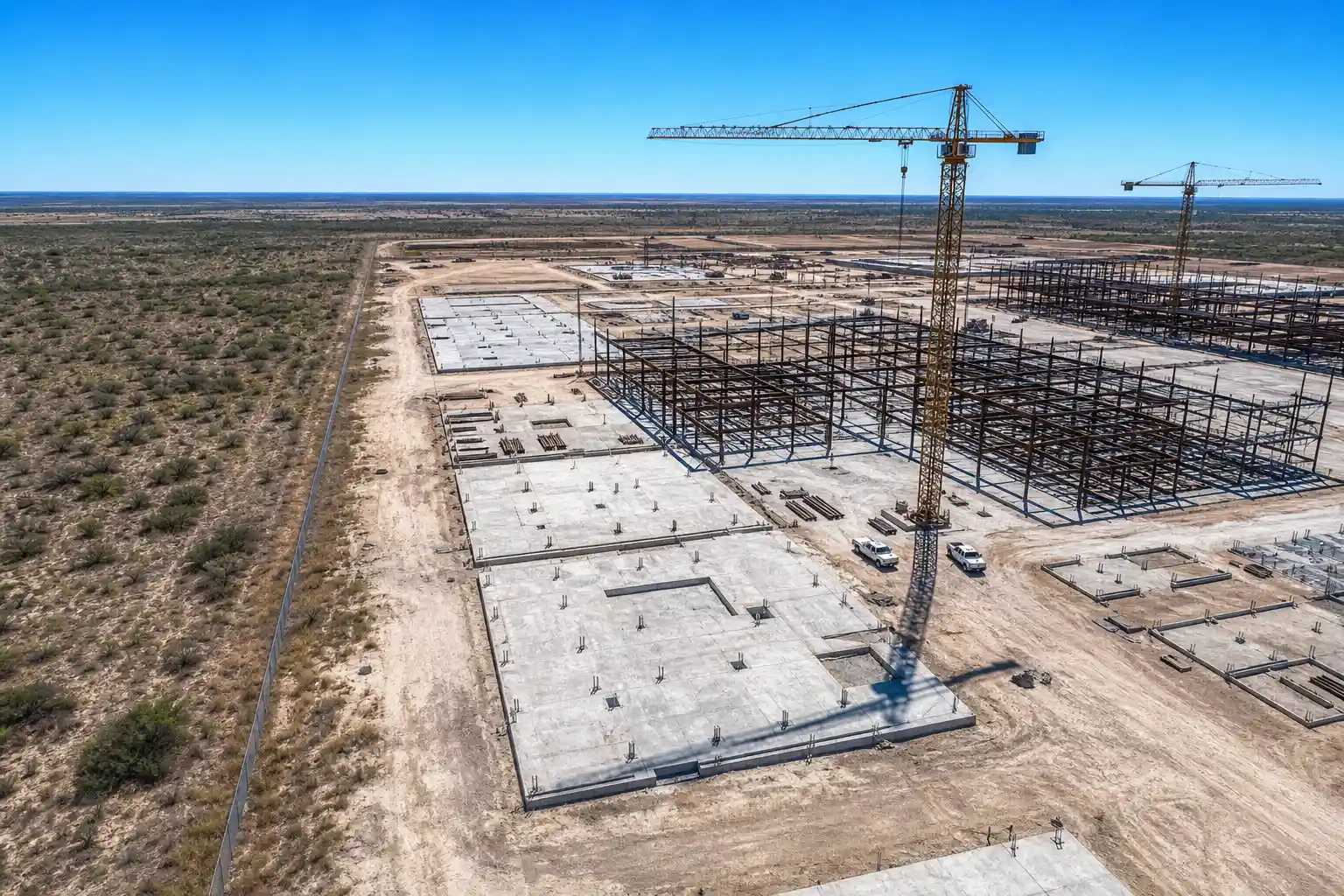
- Abilene, Texas: OpenAI and Oracle canceled a planned 600 megawatt expansion, capping the flagship campus at 1.2 gigawatts instead of the 2 gigawatts once planned.
- Narvik, Norway: OpenAI handed its planned site to Microsoft, which took over the lease from developer Nscale and now rents the capacity back to OpenAI.
- United Kingdom: OpenAI paused its Stargate project there, citing high energy costs and restrictive regulation.
- Personnel: three senior infrastructure leaders, Peter Hoeschele, Shamez Hemani and Anuj Saharan, left for Meta in the same stretch, and former Intel AI chief Sachin Katti now runs a reorganized compute unit.
The United Kingdom’s response is the clearest tell that the official explanation didn’t hold up. Kanishka Narayan, the country’s AI minister, pushed back directly.
The only thing that has changed has been the financing environment for OpenAI.
Narayan said this in a statement to the Financial Times, rejecting the regulatory rationale OpenAI had offered for the pause. Oracle has absorbed a bigger share of the strain than anyone. It took on tens of billions in debt to fund the Stargate buildout, drew on roughly $9.6 billion in loans from JPMorgan alone according to Data Center Dynamics’ reporting on the financing structure, and now faces a shareholder securities class action filed in February 2026 alleging executives misled investors about the strategy’s returns, even as company insiders sold close to $1.87 billion in shares. People involved in the projects told the Financial Times they felt let down and misled by OpenAI. Independent analyst Carmi Levy summed up the pattern to Network World, describing the gap between promising infrastructure spending and actually delivering it, and warning that leasing instead of owning leaves OpenAI with less long-term control over the compute it depends on. The strain is now showing up in JPMorgan’s own loan books tied to the buildout, a separate stress point from the one OpenAI’s equity offer is designed to soothe.
Sora, Atlas and an Exodus of Executives
Inside OpenAI, the pullback has a name: side quests. Fidji Simo, who has since exited her role as OpenAI’s CEO of applications, told staff the company had become distracted by projects outside its core business, warning that “fragmentation has been slowing us down and making it harder to hit the quality bar we want.”
Sora, OpenAI’s video-generation app, was the first casualty, shut down in March 2026 after reportedly losing the company $1 million a day. Atlas, its agentic browser, followed. OpenAI confirmed it is retiring the standalone browser on August 9, 2026, less than a year after its October 2025 launch, folding its features into a ChatGPT desktop app and a Chrome extension instead. One widely circulated account of the reshuffle, from tech commentator Bilawal Sidhu, noted that the Sora team is being redirected toward robotics rather than laid off, and that a $1 billion licensing partnership with Disney is winding down only months after it began. The company is narrowing to two products it thinks it can’t afford to lose: ChatGPT and its coding tool, Codex.
Why Is OpenAI Racing Toward an IPO Right Now?
OpenAI confidentially filed a draft S-1 with the Securities and Exchange Commission on June 8, 2026, giving itself the legal option to go public without committing to a date. The filing arrived a week after Anthropic, its closest rival, filed its own confidential S-1 at a $965 billion private valuation, and both companies are now moving through SEC review at the same time as SpaceX runs its own IPO roadshow.
In its own announcement, OpenAI was blunt about why it went public with a confidential process at all: a confidential S-1 that gives it the option to go public sooner. “We expect it to leak so we’re just announcing it,” the company said. No underwriters have been formally confirmed in public reporting, though Goldman Sachs and Morgan Stanley have reportedly been working on the draft. A filing like this buys time and optionality. It lets OpenAI lock in a private valuation before a public float dilutes it, while giving Altman a credible answer whenever reporters ask if the company is running out of runway.
The Enterprise Bet Behind the Retreat
None of this reads as a company in free fall. ChatGPT has more than 900 million weekly users, and OpenAI’s annualized revenue has climbed past $20 billion, up from roughly $12 billion in mid-2025. The bet underneath the entire retreat is that enterprise revenue, not consumer side projects, is what actually justifies the spending.
That bet already has real contracts behind it, including higher-education deals like California State University’s system-wide ChatGPT Edu agreement. It is also why OpenAI restructured its cloud supply chain rather than simply shrinking it, expanding an initial $38 billion Amazon Web Services deal to $100 billion over eight years while layering in Google Cloud, CoreWeave, Oracle and Azure commitments as rentals instead of owned capital. Renting compute is a bet that revenue arrives fast enough to keep paying for it. OpenAI closed its most recent funding round with $852 billion in paper value and, by most outside estimates, more cash on hand than any rival apart from Anthropic to survive a downturn that would sink smaller AI labs first.
Frequently Asked Questions
Has the Trump administration agreed to take a stake in OpenAI?
No formal decision has been made. The Financial Times described the talks as early-stage and conceptual, and any arrangement of this size would likely require an act of Congress. CNBC reported that the administration and Anthropic had not discussed a similar stake as of early July 2026.
What exactly replaces OpenAI’s Atlas browser?
Atlas stops working on August 9, 2026. Its agentic browsing features move into the ChatGPT desktop app, a new Chrome extension, and a separate cloud browser that runs OpenAI’s agents remotely on a user’s behalf.
When could OpenAI actually go public?
There is no confirmed date. Confidential S-1 filings typically clear SEC review in 30 to 60 days before a roadshow can begin, which would put a public filing as early as late summer 2026 if OpenAI chooses to move quickly, though the company has said it may wait.
Is Anthropic making the same data center retreat as OpenAI?
Anthropic filed its own confidential S-1 on June 1, 2026, at a $965 billion private valuation, but it has not announced comparable data center cancellations. Anthropic CEO Dario Amodei has instead criticized rivals for pushing infrastructure spending too far.

-

 AUTO1 month ago
Tesla’s Roadster Is ‘a Few Weeks Away,’ Says Its Chief Designer
-
 NEWS10 years ago
Samsung Releases Galaxy Note7 TV Ad as Reddit AMA Leaks Specs
-
 NEWS10 years ago
Android 7.0 Nougat Rolls Out To Nexus Devices With New Emoji, Features
-
 FINANCE9 years ago
Cardano Price Surges as ADA Enters the Crypto Top Ten List
-
 NEWS10 years ago
Pre-Order the First Camera Made for Facebook Live Streaming Video
-
 FINANCE12 months ago
Binance Suspends Trading and Withdrawals for a System Upgrade
-
 FINANCE9 years ago
RChain Price Jumps Nearly 150% to a New All-Time High of $2.03
-
 NEWS10 years ago
Google Play App Icons Get Fresh New Look: See the Latest Design Update