
ENTERTAINMENT
Christopher Nolan’s The Odyssey Dazzles Critics, but IMAX Seats Are Scarce
Christopher Nolan’s The Odyssey is tracking toward a $200 million global opening and 98% reviews, yet only 41 theaters worldwide show its true IMAX 70mm cut.

Christopher Nolan’s The Odyssey opened in theaters worldwide Friday carrying a 98% Rotten Tomatoes score and box office trackers pointing toward a $200 million global weekend. That would make it Nolan’s biggest opening since 2012, outside his Batman films. It also arrives with a catch nobody can fix by showtime.
IMAX says just 41 theaters on the planet can project The Odyssey in true 70mm film, the exact format Nolan built his $250 million production around. Everywhere else, ticket buyers are watching a cropped version of the movie critics are calling his best work in years.
A Career-Best Verdict Meets a Career-Best Bet
Coimbatore’s Broadway theatre in India marked opening day by handing every viewer a commemorative postcard from the screening, a small ritual echoed in different forms from Delhi to Los Angeles this week.
Universal spent $250 million producing the film and another $125 million marketing it worldwide, with launch events in London, Paris and Mumbai.
Nolan first used IMAX cameras for action sequences on 2008’s The Dark Knight. The Odyssey extends that partnership into the first feature ever shot entirely on IMAX film.
Box office trackers now put the domestic opening between $90 million and $100 million from roughly 3,900 North American theaters. That would be Nolan’s biggest debut since 2012’s The Dark Knight Rises, which made $160 million. Global tracking points past $200 million once international markets are added.
- $250 million production budget, plus roughly $125 million spent marketing the film worldwide
- $90 million to $100 million projected domestic opening weekend, with $200 million or more expected globally
- 98% Rotten Tomatoes critics score, the highest of Nolan’s 13-film career
- 41 IMAX 70mm theaters worldwide equipped to show the film exactly as it was shot
Nolan has made only one film since 2006 that earned less than $500 million worldwide, the puzzle-box thriller Tenet. Universal is betting The Odyssey extends that streak rather than breaks it.
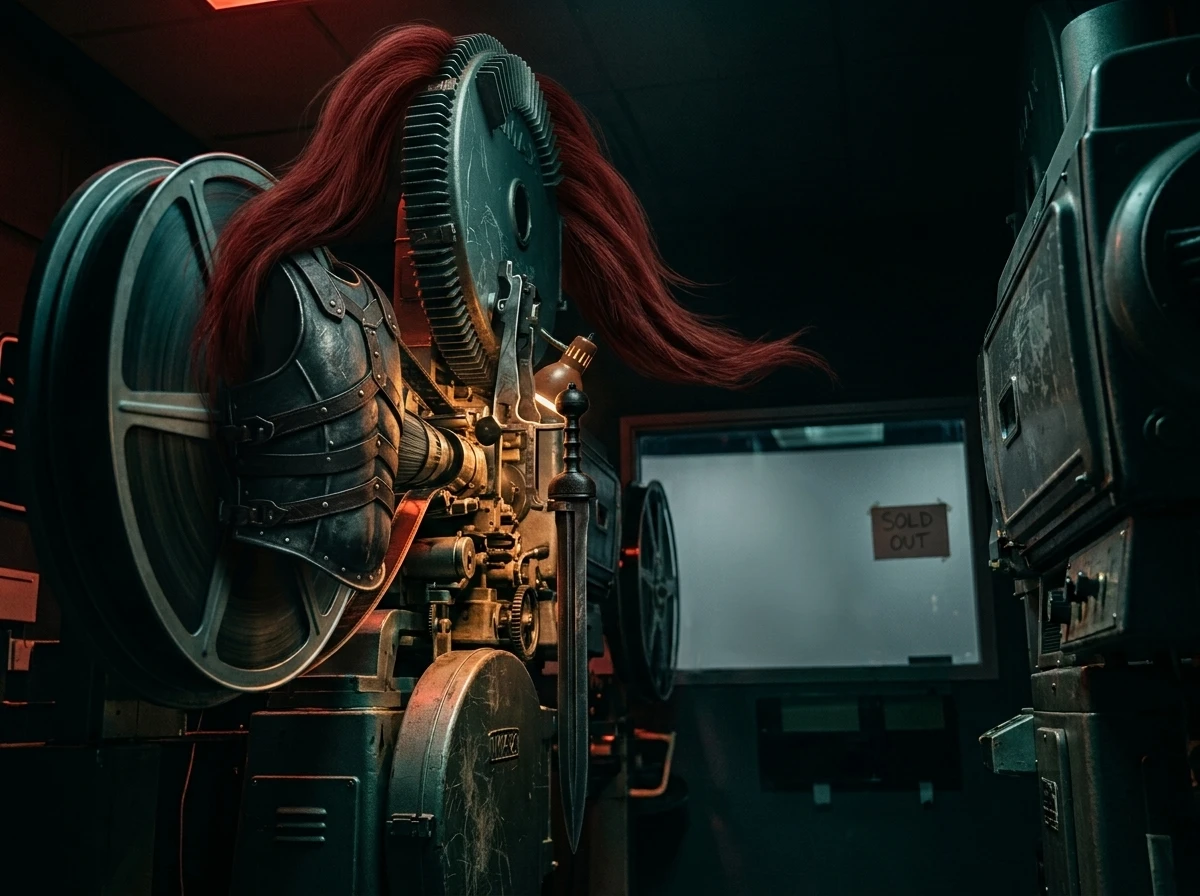
Just 41 Screens Worldwide Show It the Way Nolan Shot It
Shooting entirely on IMAX film produces a taller, denser 1.43:1 frame than almost anyone will actually see this weekend. In a standard cinema, or even most digital IMAX screens, that image gets cropped to fit a wider ratio, and viewers lose picture at the top and bottom of nearly every scene.
IMAX’s own participating-theater list counted 41 locations worldwide able to run the film in true 70mm as of this week, up from 30 for Oppenheimer in 2023. Only 25 of those sit inside the United States.
| Country | IMAX 70mm Venues | Share of the Worldwide Total |
|---|---|---|
| United States | 25 | 61% |
| Canada | 9 | 22% |
| United Kingdom | 3 | 7% |
| Australia | 1 | 2% |
| Belgium | 1 | 2% |
| Czech Republic | 1 | 2% |
| France | 1 | 2% |
India, one of the largest theatrical markets on Earth, does not appear on that list at all. Despite early shows selling out across Delhi and Mumbai, the country still has no true 15/70mm IMAX screen, a gap that has turned into its own talking point among Indian moviegoers this week.
Why Can’t IMAX Build More 70mm Projectors?
IMAX has not manufactured new 70mm film projectors in about 50 years, and most surviving units were retired, damaged or scavenged for parts long ago. Growing the network means finding old machines, rebuilding them by hand and training new projectionists, a process too slow to outrun a single opening weekend.
For more than a year, IMAX tracked down broken and abandoned film projectors around the world, salvaged usable parts and rebuilt as many machines as it could. The company trained 60 new projectionists from scratch to run them. The effort added a net 11 screens compared with Oppenheimer’s run, after one unit was lost in the process.
We’re sold out in some theaters into the fifth week already. There’s certainly more demand. The problem is they haven’t made new IMAX film projectors in about 50 years.
Richard Gelfond, IMAX’s chief executive, said as much to Variety at the film’s New York premiere. He added that engineers are exploring new projection technology, though converting thousands of existing digital IMAX auditoriums into film houses overnight simply is not possible.
IMAX sources say many of the original components needed to build these projectors no longer exist in any factory. The fifty-year-old design files were never properly maintained, so restoring a single machine can take months of improvised engineering.
Fans Fly to Melbourne and Pay $1,500 for One Seat
Scarcity has turned a movie ticket into a travel itinerary. The lengths fans are going to for a 70mm seat include:
- Booking long-haul flights to Melbourne’s IMAX 1570 auditorium in Australia rather than settle for a digital screen closer to home.
- Buying tickets a full year in advance at London’s BFI IMAX and Prague’s Oskar IMAX Plaza, both of which sold out their opening slates in 2025.
- Taking cross-country road trips, and in some reported cases delaying pregnancies, to catch a 70mm showing during the film’s brief exclusive window.
- Paying resale prices on eBay that have reportedly reached $1,500 and above for a single seat.
- Crashing AMC’s own booking site last month, when the chain first opened reservations to the public.
Even smaller details are going viral days after opening night. One widely shared post flagged that a Travis Scott track plays over the end credits, a discovery that caught plenty of longtime Nolan fans off guard.
The pattern echoes Oppenheimer, when demand pushed some fans toward 4 a.m. showtimes or trips across state lines just to catch it in 70mm. Universal and IMAX appear to be counting on the same appetite this time, only bigger.
A Backlash the Box Office Ignored
Long before any postcards were handed out, The Odyssey spent months absorbing online criticism over its casting. Elon Musk led much of it. “Chris Nolan has lost his integrity,” Musk wrote in February, after news broke that Lupita Nyong’o would play Helen of Troy.
Much of the anger centered on a rumor that transgender actor Elliot Page would play the warrior Achilles. Page never had that role. Nolan cast him as the soldier Sinon instead, a detail that undercut a large share of the outrage once the film’s full cast list became public.
Commentator Matt Walsh also criticized the casting on social media, arguing Nolan made the choice to avoid accusations of racism rather than out of creative conviction.
Nolan has mostly brushed the criticism aside. “Comes with the territory,” he told The Telegraph, adding that pre-release arguments about a film are always beside the point, since nobody making them has actually seen it yet.
Tracking and advance sales back him up so far, pointing to one of Nolan’s biggest openings ever with no visible sign that the casting fight dented ticket demand.
Where Critics Can’t Agree on Nolan’s Epic
Most reviews landed somewhere between admiring and rapturous. Variety’s Guy Lodge called the film “a genuinely grand, gutsy vision” that thrills for nearly three hours. That aggregate score, though, flattens some real disagreement underneath it.
- Time called the film an eye-glazing dud, arguing it gets dragged down by fidelity to Homer’s smaller details rather than its most exciting moments.
- The Independent called it Nolan’s best work to date, writing that it deserves to define his career.
- The Hollywood Reporter landed in between, praising the ensemble cast while calling the script structurally uneven next to Oppenheimer.
Regular audiences are splitting too. One viewer online rated the film a flat 10 out of 10. Another called the same movie “a relentless, grim, joyless take on a classic story,” scoring it 7 out of 10 despite praising its craft.
IMAX has already booked its next 70mm moment on the back of this one. Prints of Denis Villeneuve’s Dune: Part Three will carry an exclusive early preview reel into the same theaters showing The Odyssey, ahead of that sequel’s December 18 release.
Frequently Asked Questions
How Long Is The Odyssey?
The Odyssey runs 172 minutes, or 2 hours and 52 minutes, making it Nolan’s second-longest film behind the three-hour Oppenheimer. That listed runtime does not include trailers or theater advertisements, so time in your seat will run longer, especially outside special-format screenings that trim previews.
Is The Odyssey a Sequel to Troy?
No. Troy, the 2004 film starring Brad Pitt, adapts the Iliad’s account of the Trojan War itself. The Odyssey picks up after that war ends, following Homer’s separate poem about Odysseus’s ten-year journey home. The two films share mythology and a few characters but were made decades apart by different studios and directors.
What’s the Difference Between IMAX 70mm and Standard IMAX?
IMAX 70mm film runs on physical celluloid and displays Nolan’s full 1.43:1 frame, the tallest version of the image. Standard 70mm, sometimes called 5-perf, still uses film but crops to a wider 2.20:1 ratio. Most digital IMAX screens, the kind found in typical multiplexes, show the movie at 1.90:1, and only some dual-laser digital locations can approach the taller 70mm frame.
Can Moviegoers Still Find The Odyssey in IMAX 70mm?
Some seats remain, though availability changes by the hour. IMAX has added early-morning and late-night showtimes at high-demand locations, and seats sometimes reopen when other orders cancel. The official showtime finder on IMAX’s ticketing page is the most reliable way to check a specific theater before traveling.
Has The Odyssey Earned Back Its $250 Million Budget?
Not officially yet, but analysts consider it close to a formality. With a global opening projected above $200 million, the film could recoup a substantial share of its production cost in its first three days alone, well before streaming and home video revenue even enter the picture.

-
 NEWS10 years ago
Samsung Releases Galaxy Note7 TV Ad as Reddit AMA Leaks Specs
-
 AUTO1 month ago
Tesla’s Roadster Is ‘a Few Weeks Away,’ Says Its Chief Designer
-
 NEWS10 years ago
Android 7.0 Nougat Rolls Out To Nexus Devices With New Emoji, Features
-
 FINANCE9 years ago
Cardano Price Surges as ADA Enters the Crypto Top Ten List
-
 NEWS10 years ago
Pre-Order the First Camera Made for Facebook Live Streaming Video
-
 FINANCE12 months ago
Binance Suspends Trading and Withdrawals for a System Upgrade
-
 FINANCE9 years ago
RChain Price Jumps Nearly 150% to a New All-Time High of $2.03
-
 NEWS10 years ago
Google Play App Icons Get Fresh New Look: See the Latest Design Update