
BUSINESS
Jellycat’s Wimbledon Ad Scores a Rare 5.7 Stars, but Growth Has a Catch
Jellycat’s Wimbledon tennis ad earned a near-maximum 5.7-star System1 rating and 4 million views, as retailer tensions test the toy maker’s rapid growth.

A plush tennis ball with a stitched-on smiling face just out-scored almost every ad System1 has tested this year. Jellycat, the British soft toy maker, sent its Amuseable Tennis Ball character to Wimbledon this month for a social video under 20 seconds long, and the clip has already pulled in more than 4 million views. System1 Group, the advertising effectiveness research firm, gave it a 5.7-star rating, a near-maximum score in a channel where only 1% of ads reach five stars.
The ad earns that score honestly: sharp timing, a familiar cast, real wit. But the same forces that make Jellycat’s characters collectible enough to headline a Wimbledon spoof are also straining the shop network that built the brand, and inflating a resale market System1’s scorecard was never built to measure.
A Seagull and a Bunny Take Centre Court
Amuseable Tennis Ball serves. A bunny and a seagull rally across an imagined Centre Court. Ricky Rain Frog and Budgeby Parrot watch from the stands, both recurring characters from Jellycat’s toy line.
Jellycat posted the unedited spot to its own YouTube channel this week, and the whole thing runs shorter than 20 seconds start to finish.
It isn’t the toymaker’s first tennis film timed to the tournament. Jellycat shot an earlier version of the same joke at a Wimbledon location called Postmark back in 2024, and that clip picked up tens of thousands of likes on TikTok. A newer post, captioned “Bunny power on the court,” has since climbed past 797,000 likes and 1,749 comments on the same platform.
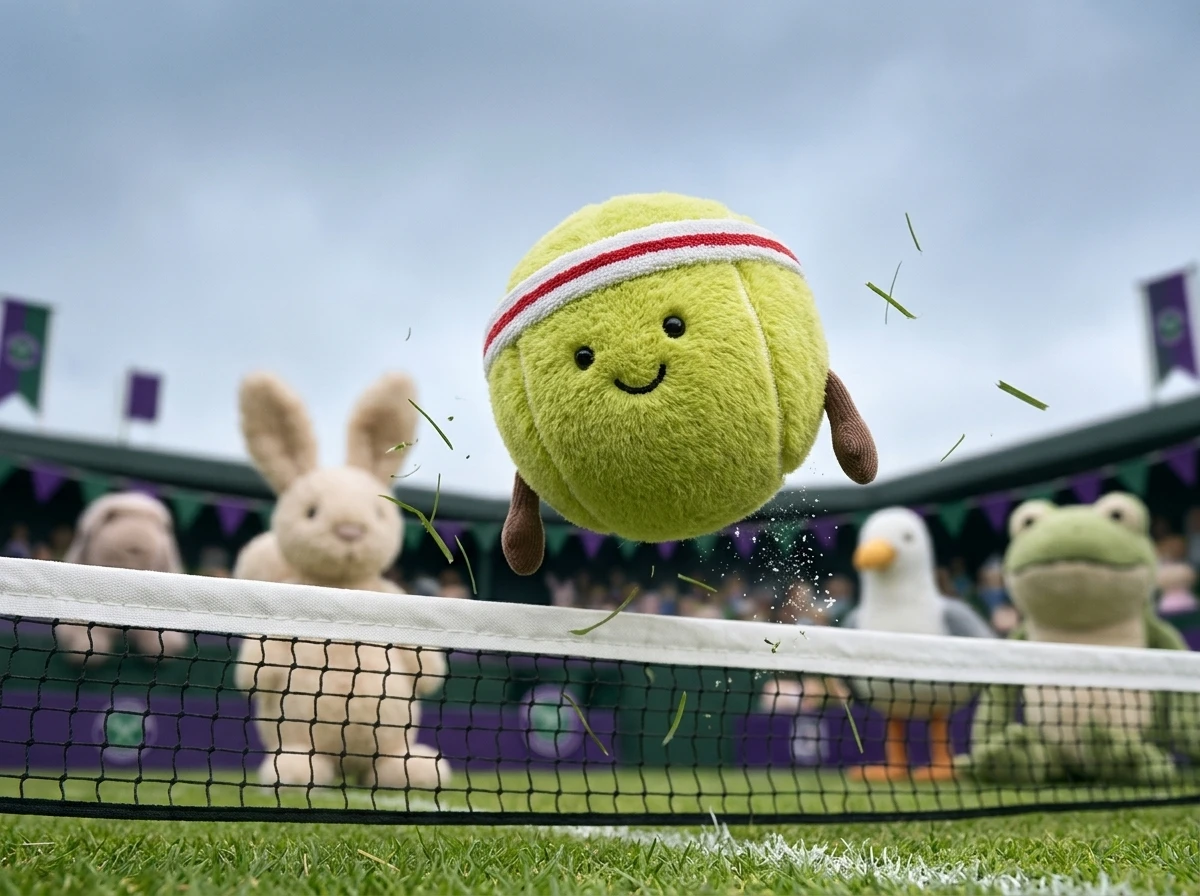
Why a 5.7-Star Rating Almost Never Happens
System1 built a TikTok-validated tool that grades short-form video the way it grades television, by measuring the emotions viewers feel while they watch. Score high enough and an ad joins a very small club: only 1% of ads in this channel reach five stars, by System1’s own benchmark, built from more than five million emotional responses collected across 80-plus countries.
The tool produces three scores: a Star Rating that predicts long-term brand growth, a Spike Rating that predicts short-term sales lift, and a Fluency Rating that shows how strongly people connect an ad back to the brand behind it. Jellycat’s spot picked up an Exceptional Spike Rating alongside its 5.7 stars, plus a Fast Fluency score, System1’s term for brand recognition within an ad’s first two seconds, that beat the category average.
The reason marketers chase a single star score at all shows up in System1’s wider research. Across 264 brands and thousands of ad campaigns, media spend alone predicts 27% of brand growth. Add a Star Rating to that equation and the predictive power climbs to 48%, roughly the gap between guessing and knowing.
The Fluent Device Advantage
Ask System1 why the ad scores so well and casting comes up before the joke does. The spot is well-branded within seconds, and when researchers asked viewers what they associated with it, Jellycat’s own name came out on top, ahead of tennis or Wimbledon itself.
Four things are doing the work at once:
- Fast Fluency – viewers place the brand within the first two seconds, before the joke even lands.
- Wit – an angry seagull and a fist-pumping bunny drove an outsized score on “Amusing” in System1’s Types of Happiness diagnostic.
- Casting – Ricky Rain Frog and Budgeby Parrot are established characters audiences already recognize.
- Length – under 20 seconds keeps the clip inside the window before a thumb scrolls or skips.
System1 calls a familiar, recurring character a Fluent Device, shorthand for a mascot so recognizable it can carry a brand’s message without a lingering logo or a line of dialogue. Jellycat introduced its Amuseables line, plush versions of household objects and food, in 2008, and has kept adding to the cast every year since. Bashful Bunny, the floppy-eared design that first turned the brand into a nursery staple, sits alongside newer arrivals modeled on fish and chips or a cup of tea. Each one is a candidate for the next campaign, a bench most challengers are still building.
Very’s Flamingos Prove the Formula Works
System1 has caught at least one other brand pulling this off on TikTok. Retailer Very ran a flamingo-led campaign through its Test Your Ad Digital tool and came away with a 5.0-star rating and exceptional short-term sales potential, plus 77% two-second brand recognition, 36 points above the typical TikTok ad.
The campaign centered on Coral, a young flamingo folded into Very’s existing flock of characters. System1’s writeup on the results calls the flamingos a consistency glue for the brand, reinforcing recognition whether the ad runs on television, out-of-home or social. That argument leans on IPA effectiveness data showing brands that keep the same characters and codes across every channel get more out of every pound they spend.
Neither score happened by accident.
| Campaign | Brand | Star Rating | Spike Rating | Brand Recognition |
|---|---|---|---|---|
| Wimbledon tennis spot | Jellycat | 5.7 | Exceptional | Fast Fluency above the category average |
| Toys TikTok cutdown | Very | 5.0 | Exceptional short-term sales potential | 77% two-second recognition, 36 points above the TikTok average |
Both brands built their mascots years before either campaign aired, then let a platform built for seconds-long attention spans do the rest.
The Same Playbook Is Straining Jellycat’s Shop Floor
Jellycat’s growth is real by any measure. Revenue climbed 37% to roughly £200 million in 2023, with pretax profit around £67 million, up from about £146 million in revenue the year before. Collectible plush toys turned into a business worth fighting over, including a fight over who gets to sell them.
In 2025, Forbes reported that Jellycat cut ties with around 100 independent retailers, part of what the company called a brand elevation strategy that narrowed its wholesale base to roughly 1,200 remaining stockists. The shift followed a move to an in-house sales team under chief executive Arnauld Meyselle, who joined Jellycat from Ren Skincare in 2022.
A company spokesperson told Forbes Jellycat has “been humbled by our recent growth,” and said the business is working to supply stockists of every size fairly.
In my 17 years, I’ve never seen a brand reshuffle its stockists in this way. It’s undoubtedly a short-sighted attempt to cut costs by having fewer people to deal with.
Therese Oertenblad, a wholesale industry consultant, gave that assessment to Forbes.
Scarcity built into Jellycat’s release calendar feeds the same collector culture that makes its characters worth animating for a Wimbledon ad. The resale marketplace StockX has tracked Jellycat’s shift into a full collector economy, complete with retirement anxiety and restock alerts, where fans chase discontinued characters the way sneakerheads chase grails. Rare, discontinued designs can fetch far more than their original sticker price once Jellycat stops making them.
Jellycat’s ad team scored a 5.7 this week. Its retail team is still working through the fallout from a decision made a year earlier.
Frequently Asked Questions
Where Did the Jellycat Name Come From?
The name traces back to the young son of one of Jellycat’s founders, who dreamed up the word by combining “jelly” and “cat.” Brothers Thomas and William Gatacre used it when they launched their London toy company in 1999, and it has stuck through 25-plus years of growth into a global collector brand.
How Big Has Jellycat’s Business Grown?
Jellycat’s revenue climbed 37% to roughly £200 million in 2023, with pretax profit around £67 million, up from about £146 million in revenue the year before. The company employs around 172 people at its London headquarters, a small team behind a brand now sold in more than 30 countries.
What Does Kidult Mean in Toy Marketing?
Kidult describes adult buyers who collect toys purely for their own enjoyment, a category toy marketers credit for turning plush characters into premium, collectible items. Industry estimates suggest adult buyers now account for roughly one in five toy and game purchases.

-
 NEWS10 years ago
Samsung Releases Galaxy Note7 TV Ad as Reddit AMA Leaks Specs
-
 NEWS10 years ago
Android 7.0 Nougat Rolls Out To Nexus Devices With New Emoji, Features
-
 FINANCE9 years ago
Cardano Price Surges as ADA Enters the Crypto Top Ten List
-

 AUTO1 month ago
Tesla’s Roadster Is ‘a Few Weeks Away,’ Says Its Chief Designer
-
 NEWS10 years ago
Pre-Order the First Camera Made for Facebook Live Streaming Video
-
 FINANCE12 months ago
Binance Suspends Trading and Withdrawals for a System Upgrade
-
 FINANCE9 years ago
RChain Price Jumps Nearly 150% to a New All-Time High of $2.03
-
 NEWS10 years ago
Google Play App Icons Get Fresh New Look: See the Latest Design Update