
AUTO
GM Sued Over Silverado and Sierra Window Leaks It Tracked Since 2019
A proposed class action alleges GM knew since 2019 that Silverado and Sierra rear windows leaked water, yet never issued a recall.

General Motors is facing a proposed class action alleging it hid a water leak defect in the rear windows of 2019 and 2020 Chevrolet Silverado and GMC Sierra pickups. A routine truck wash led one owner to a repair bill over $1,000. GM had already written up the problem five years earlier.
The case centers on a single technical service bulletin that General Motors revised twelve times over four years without ever calling it a recall, leaving the cost of the fix to owners once each truck’s factory warranty ran out.
A $1,000 Repair Bill Becomes a Federal Case
Filiberto Loza Gonzalez, the truck’s owner and the suit’s named plaintiff, was washing his 2019 GMC Sierra 1500 when he found water inside the cab. Not a puddle tracked in on a wet boot. Water was pooling in the back of the truck, arriving through the seam around the sliding rear window.
His dealer confirmed the leak and repaired it under the instructions in a GM service bulletin. The bill still ran past $1,000, because at 57,134 miles the factory warranty had already lapsed and General Motors declined to cover the work.
Gonzalez filed suit in June 2026 in the U.S. District Court for the Eastern District of California. The case, Gonzalez v. General Motors LLC, seeks to represent California owners and lessees of the affected trucks placed into service after January 3, 2019. It asks for a jury trial along with compensatory, exemplary and statutory damages.
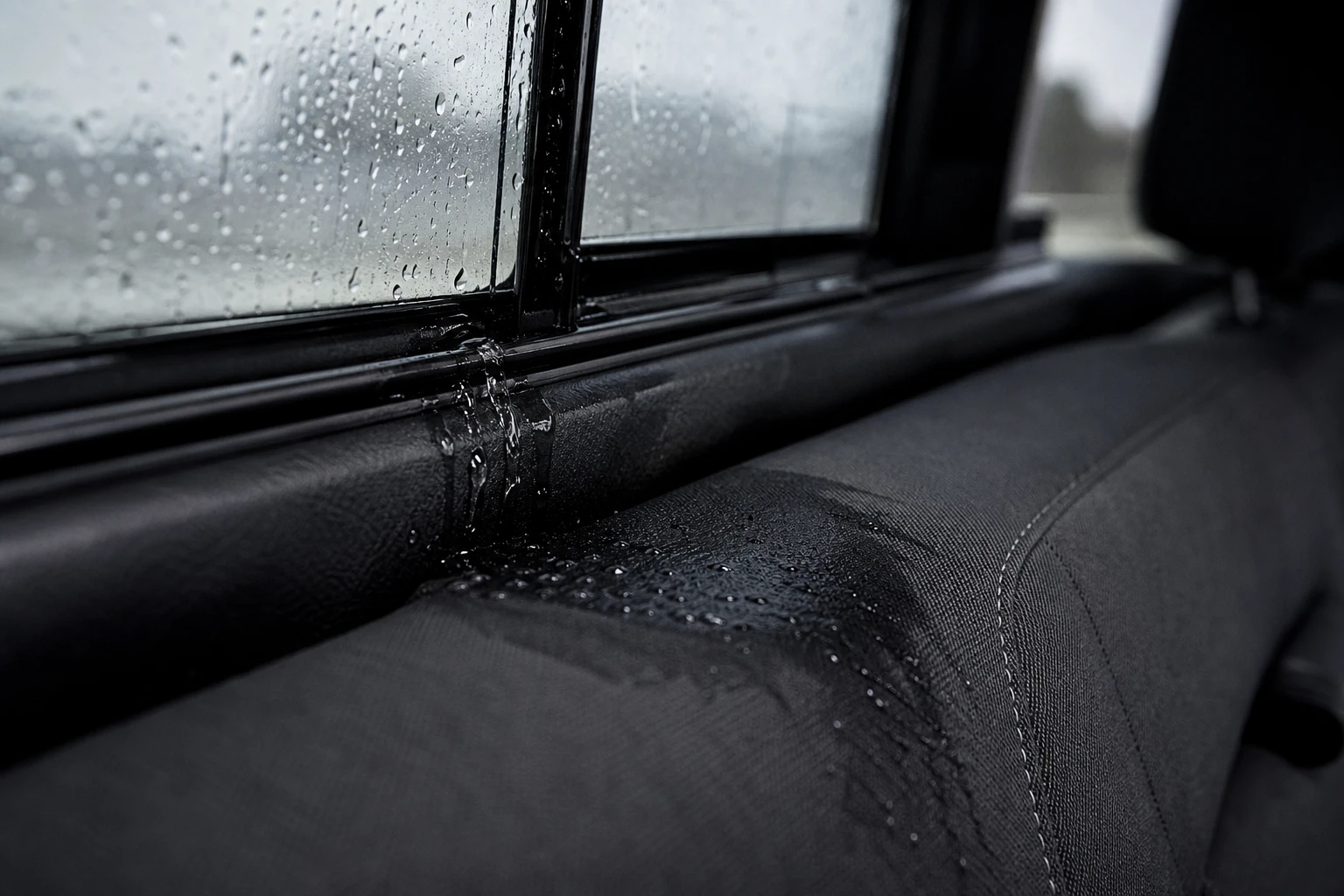
Where the Water Gets In
The rear window on these trucks is built from two glass panels, a fixed pane and a sliding pane, both framed in plastic and sealed with urethane. An owner who spots a leak would likely suspect the rubber weatherstripping visible along the cab.
GM’s own paperwork points somewhere else. Bulletin 18-NA-383 identifies the likely cause as a plastic upper rail glass guide that sits above the glass, hidden beneath the rear roof spoiler. Small cracks there let water reach the urethane seal that bonds the window to the body, not the visible weatherstrip drivers can check themselves.
Only trucks built with the power sliding rear window, GM’s option code A48, are named in the suit. Trucks from the same generation with fixed rear glass or a manual slider are not part of the claim, which matters for anyone shopping a used Silverado or Sierra from this era.
Electrical failure can result in vehicles being unsafe to drive due to the failures of the electrical and mechanical systems, rendering them unfit for safe operation on the roadway.
That warning comes from Gonzalez’s complaint. Water reaching the wiring and electronic modules behind the rear seat, the filing argues, can corrode the truck’s structure and encourage mold growth on top of the electrical damage.
Four Years of Revisions, No Recall
The timeline behind the lawsuit is built almost entirely from GM’s own service records.
- January 3, 2019: GM issues Technical Service Bulletin 18-NA-383, titled “Water Found in Rear Interior of Cab, Water Leak at Rear Sliding Window,” pointing to the glass guide crack and seal failure.
- 2019 through early 2023: GM revises the bulletin twelve times, according to the complaint, gradually expanding it to cover more of the Silverado and Sierra lineup.
- March 7, 2023: GM issues the bulletin’s twelfth and, so far, final revision.
- April 2026: Gonzalez brings his 2019 Sierra 1500 to a dealership at 57,134 miles after finding water inside the cab, and the dealer repairs it using the bulletin’s steps but bills him for the work.
- June 2026: Gonzalez files the proposed class action in the Eastern District of California.
No safety recall was ever issued for the defect described in the bulletin.
The Legal Line Between a Bulletin and a Recall
A recall is a formal safety action. The manufacturer has to notify every owner and fix the defect for free, no matter the mileage or warranty status.
A technical service bulletin (TSB) works differently. It is internal guidance GM sends to dealers on how to diagnose and repair a known issue, with no notification requirement and no free-repair mandate. Once the warranty runs out, the bill belongs to the owner.
Gonzalez’s complaint leans on that gap. The suit argues twelve revisions across four years show superior knowledge, built from GM’s dealerships, pre-release testing and warranty data. Still, GM chose the path that avoided a mandatory fix. The company has not publicly commented on the allegations, and a court has not determined whether it is liable.
Which Trucks Made the Complaint, and Which Didn’t
The suit is narrow by design. It names six specific trucks, all built with one specific window option.
| Model | Model Years Named | Window Configuration At Issue |
|---|---|---|
| Chevrolet Silverado 1500 | 2019 to 2020 | Power sliding rear window, option code A48 |
| Chevrolet Silverado 2500 HD | 2020 | Power sliding rear window, option code A48 |
| Chevrolet Silverado 3500 HD | 2020 | Power sliding rear window, option code A48 |
| GMC Sierra 1500 | 2019 to 2020 | Power sliding rear window, option code A48 |
| GMC Sierra 2500 HD | 2020 | Power sliding rear window, option code A48 |
| GMC Sierra 3500 HD | 2020 | Power sliding rear window, option code A48 |
Trucks from the same generation with fixed rear glass or a manual sliding window sit outside the claim entirely. Coverage is also limited to vehicles first placed into service after January 3, 2019, and the proposed class itself covers only California owners and lessees, not a nationwide group.
Has GM Faced Water Leak Lawsuits Like This Before?
Yes. Water finding its way into a cabin is a recurring complaint against General Motors. The Silverado and Sierra suit follows a similar case over an older Cadillac crossover, plus separate, ongoing fights over transmissions and engine lifters in other GM trucks and SUVs.
An earlier class action targeted the 2010-2013 Cadillac SRX over sunroof drains and seals that allegedly let water reach carpets and encourage mold in more than 222,000 vehicles. Consumer attorneys have grouped complaints from other GM crossovers and SUVs, including the Equinox, Traverse, Acadia and Escalade, under similar water-intrusion claims.
The rear window suit is not GM’s only open legal fight, either. The company also faces a class action over 10-speed automatic transmissions across Chevrolet, GMC and Cadillac models. A separate suit, Harrison v. General Motors, targets lifters failing prematurely in V8 engines. That case has been pending for more than four years without class certification.
A different, already-resolved GM engine case shows what that kind of litigation can eventually cost. A federal court granted final approval in October 2025 to a settlement in Siqueiros v. General Motors over defective piston assemblies in 2011-2014 trucks and SUVs. It guaranteed class members a cash payment of at least $2,149 each, with checks going out that December.
GM delivered 714,896 vehicles in the United States during the second quarter of 2026, keeping it the country’s best-selling automaker. It also recently recalled more than 26,000 Chevrolet Express and GMC Savana vans over a separate steering gear defect.
What Should Owners of Affected Trucks Do Now?
Owners of 2019 and 2020 Silverado and Sierra trucks with the power sliding rear window have a few concrete steps available. Watch for dampness after washing the truck or after heavy rain, and confirm the truck actually has the affected window option. A proposed class action does not, on its own, cover anyone’s repair costs yet.
- Check the rear footwell and the area behind the rear seat for dampness, staining or a musty smell, especially right after washing the truck or a heavy rain.
- Confirm the truck has the power sliding rear window, option code A48, before assuming it falls under the claims; fixed glass and manual sliders are excluded.
- Keep every dealer visit and repair invoice, since the repair timeline is central to how the lawsuit argues GM’s knowledge of the defect.
- File a complaint with the National Highway Traffic Safety Administration if the leak shows up, adding to the public record regulators use when weighing a formal investigation.
A proposed class action is not a verdict. Gonzalez’s claims remain unproven, and a judge has not yet decided whether to certify the case as a class covering other California owners of the same trucks.
Disclaimer: This article reports on pending civil litigation. The allegations described are unproven claims from a class action complaint, not judicial findings, and General Motors has not been found liable for the defect described. Nothing here is legal advice; owners with questions about a specific vehicle or repair cost should consult a licensed attorney. Details are accurate as of publication.

-
 TECH1 year ago
Where Garmin Watches are Made and How They are Assembled
-
 AUTO3 months ago
Tesla’s Roadster Is ‘a Few Weeks Away,’ Says Its Chief Designer
-
 NEWS10 years ago
Samsung Releases Galaxy Note7 TV Ad as Reddit AMA Leaks Specs
-
 NEWS10 years ago
Android 7.0 Nougat Rolls Out To Nexus Devices With New Emoji, Features
-
 FINANCE9 years ago
Cardano Price Surges as ADA Enters the Crypto Top Ten List
-
 NEWS10 years ago
Pre-Order the First Camera Made for Facebook Live Streaming Video
-
 FINANCE1 year ago
Binance Suspends Trading and Withdrawals for a System Upgrade
-
 FINANCE9 years ago
RChain Price Jumps Nearly 150% to a New All-Time High of $2.03