
NEWS
AI Subscriptions Jump 155% as U.S. Households Start Paying

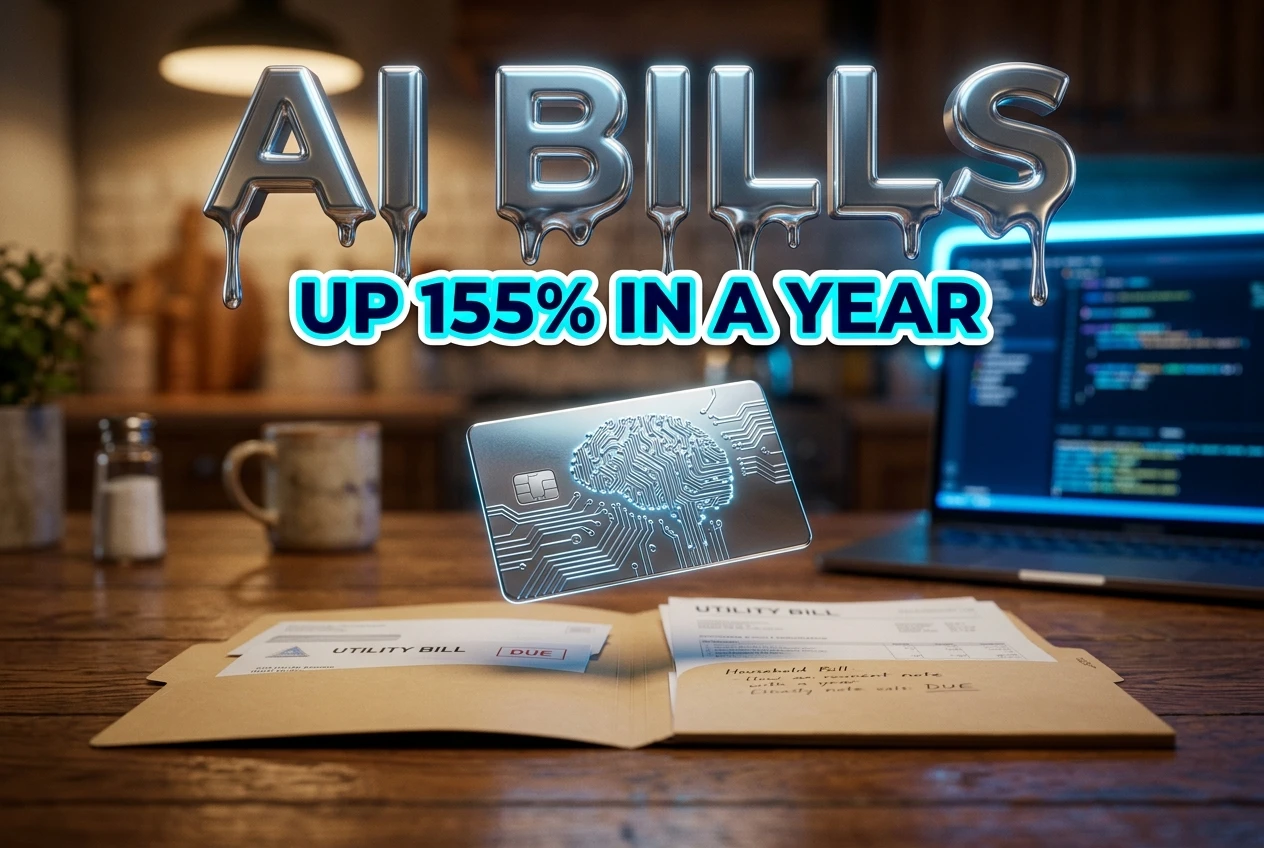
Paying for artificial intelligence is starting to look like a real line in household budgets. New data from PNC Bank shows the share of U.S. families that subscribe to generative AI tools like ChatGPT has surged roughly 155% in a year. Still, only about 2% of households pay for these services, and a surprising detail in the data hints at what comes next.
At a Glance:
- PNC Bank data shows AI subscriptions grew about 155% year-over-year in 2026.
- Roughly 2% of U.S. households now pay, most at $20 a month.
- Average AI subscription lasts seven months, signaling strong user loyalty.
- Bank of America expects the U.S. AI market to reach $75 billion a year.
Paid AI Users Signal a New Subscription Habit
The number of Americans paying for generative AI tools is climbing fast. PNC Bank’s new Monthly Consumer Health Check tracks spending trends across categories, including emerging areas like AI. PNC’s press release on the new data tool says the report draws on proprietary, anonymized transaction records to give a real-time view of U.S. consumer activity.
Bank of America payments data points to similar growth. About 3% of Bank of America households paid for AI services in 2026, with each household spending a median of $20 as of February, an increase of 10.4% year-over-year.
The biggest shift is who is signing up. Median AI spending growth was strongest among $75,000 to $125,000 households in February, suggesting expansion beyond higher-income adopters and gaining traction among middle-income consumers, according to the Bank of America Institute consumer AI profile.
How Much People Pay and Which Plans Dominate
Most paying customers stick to the entry tier. PNC found that the vast majority of AI subscribers pay around $20 a month, the going rate for mainstream consumer tools. Only a small share upgrade to power-user plans.
OpenAI’s lineup shows how the market is splitting. ChatGPT offers six tiers in 2026: Free ($0/mo), Go ($8/mo), Plus ($20/mo), Pro ($200/mo), Business ($25/user/mo), and Enterprise (custom). On top of that, OpenAI launched the Pro $100 tier on April 9, 2026, slotting a new option between Plus at $20 and the existing Pro plan at $200.
Anthropic’s Claude follows a similar ladder. Max starts at $100/month for 5x more usage than Pro, or $200/month for 20x, and adds priority access to new features and models. The Pro plan sits at $20 a month, or $17 when billed annually.
| Plan | ChatGPT | Claude |
|---|---|---|
| Free | $0 | $0 |
| Entry paid | $8 (Go) | $17-$20 (Pro) |
| Standard | $20 (Plus) | $100 (Max 5x) |
| Power user | $100 or $200 (Pro) | $200 (Max 20x) |
Why AI Subscribers Keep Coming Back
PNC’s numbers suggest people who pay for AI tools actually use them. The bank said subscriptions are getting stickier over time.
The average subscription now runs about seven months, PNC reported. That is a meaningful stretch for a product category that is barely three years old.
“That suggests many users are finding ongoing value in these services rather than simply trying them out for a month or two,” the report’s authors said.
A separate industry study found AI has jumped from novelty to daily essential for paying users. Research from digital commerce firm Bango shows more than three-quarters (77%) of AI subscribers say these services are now essential to their everyday life, 74% say their AI subscriptions are essential for work, two-thirds (67%) now rank AI as the most important subscription they have, and 61% would rather cancel all their streaming services than give up their AI subscriptions.
The financial commitment runs deeper than a single $20 charge for many power users. The average subscriber pays almost $66 per month across 4 different AI tools, and nearly a quarter (24%) spend over $100 monthly, according to Bango’s “Rise of the AI Subscriber” report.
AI Still Trails Streaming and Gambling
Despite the hype, AI subscriptions remain a niche product compared with other monthly bills. Brian LeBlanc, senior economist at PNC, said roughly 25% of U.S. consumers pay for streaming, more than 10 times the share paying for generative AI.
“We are growing quite rapidly, but we are still nowhere near streaming,” LeBlanc said. “AI capital expenditure is fueling growth in the economy and a lot of investment is predicated on it eventually being profitable.”
“AI has rocketed from curiosity to necessity in record time, but the subscription chaos that comes with it is real,” said Paul Larbey, CEO at Bango.
Even sports betting reaches more households than AI does. PNC found that 5% of U.S. households spend money on sports betting apps, more than double the share paying for generative AI tools.
The Pressure to Raise Prices and Find Profit
Free versions are likely to stick around as companies fight for users. LeBlanc said the biggest AI players are still battling for market share, which keeps costs low for consumers today.
“We’re living in a time where it’s cheapest to use these services,” LeBlanc said. “I’m curious, as time goes on, whether they’ll start increasing prices, and what that will do to adoption rates.”
OpenAI’s scale shows why investors are watching subscription revenue so closely. ChatGPT has reached 900 million weekly active users, and OpenAI now has 50 million paying subscribers, according to TechCrunch’s February 2026 report.
Those fees still need to cover huge bills for chips and data centers. As AI becomes embedded across productivity, search, entertainment, shopping and personal assistant use cases, and higher tier subscription plans emerge, BofA Global Research expects the US market could scale to $75 billion annually, supported by rising consumer willingness to pay for convenience and time-saving utility.
Key Takeaway: The AI subscription market is small but loyal, with seven-month average tenures and rising middle-income adoption pointing to a category that could one day rival streaming in scale.
Frequently Asked Questions
How much does a ChatGPT subscription cost in 2026?
ChatGPT offers six tiers: Free, Go at $8, Plus at $20, Pro at $100 or $200, Business at $25 per user, and custom Enterprise pricing. Most paying households choose the $20 Plus plan.
What share of U.S. households pay for generative AI tools?
About 2% of U.S. households pay for generative AI subscriptions, according to PNC Bank, while Bank of America puts the figure near 3% of its customer base.
How long do people keep their AI subscriptions?
PNC data shows the average generative AI subscription lasts around seven months, a sign that users find lasting value rather than dropping plans after a trial.
How does Claude Pro compare to ChatGPT Plus?
Claude Pro runs about $17 to $20 a month, matching ChatGPT Plus at $20. Anthropic’s Claude Max plan starts at $100 for 5x usage or $200 for 20x usage.
Why is AI subscription growth seen as important for the economy?
Huge investments in AI depend on the business eventually turning a profit. PNC economist Brian LeBlanc says AI capital spending is fueling economic growth but is predicated on future profitability.
Generative AI subscriptions are moving from tech-curious early adopters toward mainstream family budgets, with the 155% jump in household sign-ups telling a story far bigger than the 2% headline share. If seven-month retention holds and middle-income adoption keeps rising, AI could follow the same path streaming did a decade ago. Share your thoughts in the comments on whether your household pays for AI yet.

-
 TECH1 year ago
Where Garmin Watches are Made and How They are Assembled
-

 AUTO3 months ago
Tesla’s Roadster Is ‘a Few Weeks Away,’ Says Its Chief Designer
-
 NEWS10 years ago
Samsung Releases Galaxy Note7 TV Ad as Reddit AMA Leaks Specs
-
 NEWS10 years ago
Android 7.0 Nougat Rolls Out To Nexus Devices With New Emoji, Features
-
 FINANCE9 years ago
Cardano Price Surges as ADA Enters the Crypto Top Ten List
-
 NEWS10 years ago
Pre-Order the First Camera Made for Facebook Live Streaming Video
-
 FINANCE1 year ago
Binance Suspends Trading and Withdrawals for a System Upgrade
-
 FINANCE9 years ago
RChain Price Jumps Nearly 150% to a New All-Time High of $2.03