
ENTERTAINMENT
Netflix Launches TikTok-Style Feed and Leans Hard Into AI

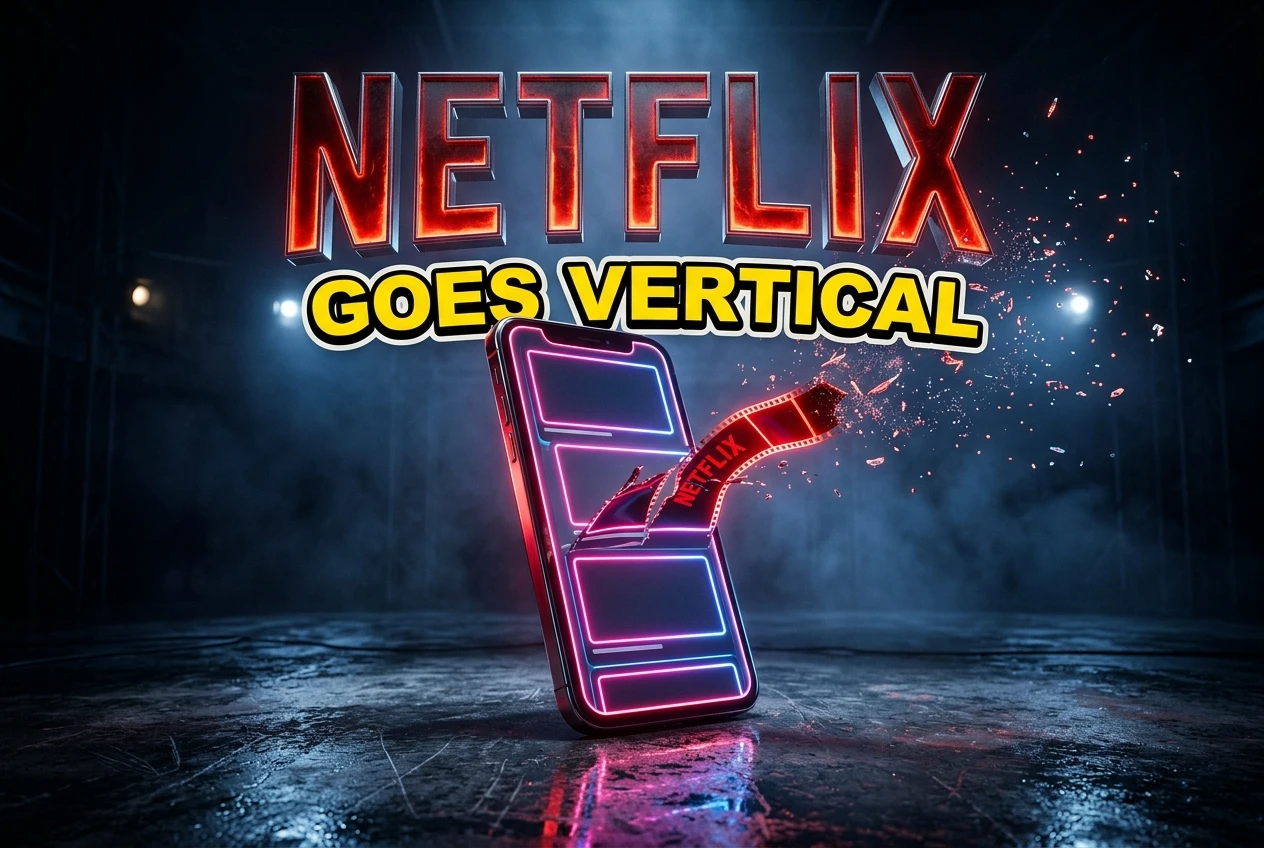
Netflix is rolling out a TikTok-style vertical video feed inside its mobile app by the end of this month, part of a sweeping redesign that also leans harder on artificial intelligence across recommendations, advertising and filmmaking. The streamer revealed the plans Thursday alongside first-quarter results that sent shares lower despite record profit.
At a Glance:
- Netflix’s redesigned mobile app with a vertical video feed launches by end of April 2026.
- Q1 revenue hit $12.25 billion, up 16.2%, with profit of $5.28 billion.
- Netflix paid up to $600 million for Ben Affleck’s AI firm InterPositive last month.
- Co-founder Reed Hastings exits the board at June’s annual meeting after 29 years.
Netflix Pushes Into Short-Form Vertical Video
Netflix is going to launch a TikTok-like vertical video feed within its apps this month, and plans to use AI broadly for content creation and recommendations, the company said on Thursday. Netflix has been testing a vertical video feed since last year.
The new format will sit inside a wider mobile app overhaul. The company confirmed the redesign today in its Q1 shareholder letter, saying the new mobile experience is meant to make it easier for subscribers to browse and discover content. The vertical feed will sit alongside a broader refresh of the app’s layout, which Netflix says better reflects its expanding content library.
The move puts Netflix in direct competition with TikTok, YouTube Shorts and Instagram Reels for mobile attention. According to Thursday’s letter, video podcasts already “over-index” on mobile, meaning users are gravitating toward phones rather than TVs for certain content types. That behavior shift helped push the redesign forward after months of internal debate.
AI Becomes the Engine Behind Discovery
Netflix is also widening its use of AI inside the app, building on a ChatGPT-powered search feature it launched last year.
“We have been in personalization and recommendation for two decades, but we still see tremendous room to make it better by leveraging newer technologies,” said Gregory Peters, co-CEO at Netflix, during the company’s first-quarter conference call.
The generative AI push goes beyond the home screen. Netflix is also leaning into AI to improve how it recommends content. The company said it is using generative AI for deeper content understanding, testing conversational search features, and improving the promotional images and trailers members see when browsing.
Netflix also wants AI to lift ad performance at a time when the ad tier is its fastest-growing segment. The company said it plans to use AI to create new ad formats and custom placements that could drive higher returns for the brands buying space on the platform.
Inside the InterPositive Deal With Ben Affleck
Last month, Netflix closed one of its largest acquisitions ever, buying Ben Affleck’s AI filmmaking company InterPositive.
Netflix Inc. will pay as much as $600 million for InterPositive, the AI moviemaking company founded by Ben Affleck, according to people familiar with the matter, making the purchase one of the biggest ever by the streaming leader.
Unlike most generative AI tools, InterPositive was built for filmmakers working with real footage. The InterPositive system builds an AI model based on an existing production’s dailies, then lets a filmmaker introduce that model into the postproduction process to provide the ability to do things like mix and color, relight shots, and add visual effects.
“It takes a great artist to make great art, and AI won’t change that. AI will give those artists better tools to bring those visions to life,” said Ted Sarandos, co-CEO of Netflix.
The acquisition already carries measurable promise for production budgets. A patent application filed in 2024 and recently reviewed by Deadline shows that along with those benefits, the company also promised significant cost savings for film and TV producers. The reductions made possible by InterPositive’s technology would be “substantial” on below-the-line production, “conservatively” reaching at least 10% to 20%. Sarandos told analysts that creators testing the tools have shown real interest, and he expects adoption to build quickly.
Strong Earnings Meet a Cautious Forecast
The product news came alongside a profitable quarter that still disappointed Wall Street. The streaming company reported revenue of $12.25 billion in the first quarter, up 16 percent compared to last year, while operating income rose 18 percent to $4 billion. Operating margin improved to 32.3 percent, compared with 31.7 percent in the same period last year, exceeding the company’s prior guidance. Net income more than doubled to $5.28 billion, boosted in part by a $2.8 billion termination fee tied to its failed acquisition of Warner Bros Discovery (WBD), which fell apart earlier this year amid a bidding war with Paramount Global.
$12.25B Q1 2026 revenue, up 16.2% year over year.
$5.28B Quarterly net income, nearly double Q1 2025.
325M Global paid subscribers at the end of 2025.
4,000+ Active advertisers on the platform, up 70% year over year.
Investors focused on softer forward guidance instead. Netflix shares plunged more than 9% after the market close, despite the company reporting solid results for the first quarter of 2026. The negative market reaction was mainly driven by more cautious forward guidance, which came in below expectations in several key areas.
Advertising, Price Hikes and a Boardroom Exit
Advertising has become the clearest growth lane. The company’s ads plan (priced at $8.99 in the US) remains very popular, representing over 60% of all Q1 sign ups within our ads countries. Netflix will launch new products throughout 2026 to help advertisers assess the incrementality of their buys on Netflix, all verified by Netflix’s trusted first-party data. Its improved capabilities are attracting many new advertising clients, now working with over 4,000, up 70% year over year, and the company continues to expect about $3B in ad revenue this year, up 2x from 2025.
Netflix is also squeezing more revenue out of existing subscribers. Last month Netflix announced it would once again raise prices across all of its streaming plans. “Our recent price changes have gone well, reflecting the strong value we provide members,” the company said in the shareholder letter on Thursday.
The biggest personnel news came from the top of the org chart. Netflix also announced that Reed Hastings, Netflix’s co-founder and current chairman, would exit the board in June when his term expires. Hastings stepped down from his CEO role in 2023. Greg Peters, who had served as chief operating officer, stepped into the co-CEO role alongside Ted Sarandos. You can review the full numbers in Netflix’s Q1 2026 shareholder letter.
Key takeaway: Netflix is betting that a TikTok-style feed, paired with AI across discovery and production, will keep the next decade of viewers scrolling inside its app instead of leaving for social video platforms.
What Comes Next for Netflix Users
Subscribers should see the redesigned app hit their phones within two weeks. The main change is a vertical, scrollable feed of short clips from movies, TV shows, and possibly video podcasts. Users can swipe through these clips, much like on TikTok or Reels, and tap to start watching the full show or movie right away.
The format follows a larger content strategy that now spans live sports, podcasts and games. Netflix said it is expanding into video podcasts, live events, AI tools for creators and a standalone gaming app for kids. It also highlighted the World Baseball Classic, saying the live stream of the Japan vs. Australia game became the most-watched title ever on Netflix in Japan.
The InterPositive team, meanwhile, is getting folded into Netflix’s production pipeline. As Affleck explained to NPR, creators can use proprietary models to fix shots, remove wires, and adjust lighting on scenes they have already filmed.
What the app launch looks like in practice will be tested soon:
- Auto-playing short clips from shows, films and video podcasts inside a swipeable feed.
- AI-generated trailers, promotional images and conversational search tools woven into browsing.
- New ad formats built for vertical mobile viewing, tied to Netflix’s $3 billion ad goal.
- Deeper integration of InterPositive’s post-production tools across Netflix originals.
Frequently Asked Questions
When will Netflix launch the vertical video feed?
Netflix confirmed the redesigned mobile app, including the TikTok-style vertical feed, will roll out by the end of April 2026.
What is InterPositive and how much did Netflix pay for it?
InterPositive is an AI filmmaking startup founded by Ben Affleck. Netflix agreed to pay up to $600 million for the company, making it one of Netflix’s biggest acquisitions ever.
How much money did Netflix make in Q1 2026?
Netflix posted $12.25 billion in revenue, up 16.2% year over year, and $5.28 billion in net income, helped by a $2.8 billion termination fee from the failed Warner Bros. Discovery deal.
Why did Netflix stock fall after strong earnings?
Shares dropped more than 9% because the company’s forward guidance and full-year operating margin target came in below what Wall Street was hoping for.
Is Reed Hastings leaving Netflix?
Hastings will exit the Netflix board in June 2026 when his term ends, 29 years after co-founding the company. He stepped down as CEO in 2023.
Netflix is trying to hold onto viewers who increasingly live inside vertical feeds, while using AI to cut production costs and serve more targeted ads. With 325 million paying members, a $600 million bet on Affleck’s InterPositive and a late-April app overhaul, the next quarter will test whether these moves turn habit into revenue. Share your thoughts in the comments on whether a TikTok-style Netflix is a feature or a distraction.

-
 TECH1 year ago
Where Garmin Watches are Made and How They are Assembled
-

 AUTO3 months ago
Tesla’s Roadster Is ‘a Few Weeks Away,’ Says Its Chief Designer
-
 NEWS10 years ago
Samsung Releases Galaxy Note7 TV Ad as Reddit AMA Leaks Specs
-
 NEWS10 years ago
Android 7.0 Nougat Rolls Out To Nexus Devices With New Emoji, Features
-
 FINANCE9 years ago
Cardano Price Surges as ADA Enters the Crypto Top Ten List
-
 NEWS10 years ago
Pre-Order the First Camera Made for Facebook Live Streaming Video
-
 FINANCE1 year ago
Binance Suspends Trading and Withdrawals for a System Upgrade
-
 FINANCE9 years ago
RChain Price Jumps Nearly 150% to a New All-Time High of $2.03