
NEWS
Kumamoto Quake Toll Hits 30 as Heat Compounds the Crisis
Japan’s Kumamoto earthquake death toll rose to 30 as 39C heat, blackouts and aftershocks turn shelters and rescue sites into a second danger zone for thousands.

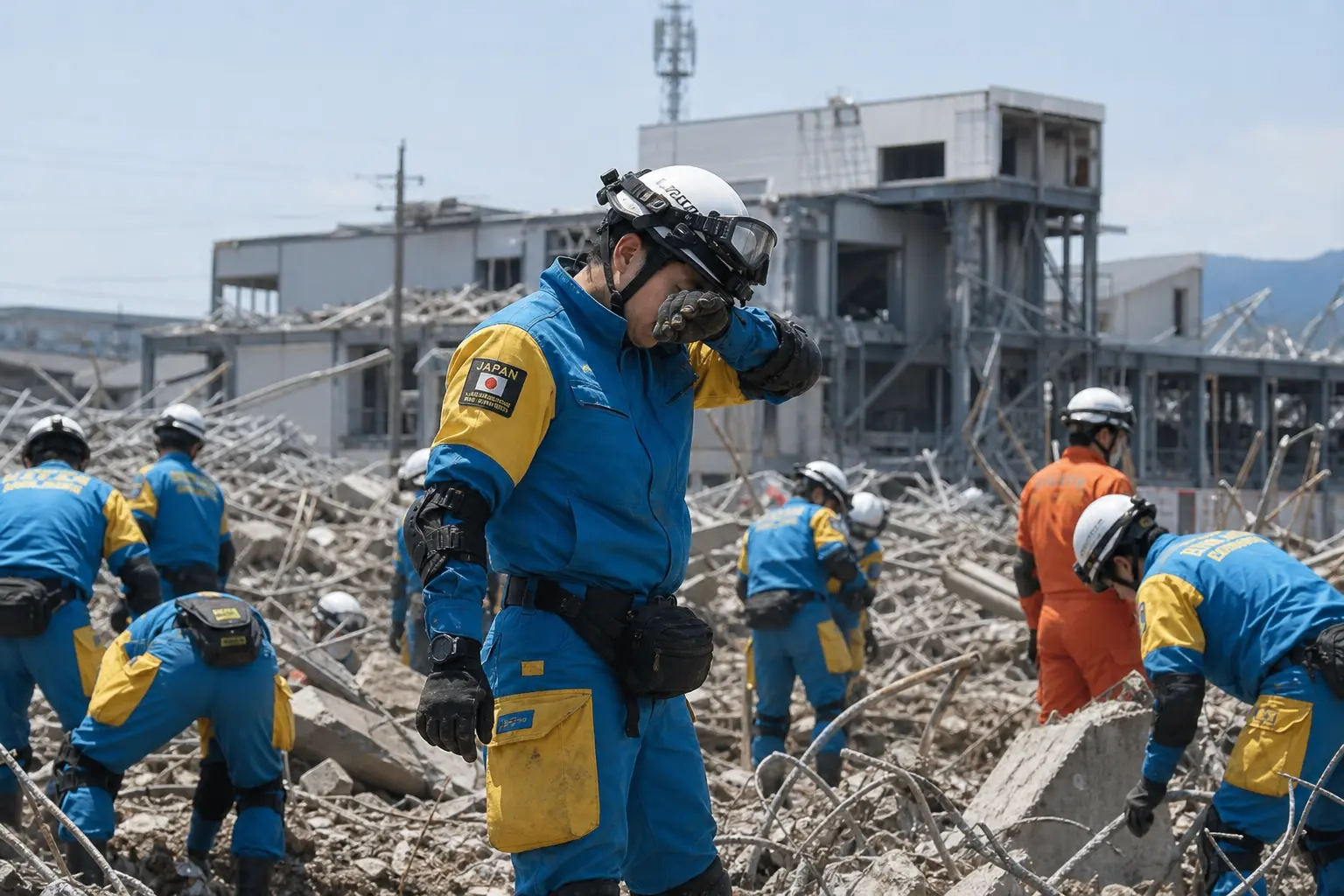
Prime Minister Sanae Takaichi said Thursday the death toll from the powerful earthquake that struck Kumamoto Prefecture has risen to 30. Rescuers are still pulling through rubble at a collapsed shopping mall and a paper factory while temperatures climb toward 39C and more than 100 aftershocks keep residents on edge.
The magnitude 6.8 (JMA 7.1) quake hit at 16:27 local time on Tuesday at a shallow depth of about 10 km. It flattened houses, snapped power lines and set off a gas explosion that tore through part of Aeon Mall Kumamoto an hour later. The immediate structural toll is clear. The harder problem now is keeping 9,000 people in evacuation centres cool and hydrated while tens of thousands of households remain dark.
Search clocks and the weather clock are now running together. Every hour spent under debris is also an hour spent in rising heat. That twin pressure defines the middle of this week for both survivors and the crews still working the two main collapse sites.
Thirty Dead Across Five Hotspots
Takaichi confirmed the updated figure on Thursday as search teams worked through extreme heat. Early counts climbed steadily from the first hours: two women in their 20s at the mall, factory workers under a fallen chimney, residents crushed in houses.
| Location | Confirmed deaths | Notes |
|---|---|---|
| Yatsushiro | 8 | Includes Nippon Paper factory chimney collapse |
| Hikawa | 5 | Indirect / disaster-related |
| Aeon Mall Kashima | 4 | Second-floor collapse plus explosion |
| Uki | 2 | House collapses |
| Kōsa | 1 | Vietnamese technical intern under fallen crane |
Wikipedia’s running tally and prefectural briefings put total injuries near 387. At least 50 people were hurt in Hikawa alone, 80 in Yatsushiro and 160 in Kumamoto City. Three people remained missing at the mall as of midweek reports; four were still unaccounted for at the paper plant after seven of eleven trapped workers were freed.
The geographic spread matters. Deaths are not clustered at a single industrial site. They run from the mall floor in Kashima through house collapses in Uki and Kōsa to the chimney failure in Yatsushiro. That pattern forces rescue managers to keep crews and equipment split rather than concentrated.
Indirect and disaster-related deaths already appear in the Hikawa column. Officials are treating heat and exhaustion as part of the same casualty ledger as crush injuries, not as a separate later category.
Heat Turns Shelters Into a Second Hazard
Forecasts show prefecture highs reaching 39C in the coming days. Humidity is high. Power is still out for more than 30,000 households, cutting fans and home air-conditioning just when people need them most.
- 9,000 residents in evacuation centres as of Wednesday counts
- 300 portable air conditioners ordered by Defence Minister Shinjiro Koizumi, 150 bound for shelters
- Temperatures already hitting 35C during rescue shifts
- Push-type aid (water, generators, cooling units) moving without waiting for local requests
At the first Emergency Headquarters meeting, Takaichi directed ministries to ensure push-type delivery of portable air conditioners, drinking water and power-supply vehicles reach affected areas without delay. Officials are warning both survivors and the thousands of Self-Defense Force, fire and police personnel on site to hydrate and rest in shade. Heatstroke risk is now treated as equal to aftershock risk.
Many families have chosen to sleep in cars rather than crowded halls. That choice keeps them near damaged homes but traps them in metal boxes under a baking sun with limited airflow.
The arithmetic is blunt. Half of the ordered portable units are headed straight to shelters. The rest must stretch across rescue staging points and the wider blackout zone. Generators and water tankers are moving on the same push-type logic so that local offices do not have to file formal requests before relief arrives.
Crowded halls without reliable cooling become medical risks of their own. Car camps trade one problem for another: proximity to home at the cost of trapped heat and almost no airflow once the sun is high.
Aftershocks Keep People Outside and Exhausted
More than 100 aftershocks have been recorded. The Japan Meteorological Agency warned that intensity-7 class events remain possible for up to a week, with the first two to three days especially dangerous. One M6.1 aftershock struck the Amakusa-Ashikita region the same evening.
Residents who lived through the 2016 sequence know the pattern. Many refuse to re-enter cracked houses. The result is outdoor living or car camps that multiply heat exposure precisely when the mercury climbs. Rescue teams digging at the mall and factory face the same double load: unstable debris plus thermal stress in full gear.
- Stay out of damaged buildings and landslide-prone slopes
- Expect strong shaking for days
- Prioritise water and shade for anyone outdoors or in temporary shelter
- Power restoration remains slow in hardest-hit pockets
JR Kyushu suspended Shinkansen and local services; some segments later reopened while the Kumamoto-Kagoshima stretch stayed closed. Expressways and Kumamoto Airport’s runway were shut in the first hours. Nuclear plants in neighbouring prefectures reported no abnormalities.
The aftershock warning window overlaps exactly with the hottest days of the forecast. People who might otherwise return to check damaged rooms are staying outside. That keeps them safer from sudden collapse and more exposed to heat at the same time.
Same Fault System, Different Season
The quake ruptured on the southern portion of the Hinagu Fault, part of the same system that produced the deadly 2016 Kumamoto sequence. That earlier pair of shocks killed about 277 people (50 directly, most of the rest disaster-related) and wrecked thousands of buildings, including parts of Kumamoto Castle still under long-term repair.
This time the mainshock reached a maximum seismic intensity of 7, the top of Japan’s scale, in Uki City and Hikawa Town. Intensity 6+ hit parts of Kumamoto City, Yatsushiro, Uto, Misato and Mashiki. Peak ground acceleration approached 1.7 g at some stations. The JMA named it the 2026 Kumamoto earthquake and noted long-period ground motion class 4 in the Kumamoto region.
The seasonal difference is decisive. April 2016 brought cooler temperatures. July 2026 layers a heatwave on top of blackouts and open-air living. Indirect deaths from heat and exhaustion now sit inside the same reporting window as crush injuries.
| Factor | 2016 sequence | 2026 event |
|---|---|---|
| Fault system | Hinagu and related | Southern Hinagu |
| Season | April, cooler | July, heatwave toward 39C |
| Direct and related deaths | About 277 (50 direct) | 30 confirmed, searches open |
| Maximum intensity | 7 in hardest-hit towns | 7 in Uki and Hikawa |
| Standing repairs | Kumamoto Castle still unfinished | Mall had only just reopened |
Long-period ground motion class 4 means taller structures and large open floors felt prolonged swaying even where peak acceleration was lower. That helps explain damage patterns at the mall and at industrial sites with high or heavy fittings.
Where the Digging Continues
Thousands of personnel, including Self-Defense Forces units and some international firefighters, are focused on two main sites. At Kashima’s Aeon Mall a section of the second floor gave way. An explosion followed roughly an hour later; Aeon President Akio Yoshida said it was “very likely” a gas blast, though investigation continues. Five bodies and four survivors were brought out early. A cat café inside the complex later confirmed all 25 cats left behind had been rescued safely.
The mall had only reopened the previous month after a full revamp. It was badly damaged in 2016. In Yatsushiro the chimney and parts of a Nippon Paper Industries factory collapsed, trapping eleven workers. Five died; seven were freed. Fires broke out in the city and nearby Matsubase. A Vietnamese technical intern was killed when a crane fell on him in Kōsa, the first confirmed foreign fatality.
Surface ruptures cracked roads, shifted reference points by tens of centimetres and dropped one side of an expressway viaduct. Twelve homes were reported fully collapsed in early police tallies. Freight trains derailed; passengers on a Shinkansen suffered bruises but no derailment of the bullet trains themselves.
The two primary dig sites demand different tactics. Mall debris mixes retail fixtures, concrete slabs and the aftermath of the blast. The factory site centres on the fallen chimney and heavy industrial plant. Crews cannot simply shift from one to the other without re-staging gear and rest cycles.
The Mall That Came Back and Fell Again
Aeon Mall Kumamoto’s quick return to service after 2016 repairs made the fresh collapse especially bitter for local shoppers and staff. Yoshida bowed deeply at a press conference and said the company took the loss of life seriously.
We take it seriously that an explosion happened and precious lives were lost.
Aeon President Akio Yoshida spoke those words while standing at the damaged site. Store employees were among the dead and missing. The blast injured dozens more and left a cloud of smoke visible from hundreds of metres away. Cause confirmation is still pending, but gas-leak reports circulated among officials within hours.
Hiroko Ogata, a 75-year-old restaurant owner in Yatsushiro, hid under a table as her building swayed. “I have lived here for 75 years, but I have never experienced such a big quake,” she told the BBC. “I thought I would die.” Her words match the intensity readings that put the strongest shaking in the same towns that took the heaviest 2016 blows.
For residents who watched the mall reopen only a month earlier, the second failure carries a particular weight. The building had already been through one full repair cycle. Its collapse again, followed by the explosion, has become a local symbol of how little margin the fault system leaves.
How Transport Cutoffs Compound the Heat
Road, rail and air links failed in the first hours and only partly recovered. That isolation collides directly with the need to move cooling equipment, water and medical cases while temperatures climb.
- Tuesday 16:27 Mainshock hits; expressways and the airport runway close within the first hours.
- Tuesday evening JR Kyushu suspends Shinkansen and local services; an M6.1 aftershock strikes Amakusa-Ashikita.
- Overnight into Wednesday Some rail segments reopen; the Kumamoto-Kagoshima stretch stays closed.
- Midweek Power still out for more than 30,000 households; push-type convoys of generators and cooling units roll in on the routes that remain open.
Freight derailments and the closed Shinkansen stretch slow bulk movement of relief goods. Local roads cracked by surface rupture force detours. The airport runway shutdown removes a fast channel for bringing in extra crews or specialised gear.
Nuclear plants in neighbouring prefectures reported no abnormalities, removing one potential extra emergency from the board. The remaining transport problem is simpler and harder: get water, power and cold air to 9,000 people in shelters and to the crews still digging, using a damaged network in extreme heat.
Why the Next Days Decide the Toll
The death count of 30 is still provisional while teams work the mall and the paper plant. Injuries already near 387 show how wide the initial impact was. What happens next depends less on new structural collapses than on whether heat and aftershocks generate a second medical wave.
More than 4,600 personnel were committed in early tallies, with later deployments adding to that total. Those numbers only help if rotation, shade and water keep the force itself from becoming a casualty list. The same rule applies inside the shelters.
A temporary tsunami advisory for the Ariake and Yatsushiro seas was cancelled after no waves appeared. That at least cleared one concurrent alert. The alerts that remain are seismic and thermal, and they reinforce each other every afternoon as the temperature rises and the ground keeps shifting.
What the Numbers Already Show
By Thursday the official death count stood at 30 with searches unfinished. Injured numbered in the hundreds. Evacuation centres held roughly 9,000 people. Power remained cut to more than 30,000 households midweek. More than 4,600 personnel had been committed to the response in early tallies; that figure later rose with additional deployments. A temporary tsunami advisory for the Ariake and Yatsushiro seas was cancelled after no waves appeared.
The maximum seismic intensity of 7 in Uki and Hikawa places this event at the extreme end of Japan’s experience scale. Ground deformation and surface ruptures confirm significant slip on the Hinagu system. The next days will decide whether the heat and aftershocks produce a second wave of medical cases or whether the rapid push of cooling equipment and water keeps that cascade in check. Rescue clocks are still running at the mall and the factory. So is the temperature.

-
 TECH1 year ago
Where Garmin Watches are Made and How They are Assembled
-
 AUTO3 months ago
Tesla’s Roadster Is ‘a Few Weeks Away,’ Says Its Chief Designer
-
 NEWS10 years ago
Samsung Releases Galaxy Note7 TV Ad as Reddit AMA Leaks Specs
-
 NEWS10 years ago
Android 7.0 Nougat Rolls Out To Nexus Devices With New Emoji, Features
-
 FINANCE9 years ago
Cardano Price Surges as ADA Enters the Crypto Top Ten List
-
 NEWS10 years ago
Pre-Order the First Camera Made for Facebook Live Streaming Video
-
 FINANCE1 year ago
Binance Suspends Trading and Withdrawals for a System Upgrade
-
 FINANCE9 years ago
RChain Price Jumps Nearly 150% to a New All-Time High of $2.03