
NEWS
Zebra and Aiva Launch Voice AI to Free Nurses From Paperwork

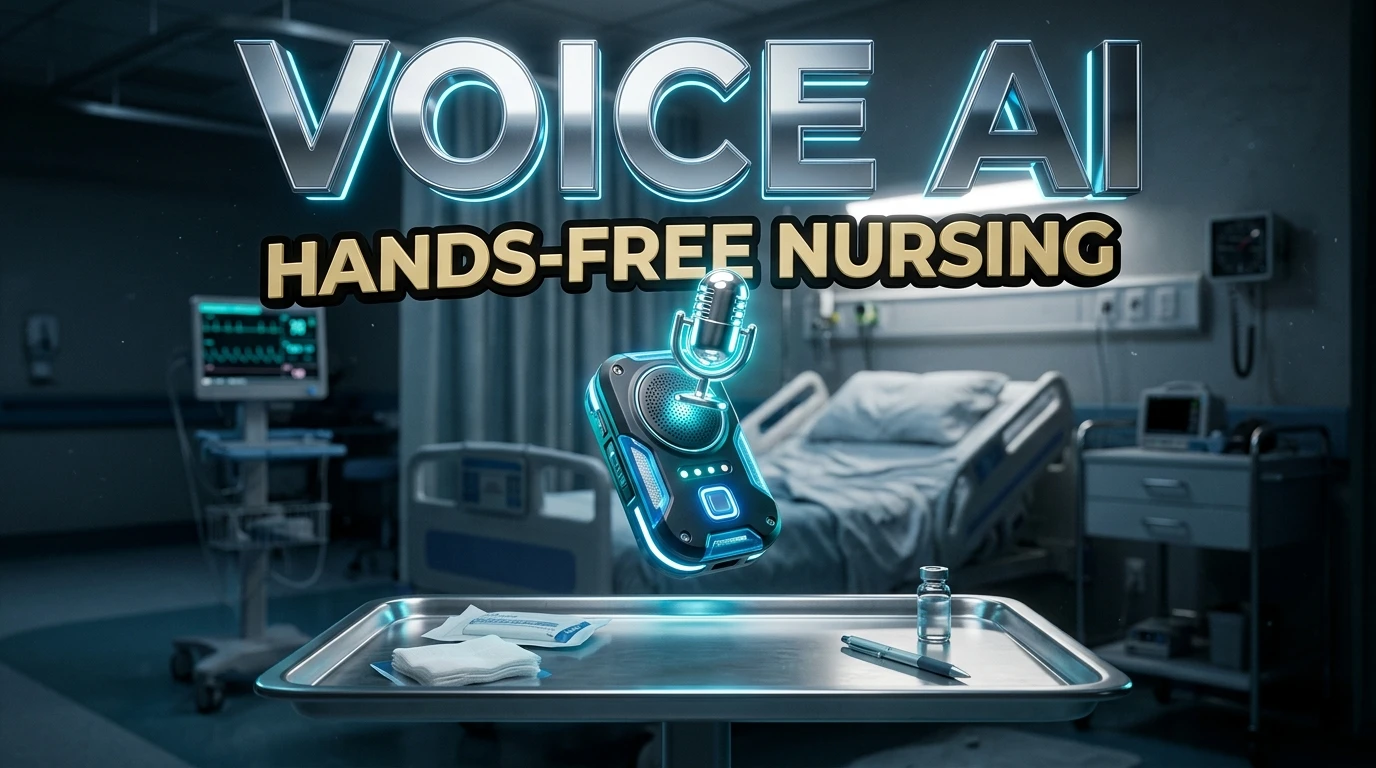
Zebra Technologies and Aiva Health have rolled out a joint push to bring hands-free, voice-driven artificial intelligence to hospital nurses, promising to cut paperwork and return more time to the bedside. The partnership, announced on April 9, 2026, plugs Aiva’s Nurse Assistant into Zebra’s clinical-grade HC20 and HC50 mobile computers and the new WS101-H wearable badge.
At a Glance:
- Zebra and Aiva unveiled hands-free voice AI for nurses on April 9, 2026.
- Cedars-Sinai pilot cut documentation time by 81% with over 120 nurses.
- HRSA projects a shortage of 108,960 full-time registered nurses by 2038.
- Aiva integrates with Epic, Oracle Health, ServiceNow and LanguageLine.
Voice AI steps onto the hospital floor
The two companies said the integration is built to let nurses talk to their devices instead of tapping through screens while gloved or mid-procedure. Aiva’s Nurse Assistant runs on Zebra’s purpose-built healthcare hardware, creating a single tool for charting, messaging and task routing.
Announced through a joint press release on PR Newswire, the deal ties Los Angeles-based Aiva to Zebra’s Lincolnshire, Illinois headquarters. Zebra trades on Nasdaq under ticker ZBRA.
“Nurses are the heart of healthcare, and our mission is to empower them with technology that lets them focus on what they do best: caring for patients,” said Kassaundra McKnight-Young, Chief Nursing Informatics Officer at Zebra Technologies. The tie-up is the first time Aiva’s ambient assistant ships natively on a wearable hospital badge rather than a general-purpose smartphone.
Why nurse burnout is reshaping hospital tech
Hospitals are under pressure from long shifts, thin staffing and rising patient loads. Voice tools are being pitched as a way to reclaim hours lost to screens.
Research cited by the American Association of Critical-Care Nurses shows nurses spend roughly 40% of a shift on documentation alone. That figure has become a rallying point for the American Nurses Association’s “25×5” effort to cut paperwork by 75% within five years.
A national survey of 2,600 nurses and nursing students by Cross Country Healthcare, released through Florida Atlantic University, found widespread stress, burnout and staffing shortages are threatening both nurse well-being and patient care. Administrative overload, not clinical complexity, is now the top driver of nurse turnover in many US systems.
Burnout carries a cost for patients too, since rushed charting raises error risk and delays care. That is why chief nursing officers are treating voice AI as a safety tool, not just a convenience.
40% of a nurse’s shift is spent on documentation, per the US Surgeon General’s advisory.
2,600 nurses surveyed nationally reported persistent burnout in 2025.
71% of nurses say staffing gaps have caused care delivery issues.
1.1 data points per minute are logged by nurses during a 12-hour shift.
Inside the Aiva and Zebra voice stack
Aiva Nurse Assistant is an ambient app built for hospital floors, not consumer use. It lets nurses document, request supplies and launch interpreters by voice.
Through spoken commands, clinicians can chart directly into Epic or Oracle Health records, open ServiceNow work orders, pull up policies and launch LanguageLine or AMN Healthcare interpretation in seconds. Each action is validated on screen before it is filed.
On the hardware side, the WS101-H wearable badge clips to scrubs and pairs with a host mobile computer, so voice commands run while nurses keep their hands on patients. By moving voice to a neck-worn badge, the stack removes a full layer of device handling from the average patient room.
“Nurses are our healthcare superheroes, but for years hospitals have overburdened them with new systems while focusing on streamlining the work of physicians,” said Sumeet Bhatia, Founder and CEO of Aiva Health.
The HC20 and HC50 mobile computers, which won a 2024 MedTech Breakthrough Award, are built for disinfection, drop resistance and hospital Wi-Fi security. When paired with low-latency voice, the devices aim to remove screen taps that break a clinician’s focus during care.
Early pilots show faster charting and calmer shifts
This voice-first approach is not just a pitch. Cedars-Sinai has been testing the Aiva app on its wards and reported an 81% drop in time between a nursing observation and the moment it lands in the right flowsheet row.
| Task | Typical time with keyboard | With Aiva voice |
|---|---|---|
| Flowsheet charting | Several minutes per entry | 81% faster at Cedars-Sinai |
| Work order submission | Multi-step ServiceNow form | One spoken command |
| Interpreter access | Desk phone dial-in | Launched from badge |
According to Cedars-Sinai’s newsroom, the pilot involved more than 120 nurses charting millions of data rows into Epic using the tool. Hospital leaders said the speed gain translated into real minutes back at the bedside for each clinician. Those minutes are the currency hospitals are now chasing in every AI contract they sign.
Bhatia argued that the cost math also works in hospitals’ favor. He said Aiva plus Zebra can cut incidental overtime, lift patient satisfaction scores and trim administrative spending at the same time.
What it means for the future nursing workforce
The Health Resources and Services Administration projects an 8% shortage of registered nurses in 2028, easing to about 3% by 2038. Rural regions face the sharpest squeeze, with a projected 24% RN gap in non-metro areas by 2027.
Zebra’s push sits inside a broader playbook called Orchestrated Care. Rolled out at HIMSS26 in March, the framework blends device visibility, staff communication and workflow automation on one mobile layer.
Industry analysts say voice-native clinical apps could become standard in the next wave of electronic health record upgrades. Key features now being demanded by chief nursing officers include:
- Real-time charting that maps speech to discrete EHR fields, not narrative blobs.
- Badge-level wearables that work hands-free while gloved or gowned.
- Built-in compliance with HIPAA and hospital data residency rules.
- Open integrations with service management and interpreter platforms.
For hospitals weighing the investment, the Zebra and Aiva launch offers a concrete test of whether ambient AI can deliver on its bedside promise. The next 12 months of deployment data will decide if voice becomes the default interface for nursing by 2027.
Frequently Asked Questions
What is Aiva Nurse Assistant?
Aiva Nurse Assistant is an ambient, voice-powered AI app built for hospital nurses. It lets them chart, request supplies and launch interpreters by speaking instead of typing.
Which Zebra devices work with Aiva?
The assistant runs on Zebra’s HC20 and HC50 healthcare mobile computers and the WS101-H wearable communication badge.
Does Aiva integrate with Epic and Oracle Health?
Yes. Aiva charts directly into Epic and Oracle Health records, and also connects with ServiceNow, LanguageLine and AMN Healthcare.
How much time can voice AI save nurses?
A Cedars-Sinai pilot with over 120 nurses showed an 81% reduction in the time between an observation and its entry into the correct flowsheet row.
Why does this matter for the nursing shortage?
HRSA projects a shortage of 108,960 full-time RNs by 2038. Tools that cut paperwork can help existing staff spend more time on direct patient care.
The Zebra and Aiva rollout lands at a moment when hospitals are desperate for anything that gives nurses time back, from the 40% documentation drag to the looming HRSA-projected shortfall. If the 81% speed gain from the Cedars-Sinai pilot holds at scale, the voice-first bedside could move from novelty to norm fast. Share your thoughts in the comments, and tell us if your hospital is ready to go hands-free.

-
 TECH1 year ago
Where Garmin Watches are Made and How They are Assembled
-

 AUTO3 months ago
Tesla’s Roadster Is ‘a Few Weeks Away,’ Says Its Chief Designer
-
 NEWS10 years ago
Samsung Releases Galaxy Note7 TV Ad as Reddit AMA Leaks Specs
-
 NEWS10 years ago
Android 7.0 Nougat Rolls Out To Nexus Devices With New Emoji, Features
-
 FINANCE9 years ago
Cardano Price Surges as ADA Enters the Crypto Top Ten List
-
 NEWS10 years ago
Pre-Order the First Camera Made for Facebook Live Streaming Video
-
 FINANCE1 year ago
Binance Suspends Trading and Withdrawals for a System Upgrade
-
 FINANCE9 years ago
RChain Price Jumps Nearly 150% to a New All-Time High of $2.03